




 01341422870
SEARCH

 01341422870
Wines of Le Marche
Le Marche Wines with Dropyn
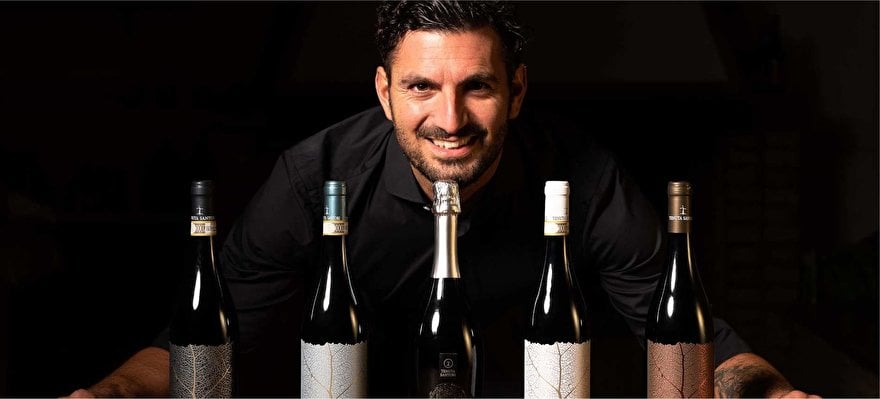
Croeso! Welcome! Wine enthusiasts and curious explorers. If you’re intrigued by off-the-beaten-path wine adventures, you’ll love our latest podcast episode on Dropyn, where we dive into the captivating world of Le Marche wines. This lesser-known Italian region might not be the first to come to mind when you think of Italian wine, but it boasts a rich heritage and variety that’s sure to impress any wine lover. We even had the chance to chat with Marco from Tenuta Santori for a chat about his wines while he was visiting Dolgellau.
Unique Wines
Le Marche is a treasure trove of unique wines, producing over 1 million hectoliters annually. With its diverse microclimates and picturesque landscapes ranging from rugged mountains to serene coastlines, it creates the perfect setting for cultivating a range of grape varieties. In our podcast, we explore some of the region’s standout varieties, such as a Verdicchio from Co-op known for its refreshing acidity and versatility, and Montepulciano, which brings a robust and fruity flair to the table.
DOCG
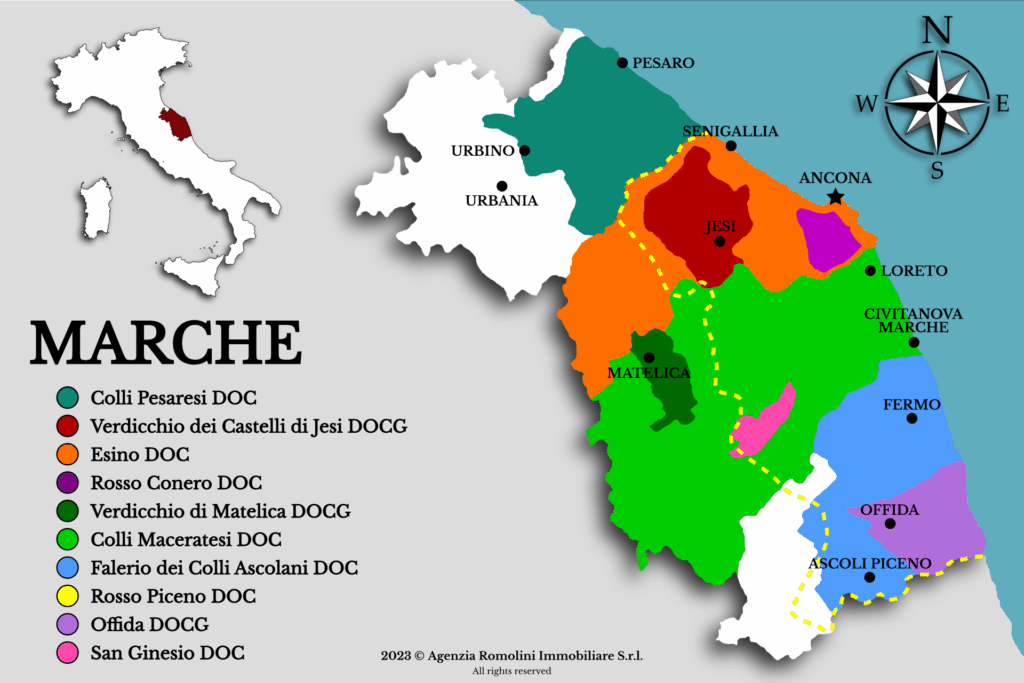
The region is also home to five prestigious DOCG (Denominazione di Origine Controllata e Garantita) areas, which represent the pinnacle of quality in Italian wine certification. These include Verdicchio dei Castelli di Jesi Riserva and Vernaccia di Serrapetrona, to name a couple. Each DOCG area contributes its own distinctive flavors and traditions, highlighting the region’s commitment to excellence and craftsmanship in winemaking.
Tenuta Santori
Marco from Tenuta Santori shares his passion for maintaining these high standards and what makes Le Marche stand out. In the podcast, Marco also reveals the unique challenges and joys of winemaking in Le Marche. He talks about his family’s commitment at Tenuta Santori and their focus on sustainable practices that honour both tradition and the land’s natural resources. This personal perspective provides listeners with a deeper appreciation of the dedication and love involved in every bottle of his wine.
Tune in!
So, pour yourself a glass of your favorite and tune into Dropyn for a journey through the vineyards of Le Marche. Discover why this hidden gem of Italy deserves a spot on your wine radar and get ready to be inspired by the stories. Iechyd Da!
Exploring South Africa: Avondale Wines on Our Podcast
South Africa
We’ve got something special for you on our latest South African podcast episode. This week, we’re shining the spotlight on Avondale Wines, a gem nestled in the heart of the beautiful Paarl region. Jonathan Grieve is the mastermind behind this one-of-a-kind vineyard. He popped by to visit us in Dolgellau, so we couldn’t resist a chat about his biodynamic approach to winemaking.
Eco-Friendly
Picture this: a vineyard where nature calls the shots and every drop of wine tells a story. That’s Avondale for you. Jonathan and his team have crafted an eco-friendly paradise where the wine is as pure as it can get. In this podcast episode, we take you on a tour around the Avondale vineyards. Dylan, Osian and Llinos chat about their sustainable practices that make their wines so unique and delightful.
Biodynamic Farming
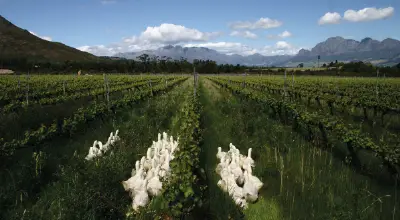
During Jonathan’s visit we talked about all things biodynamic and he had a fascinating presentation. This included how Avondale is creating a thriving ecosystem for the land, plants, and animals alike. He shared practices on farming with nature which Llinos finds especially interesting coming from a Welsh farming background.
Sustainability is the Future
But this podcast episode isn’t just about wine; it’s about a global movement towards sustainability. His visit had quite an impact on all of us in Dylanwad. It was a reminder that no matter where we are in the world, we should all be connected through the simple act of caring for our planet. Our conversation explored the impact of sustainable farming on both the environment and local communities. Through Jonathan’s insights, you’ll see how Avondale Wines is leading the way in making wine an eco-conscious choice.
Head to Dropyn for more!
So, grab your headphones and join us at ‘Dropyn’ for a casual and hopefully informative delve into the world of Avondale Wines. Whether you’re a dedicated wine aficionado or just curious about how sustainability meets winemaking, this homely chat between Dylan, Osian and Llinos is a little insight into South Africa and Avondale. Pour yourself a glass of your favorite vintage, get comfy, and listen in as we toast to a future where wine and nature go hand in hand. Iechyd Da!
A Catalan Visitor: Our Podcast with Quim from JMF Selection
JMF Selection
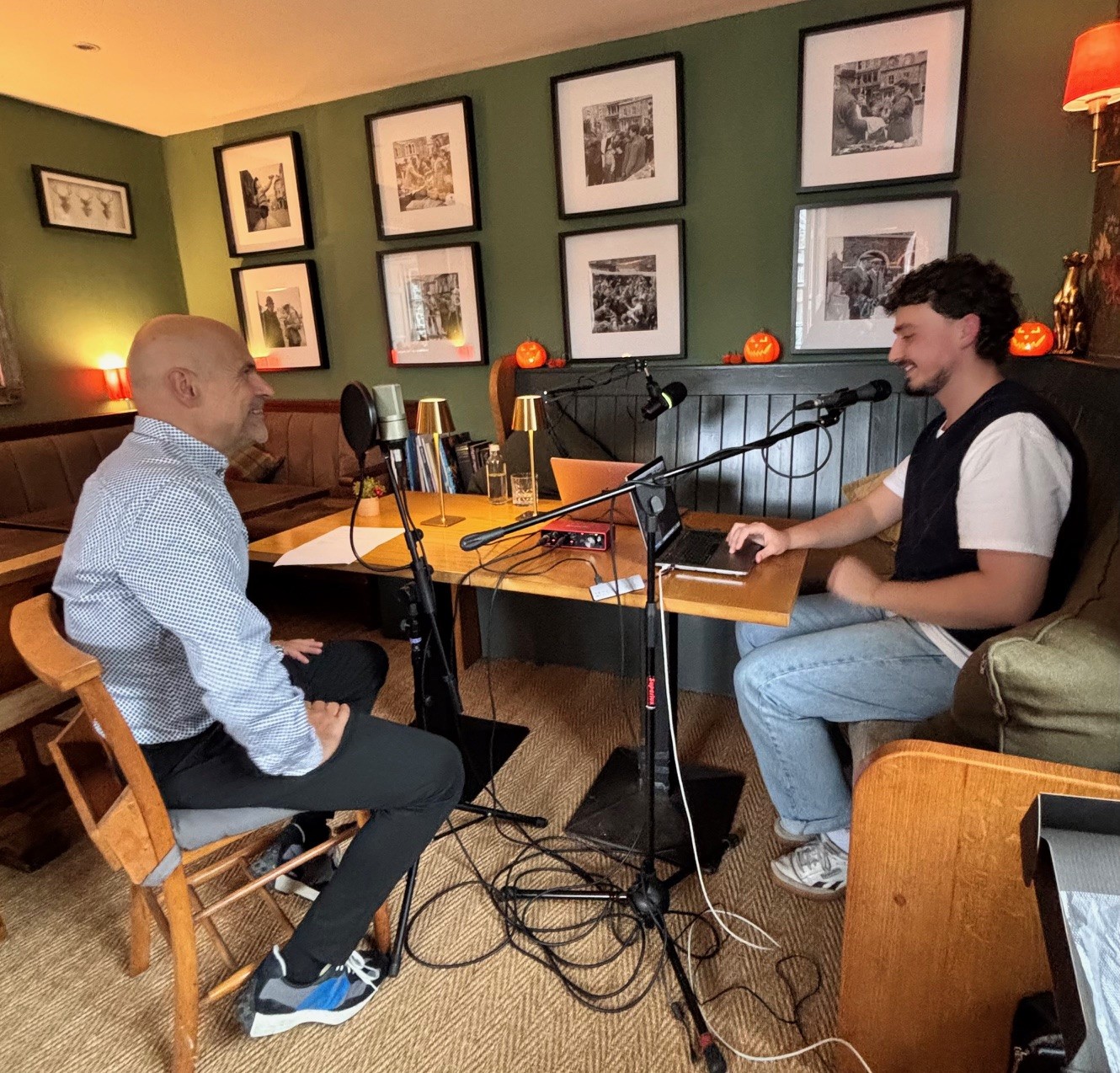
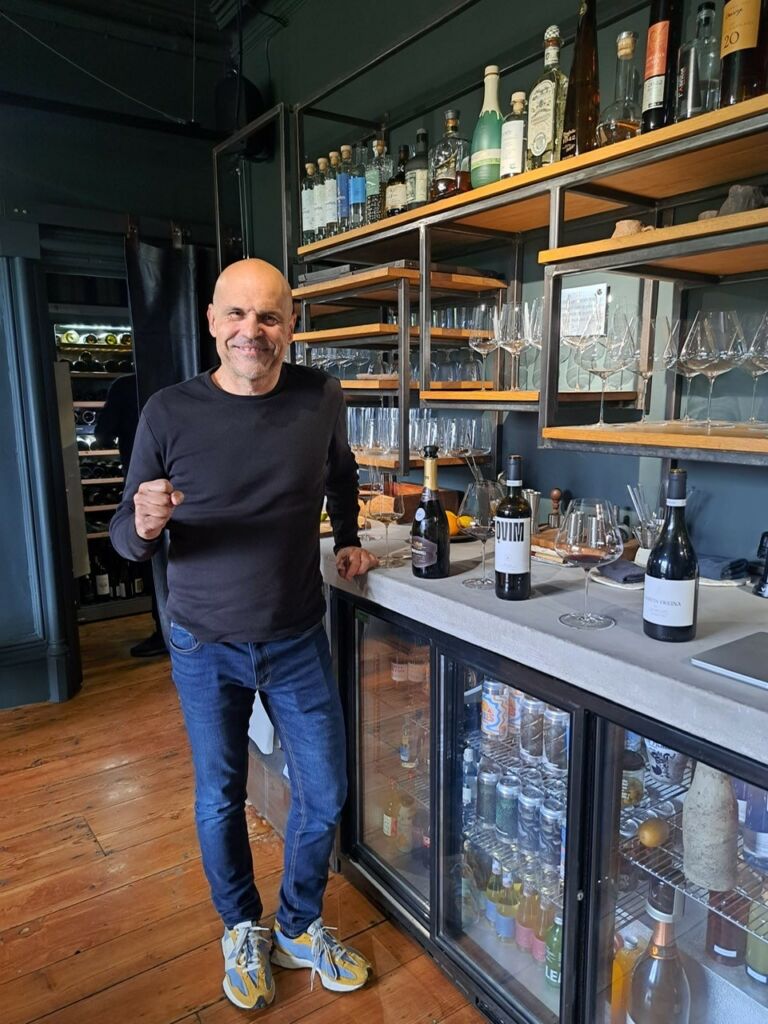
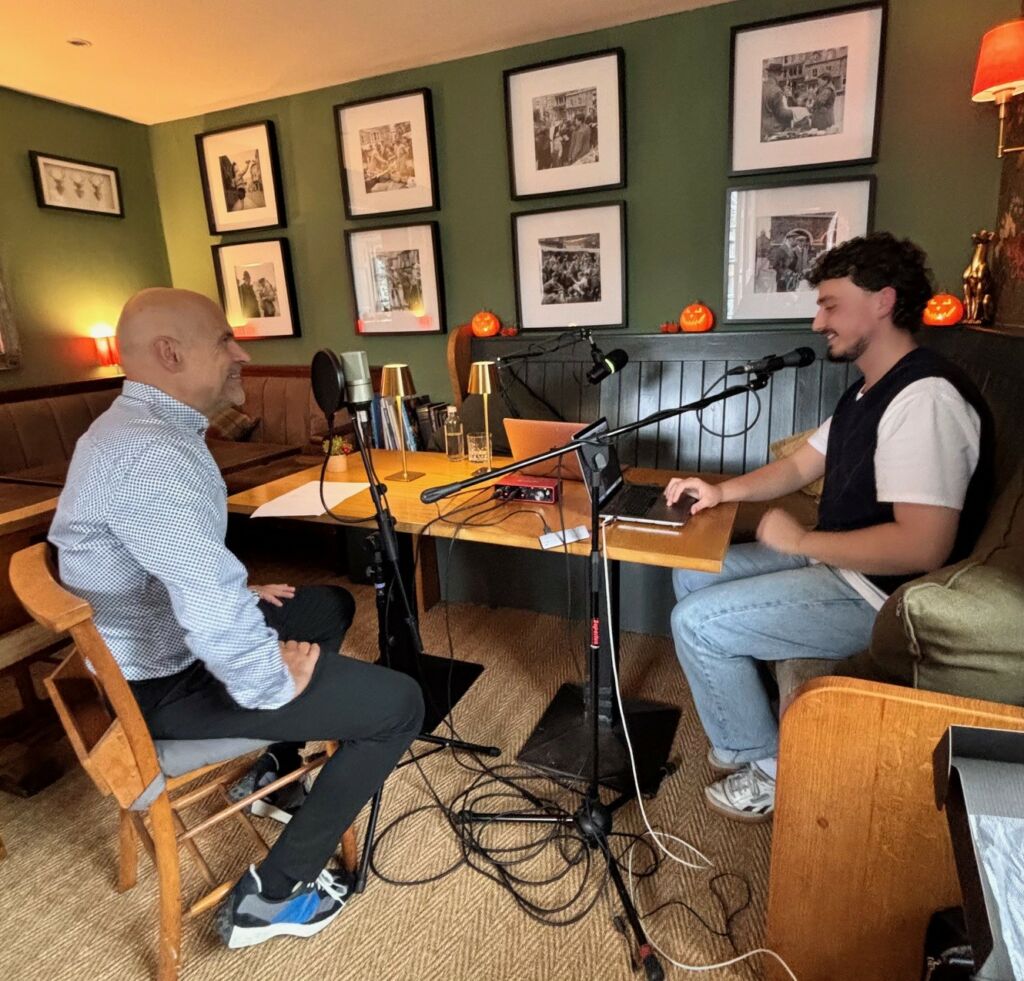
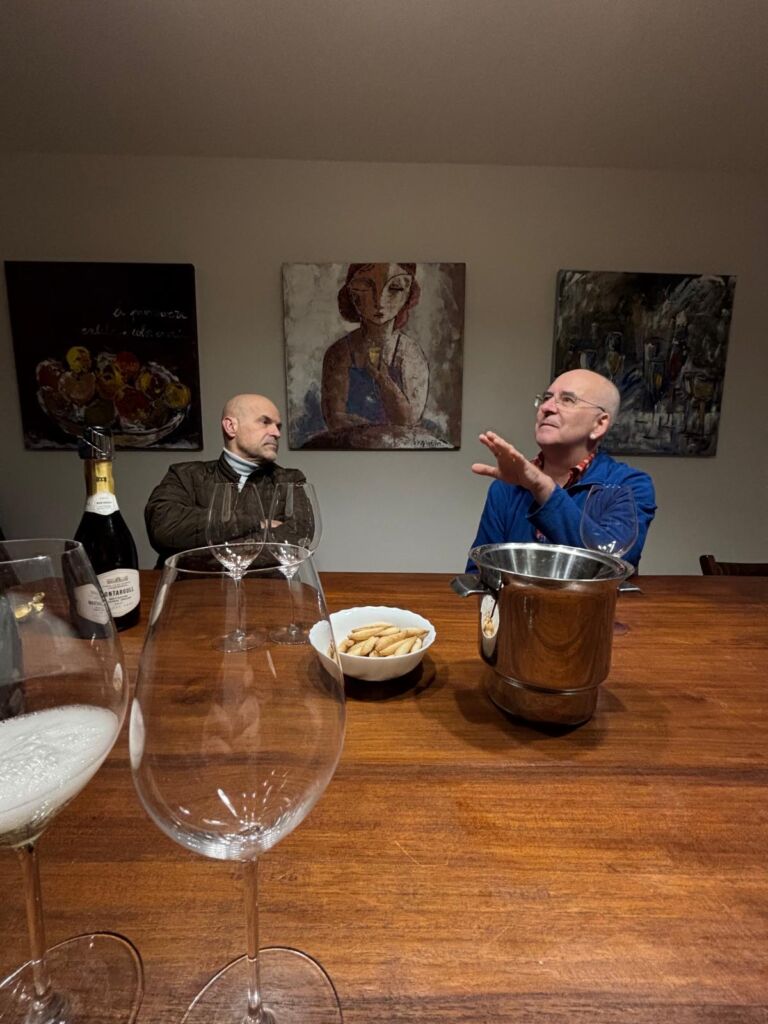
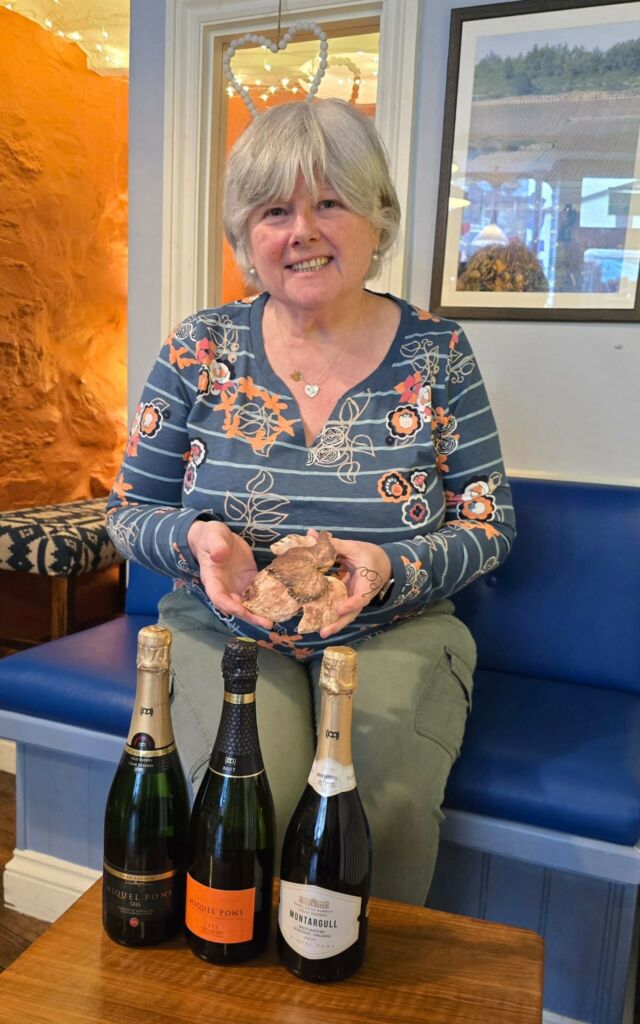
This week’s podcast has a special guest who brought sunshine, stories and some seriously good wine to Dolgellau. Our friend Quim from JMF Selection spent a few days with us here in Wales. He visited customers and tasted through an exciting range of wines. Naturally, we couldn’t let him leave without sitting him down for a chat on Dropyn.
Miquel Pons Cava
Quim is not only a great advocate for Catalan wine but also the export manager for Miquel Pons Cava. This is a producer that champions traditional method sparkling wine with precision. In the episode, he takes us behind the scenes of the estate. Quim shares what makes their Cava so distinctive: family heritage, meticulous vineyard care, and a commitment to quality and organic practices.
QVIM Rioja and Monsant
We have been buying Quim’s own wines for some time too. It was fascinating to learn about the effect of altitude on his grapes. This is a neat link to our first podcast. He tells us about creating a Rioja that reflects both tradition and freshness. He also makes a beautifully expressive Samsó (Carignan) from Montsant. This is a region tucked just beneath Priorat with its own rugged charm. Each bottle tells a piece of his journey. His theory about drinking the wines in almost a state of meditation is compelling. I like it – I’m not drunk I’m meditative!
Between tastings and customer visits, Quim also managed to enjoy a few days soaking up Wales. I suspect he was really taken with the Hurly Burly estuary swim – maybe a September visit next year?
Tune in to the full episode by clicking HERE . Leave a rating or a review so that we can improve and also any questions you’d like us to answer or topics for a wine podcast.

High Altitude Wines: How Elevation Shapes Great Wine
High Altitude Wines
There’s something magical about wines that come from the mountains. As vineyards climb higher, everything changes — the sunlight is more intense, nights are cooler, and grapes ripen more slowly, building layers of flavour and elegance. Altitude, as it turns out, can be a winemaker’s secret weapon.
Wines from Mendoza
Nowhere is this clearer than in Mendoza, Argentina, where vines cling to the foothills of the Andes. Here, at 900–1,500 metres above sea level, Malbec thrives under piercing blue skies. The combination of long sunny days and crisp nights produces wines of deep colour, ripe fruit, and remarkable freshness — proof that extreme conditions can yield balance and beauty.
Greece
The story continues in Greece, where altitude gives Mediterranean warmth a welcome lift. From Santorini’s windswept terraces to the mountainous vineyards of Naoussa, cooler temperatures preserve the grapes’ natural acidity. The results are wines that sing with energy — crisp Assyrtiko, spicy Xinomavro — a reminder that Greece’s rugged landscape is as important as its ancient heritage. We don’t have any on our shelves yet but we’re close to finding some for you!
I Fabbri
Closer to home, we’ve been proudly importing wines from I Fabbri, a small, family-run estate in the hills of Lamole, at the highest reaches of Chianti Classico. At around 600 metres, these steep vineyards produce Sangiovese of rare finesse: fragrant, pure, and mineral-driven. Altitude here isn’t a challenge — it’s a defining element. The cool climate slows ripening, giving I Fabbri’s wines an elegance that sets them apart.
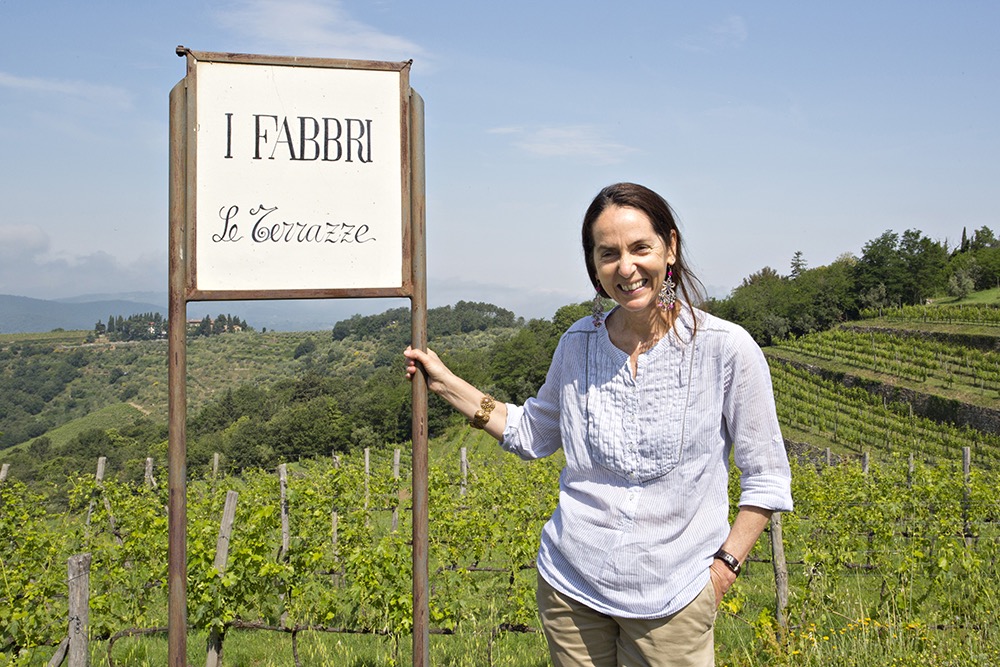
Andes to Tuscany
From the Andes to Tuscany’s hilltops, altitude shapes more than just the view. It’s what gives these wines their soul — freshness, structure, and the kind of depth that only comes from living a little closer to the sky.
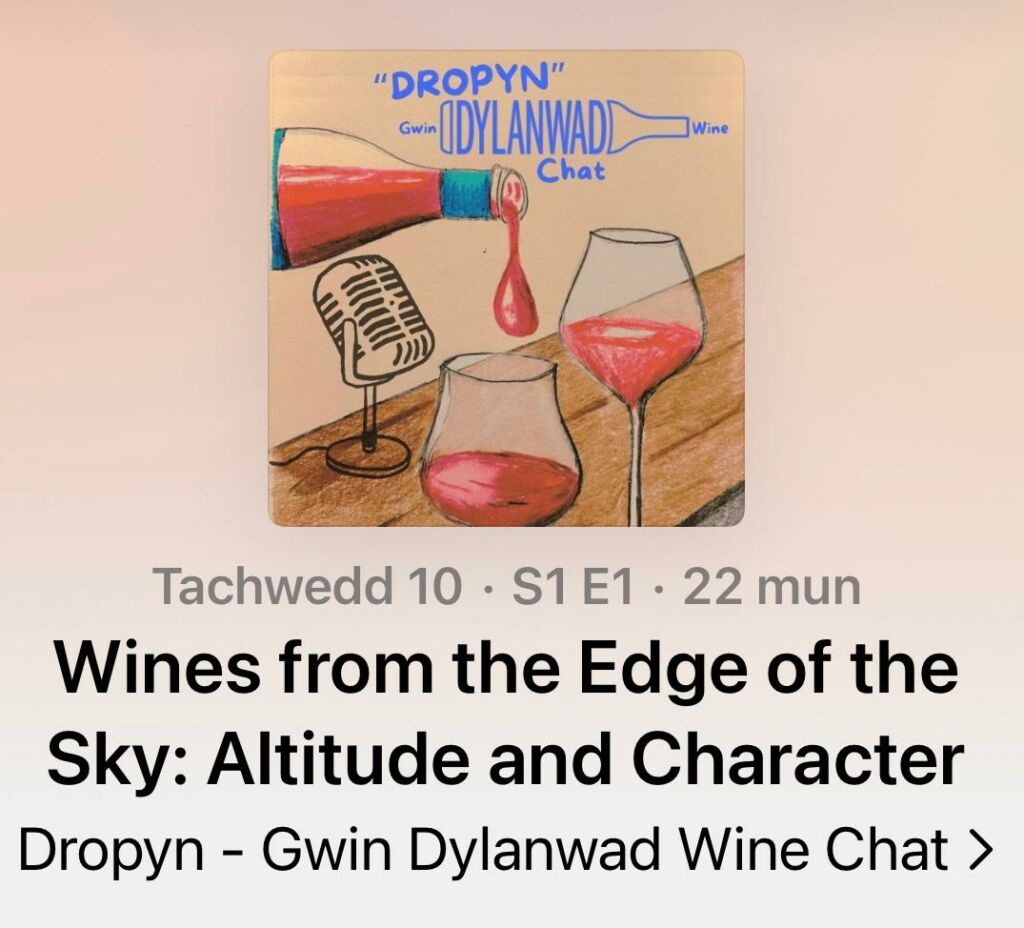
Dropyn – Gwin Dylanwad Wine Chat Podcast
You can hear more about I Fabbri and the fascinating role of altitude in winemaking in our first podcast episode, where we explore how vineyards at the edge of the sky produce wines full of life, energy, and story. Just click on Dropyn – Gwin Dylanwad Wine Chat.
Celebrating Welsh Wine Week: A Toast to a Thriving Industry
Welsh Wine Week
As Welsh Wine Week unfolds, there’s no better time to celebrate the remarkable rise of Welsh wine over the past decade. Wales is now producing award-winning wines that hold their own against better-known regions. From crisp, mineral whites to delicate rosés and elegant reds, Welsh vineyards are embracing the terroir of their hillsides and crafting wines full of character and quality.
Whitecastle’s New Winery
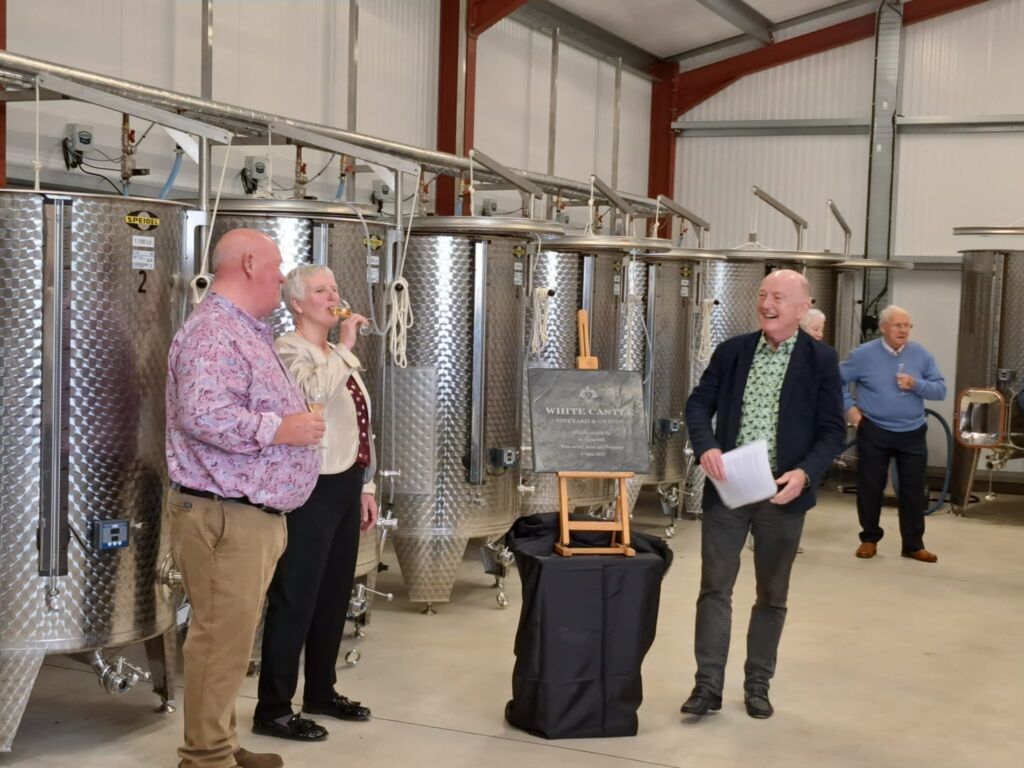
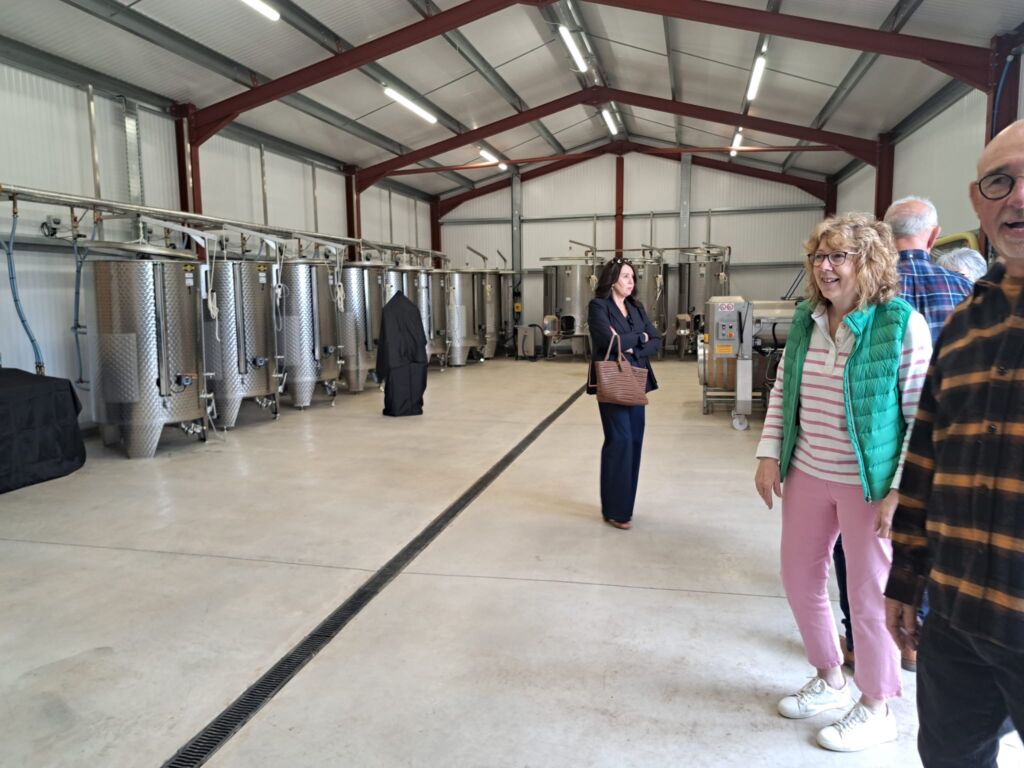
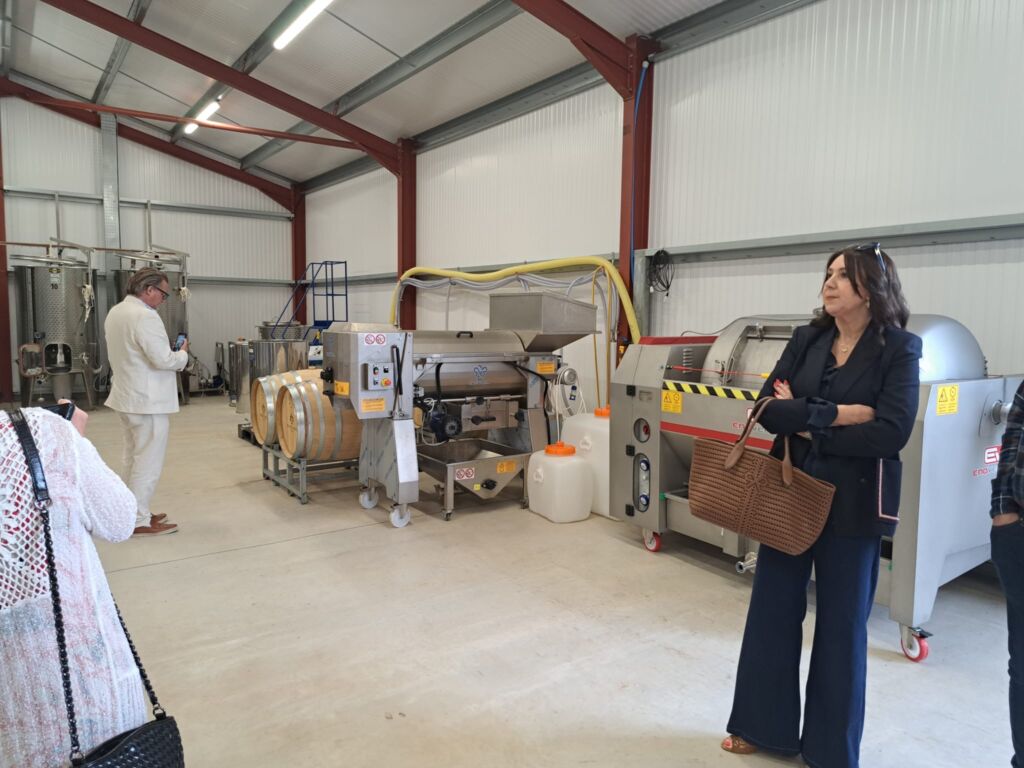
It’s a bit of a trek on a Sunday from Dolgellau to Whitecastle in Llanfetherine but Dylan wouldn’t have wanted to have missed the official opening of Robb and Nicola’s Gwindy for the world. We’ve been selling their wines and tracking their progress with great interest for a decade. Now, they have taken the huge next step of building their own winery! A massive stride and investment.
Oz Clarke
Oz Clarke, one of the doyans of the UK wine industry gave an entertaining and dramatic opening speech that would have been worth the trip on its own! The building is immaculate with all the shiny new equipment you’d expect. More importantly, tanks and barrels filled with their first ferments made on site were made available to sample. We can’t wait to have them on our shelves in Gwin Dylanwad. Bravo Robb and Nicola. Here’s to many more vintages of Monmouthshire’s finest!
Montgomery Vineyard
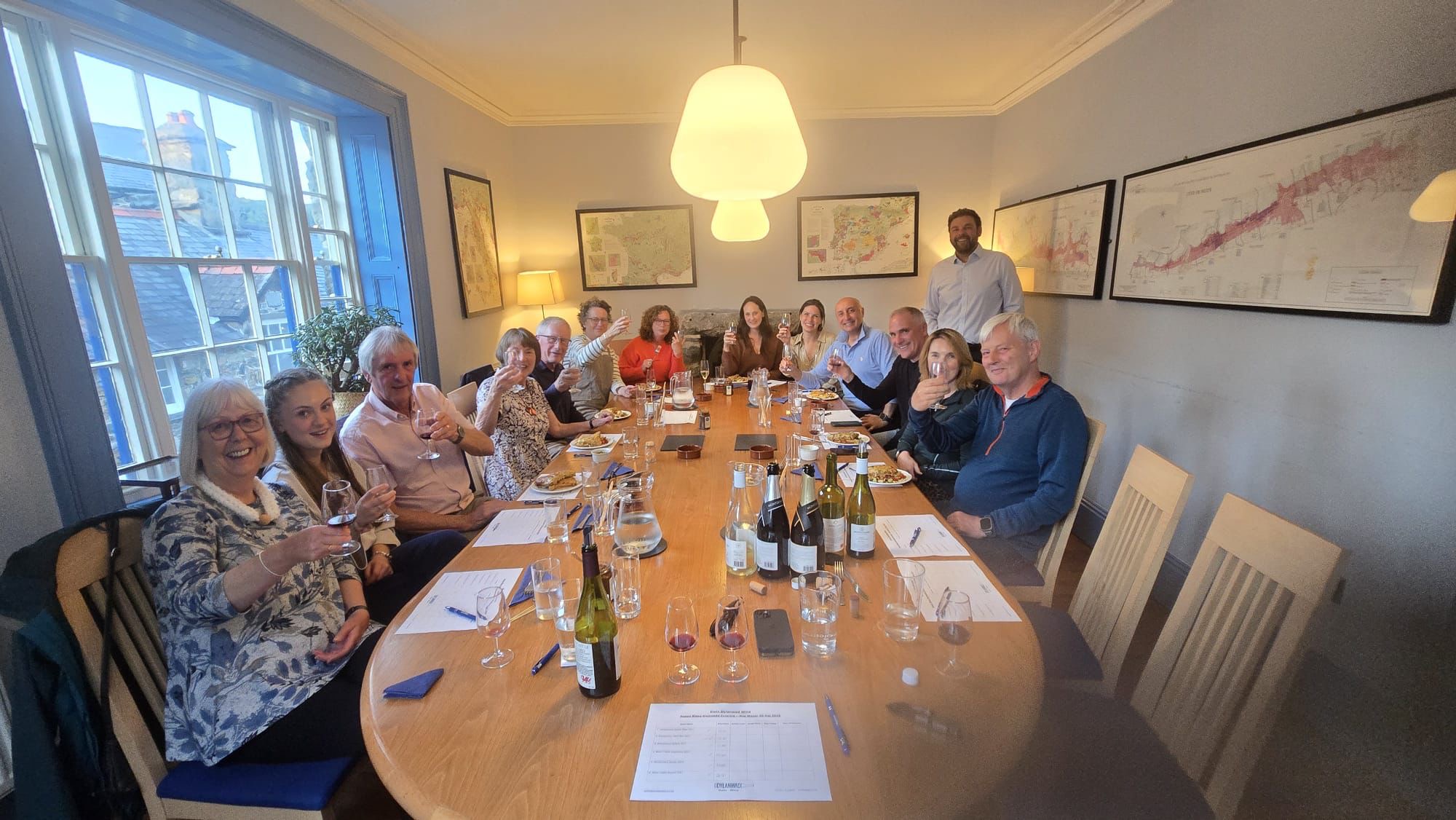
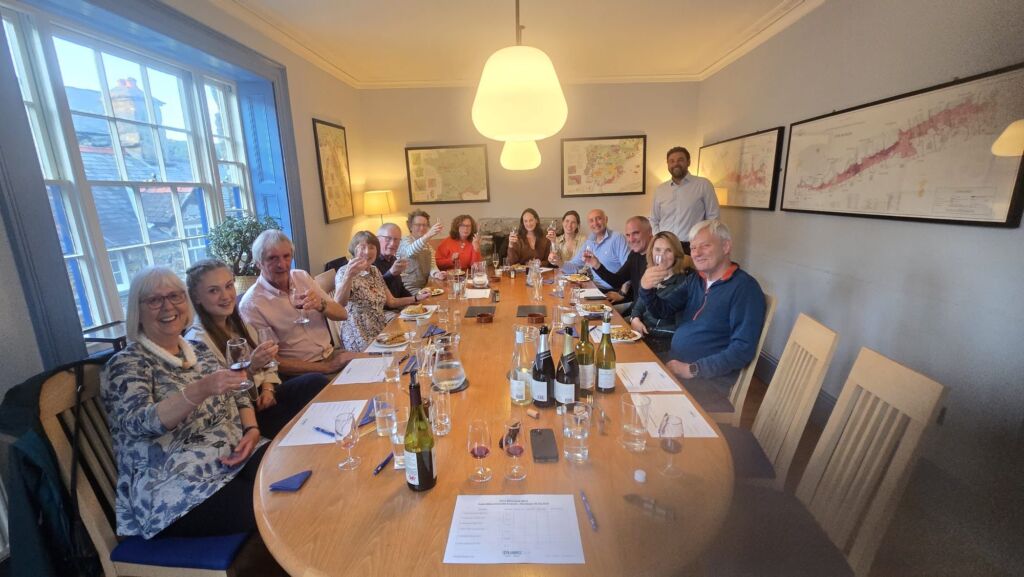
Back at the shop, we were thrilled to welcome Woody from Montgomery Vineyard for a special tasting on Friday night. He guided us through a hand-picked selection of his wines as well as a wine from Gwinllan Y Dyffryn and Whitecastle. To top it off, Dylan whipped up his famous Welsh rarebit to end the tasting.
A New Natural Wine
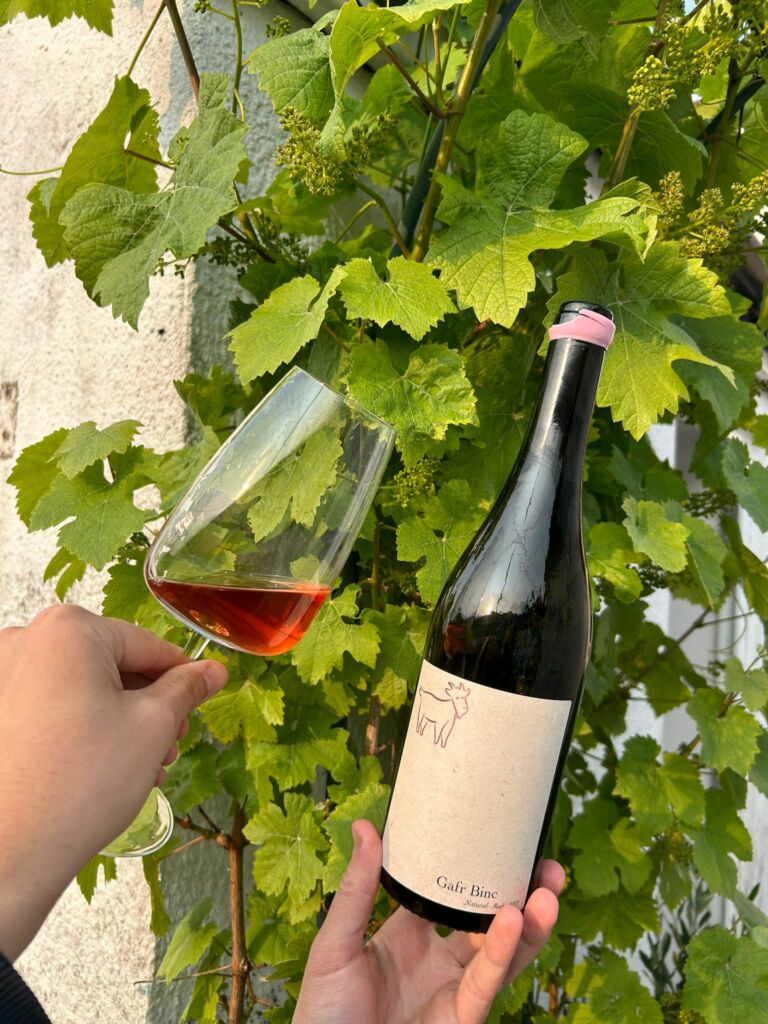
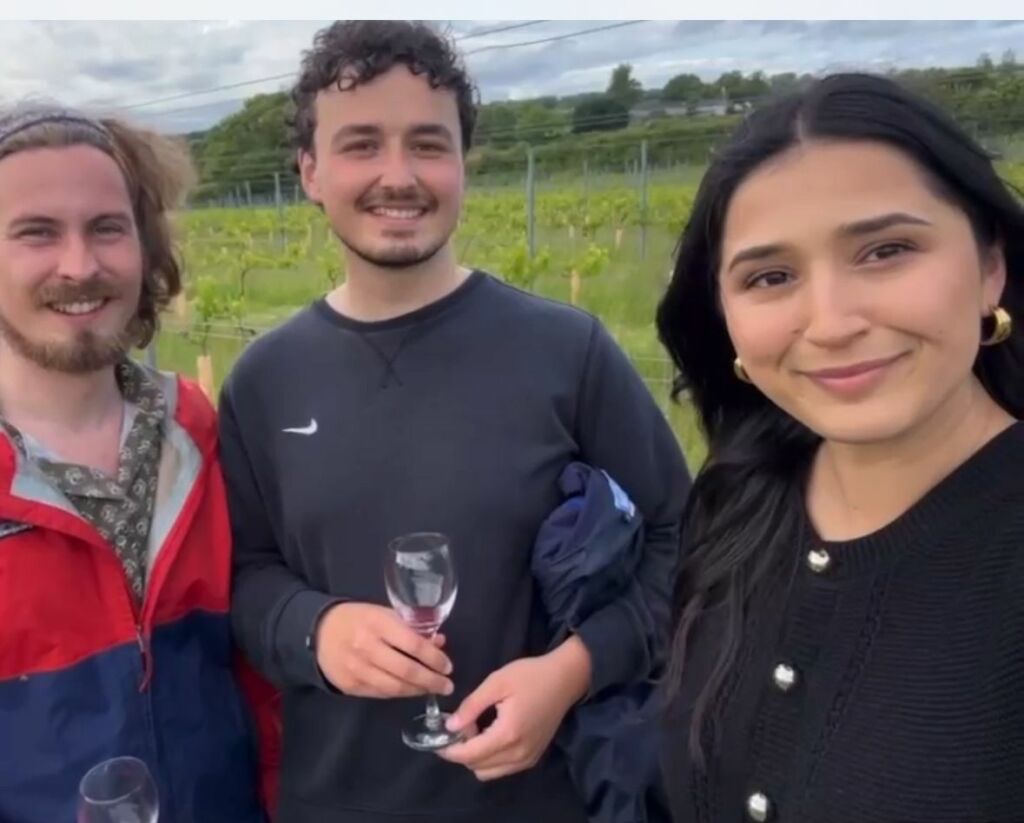
On Saturday, Osian visited Tair Gafr Wine (yes, our team really do live and breathe wine!). This beautiful 3-acre vineyard near Cowbridge produces natural Welsh wines while preserving the biodiversity in and around the land. It has gained organic status and practises minimum intervention including many biodynamic methods. With 3,000 south-facing vines you can also enjoy the company of alpacas as well as the goats Potter, Oz and Merlin who roam freely among the vines.
Committed to Sustainability
The name “Tair Gafr” refers to a Welsh folk song about goats of different colours, much like the vibrant range of wines produced here. Guinea fowls wander through the rows of vines providing natural pest control by eating insects. Osian and his friends were shown the Regent and Orion grapevines, learning about the vineyard’s commitment to polyculture and soil health.
The Wines
They tasted three natural wines: Oes Gafr Eto – light, floral, with tart cherries; Gafr Binc – notes of rhubarb and custard, complex and great texture; and Gafr Goch – fruity, with hints of black pepper and cherries, smooth and beautifully balanced.
The challenge of Welsh wine making
Of course, making wine in Wales comes with real challenges. The climate, while improving in conditions for wine making, is still unpredictable, and last year was particularly harsh for many vineyards. Poor weather during the growing season led to very low yields, with some producers harvesting just a fraction of what they had hoped for.
Taster Slate
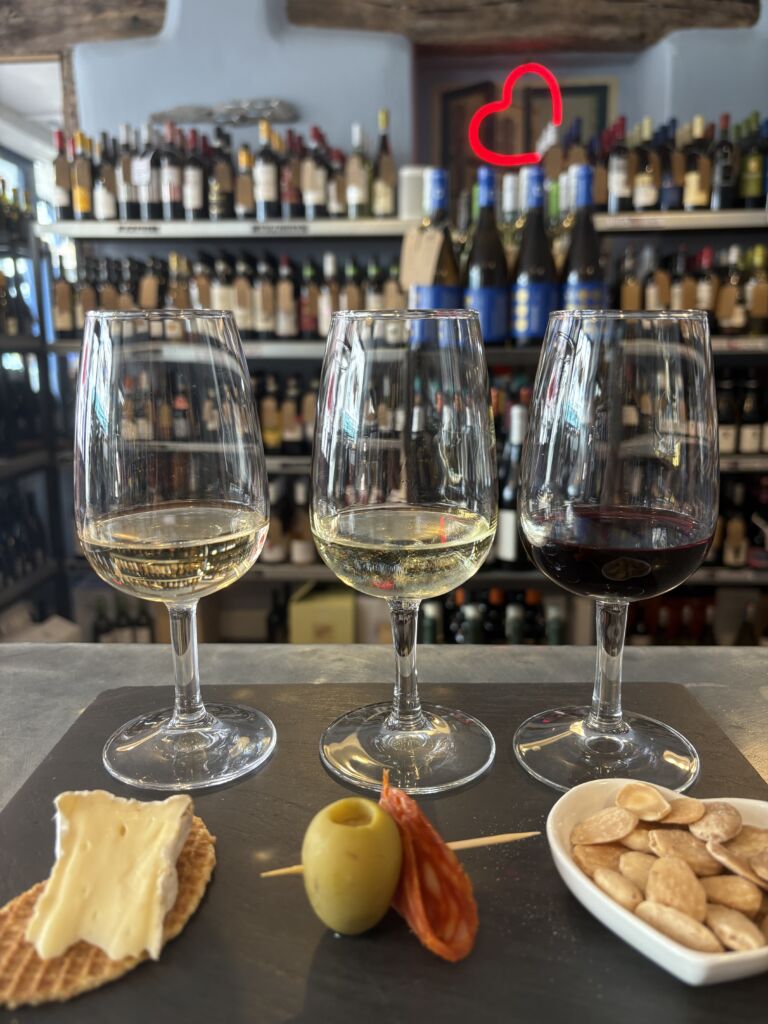
So whether you’re popping open a bottle of Whitecastle’s Pinot Noir Précoce or sipping a sparkling from Montgomery, this week is all about supporting and celebrating the creativity and resilience of Welsh winemakers. Have a look at our website for Welsh Wines. Also, all week in Dylanwad we have a taster slate of 3 Welsh Wines with 3 snacks. So come and enjoy. Iechyd da!
Discovering the Craft of Miquel Pons Cava
Miquel Pons Penedès
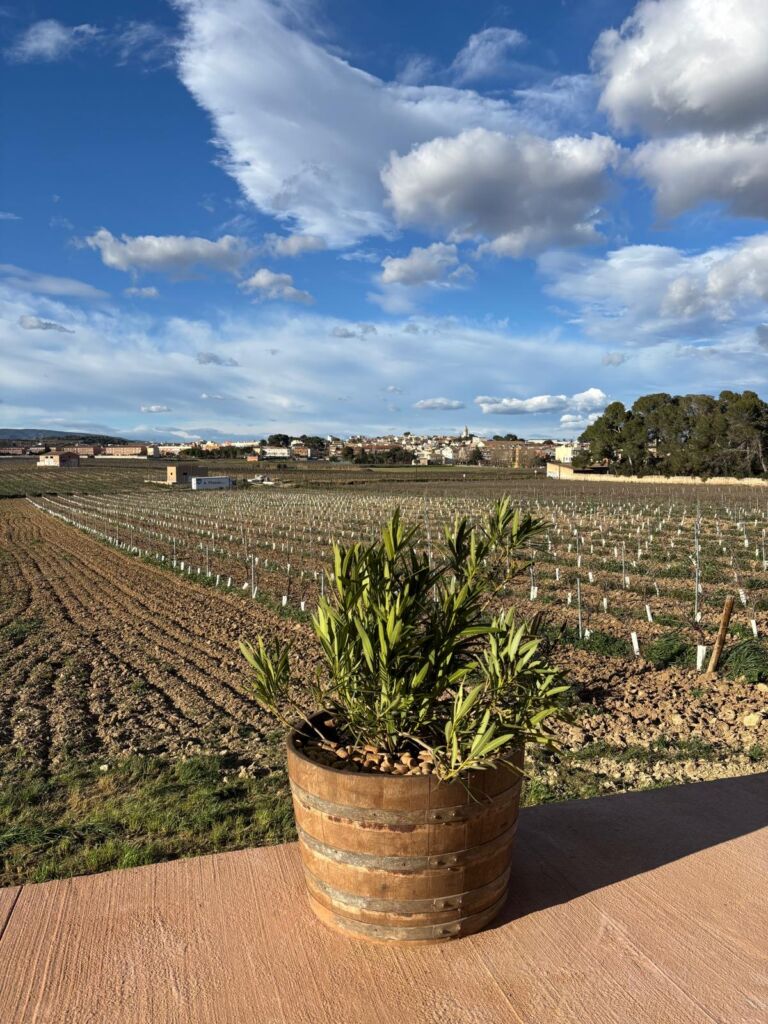
Visiting Miquel Pons Cava was a fascinating experience. It revealed the knowledge and precision behind every bottle of this renowned Spanish sparkling wine. Nestled in the heart of Catalonia’s Penedès region, Miquel Pons is a family-run organic winery. They are dedicated to preserving traditional Cava-making methods, while embracing modern techniques to ensure the highest quality. Cava is made using the same method as Champagne and offers exceptional value from Miquel Pons.
Meticulous Production
One of the highlights of our visit was learning about the meticulous production process. Miquel explained how the winery carefully selects the finest grapes from specific plots around their estate. The traditional varieties of Macabeo, Xarel·lo, and Parellada create a perfectly balanced Cava. The second fermentation takes place in bottle. Then the wines have extended ageing on the lees which is crucial in creating these exceptional wines.
Disgorgement Demonstration
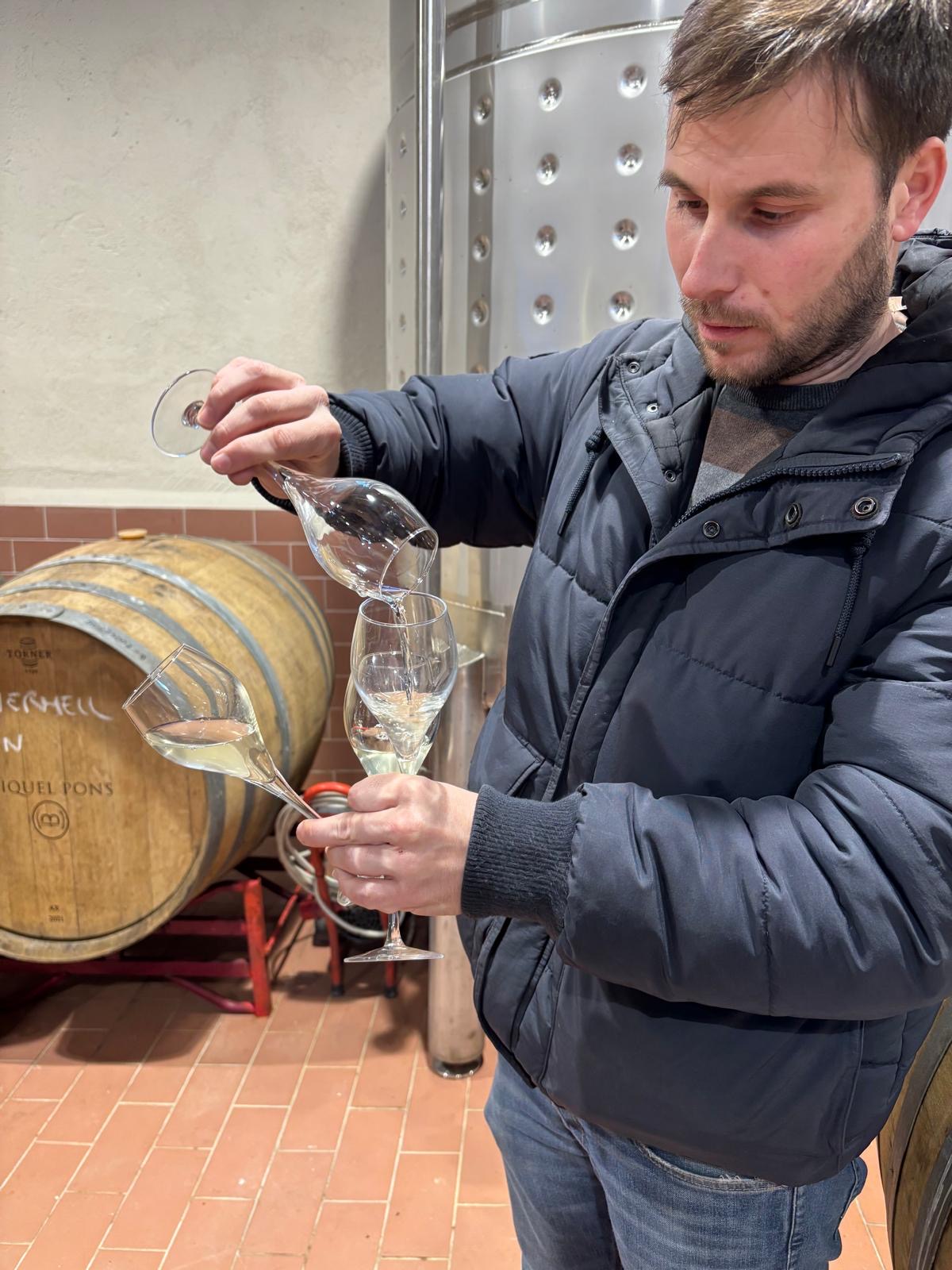
A particularly exciting moment was witnessing the disgorgement process first-hand. This technique involves removing the sediment from the neck of the bottle and ensures clarity and purity in the final product. Normally, this is done through freezing the neck of the bottle. However, they believe a finer wine is produced without this thermal shock. Miquel expertly demonstrated this process, sending a neat spray of Cava over Llin who was trying to film him!
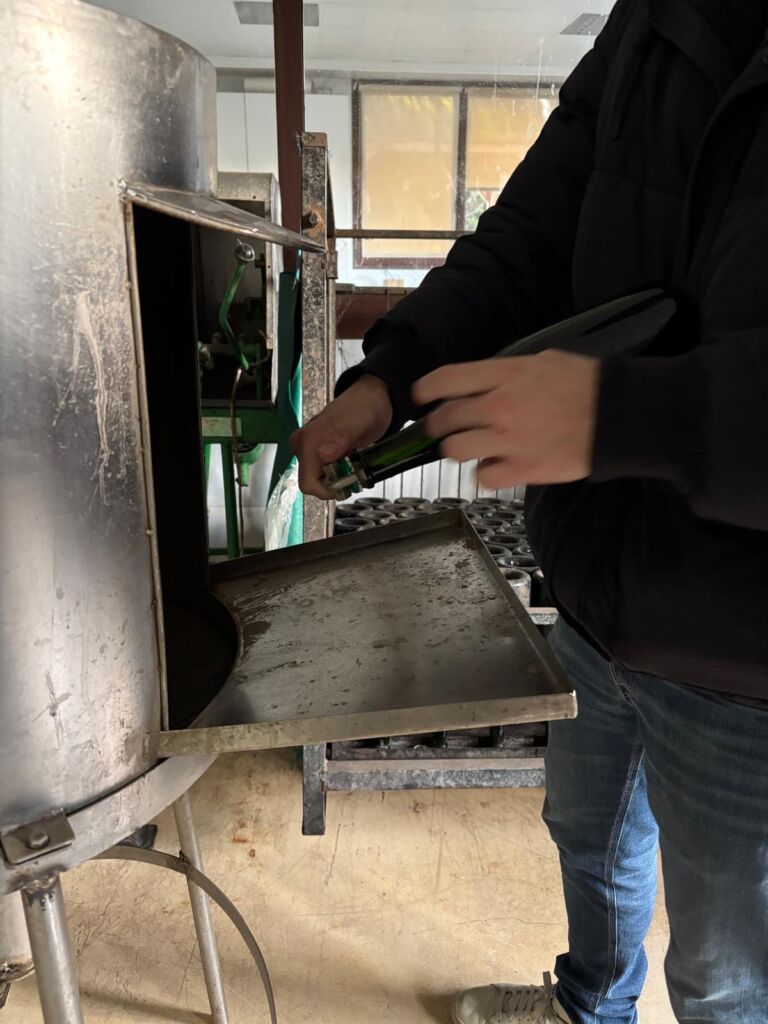
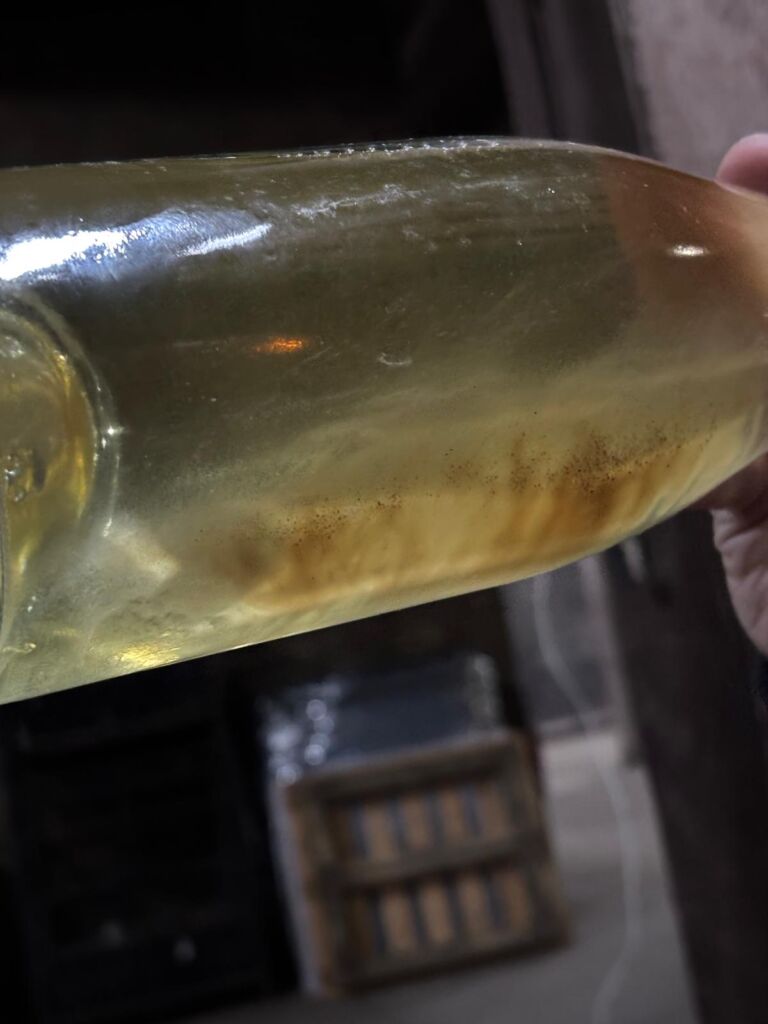
The Best Quality Cava
Of course, no visit to Miquel Pons would be complete without tasting their exceptional Cavas. We sampled a range, from Reserva to the more complex and aged Gran Reserva. You always learn something new and I have never seen a traditional sparkling wine where they use a cork for the bottle fermentation (as opposed to a crown top). This is what they do for their very top wine and clearly it makes a difference.
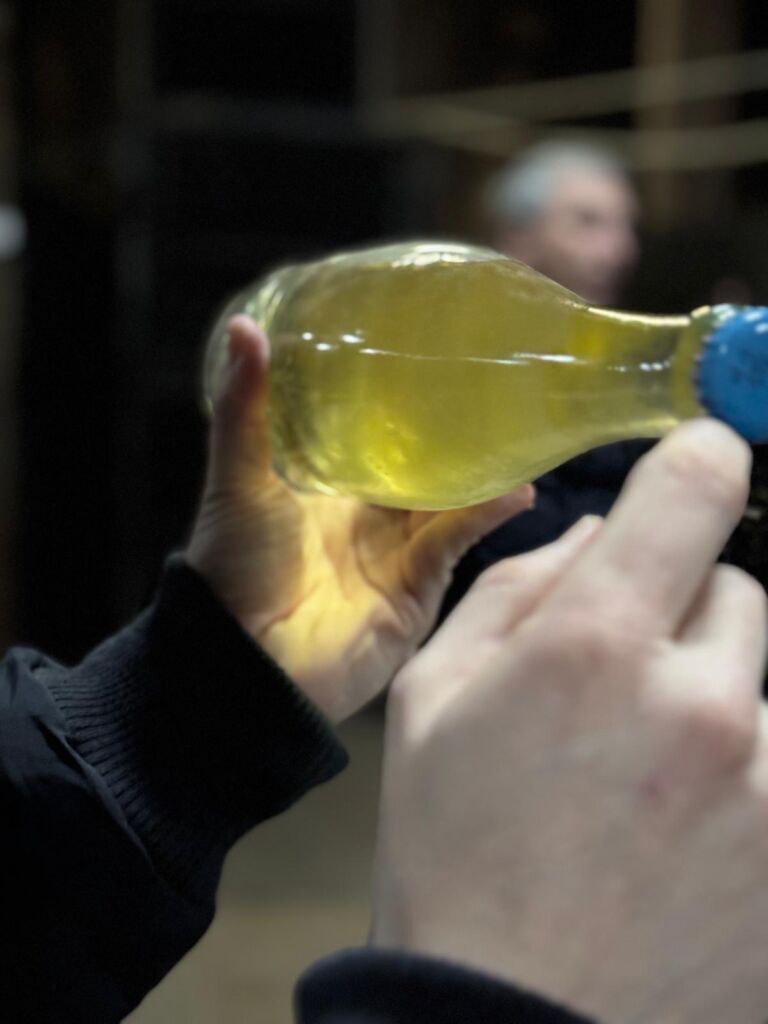
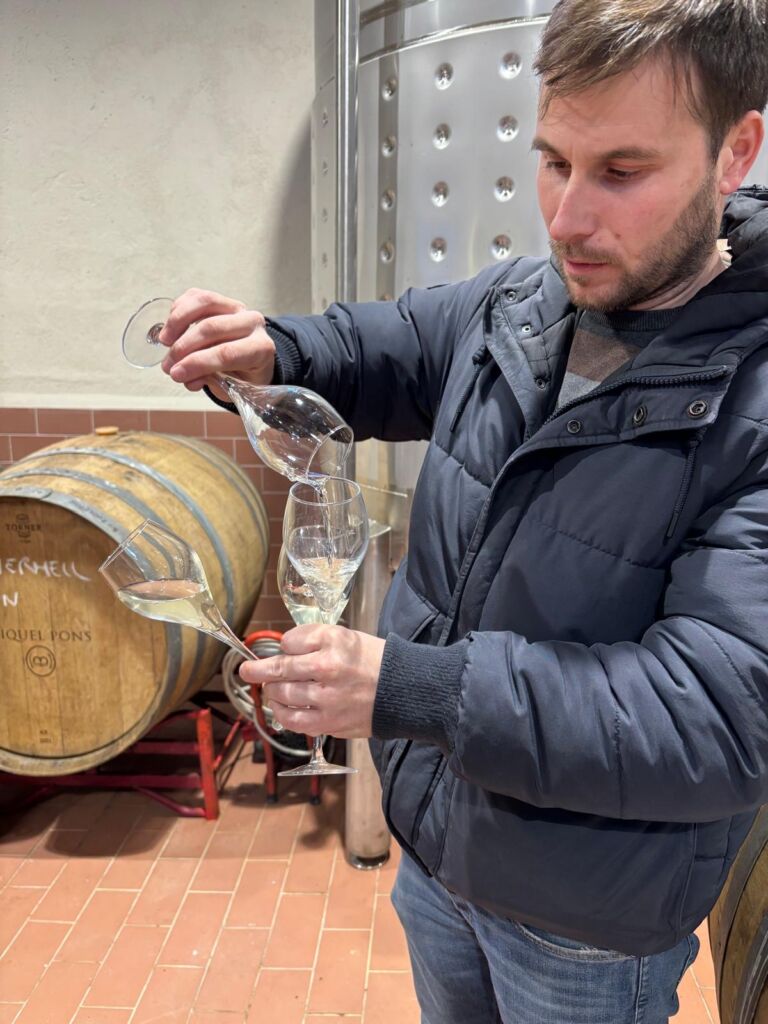
Tim Atkin
Miquel Pons Cava has received high praise: 95 points in Decanter Magazine. Recently they have attracted the attention of esteemed wine critic Tim Atkin, who has featured them in his choice of top Cava. If you are curious about Cava, or a big fan of sparkling wine, we highly recommend you pop in to try them. Make it quick, we are the only UK importer with limited stock for now!
Champagne Cordeuil Père et Fille
We’ve just launched our new Champagne Cordeuil Père et Fille on our shop shelves. It occurred to me that we never wrote about our trip to the Loire at the beginning of the year! This is a mistake! I had no intention of keeping you all in the dark from our tales I promise!
Champagne Cordeuil Père et Fille – a New Import
We are proud of our new Champagne – it is the latest gift from our travels! It was the last stop of our trip but it was by no means the least.
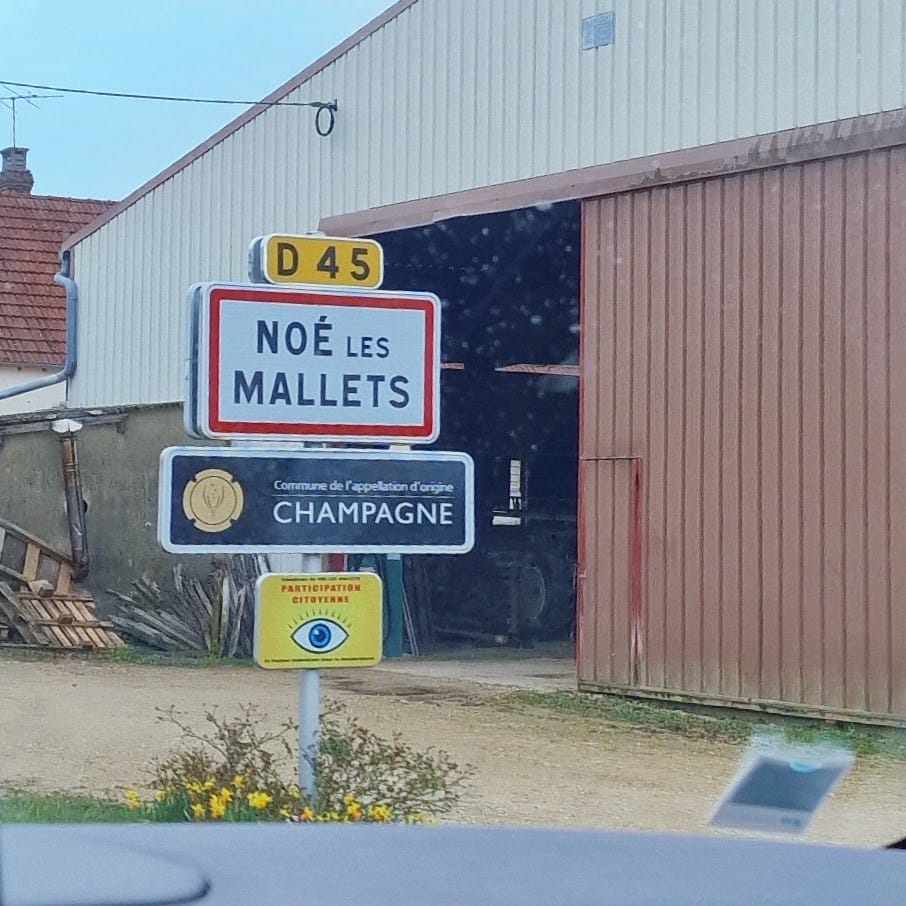
We had already been to Sancerre and Chablis so on the last day we bundled in the mini traveller to head to the airport. We had one stop to go – Chateau Cordeuil Père & Fille. Nothing got us out of bed quicker than a morning of Champagne tasting which was very apt for Llinos’ birthday too.
Father & Daughter Duo
Erlande welcomed us on our arrival. She is the daughter of Gilbert in the ‘father & daughter’ duo. Dyl and Llinos had already been last year so they were like old friends! The vineyard is based in Cote des Bar and has a long family history that began in 1950. Erlande is 3rd generation managing this vineyard in this lesser know region. Lesser known maybe, but no skimping on quality and we think this is great value Champagne.
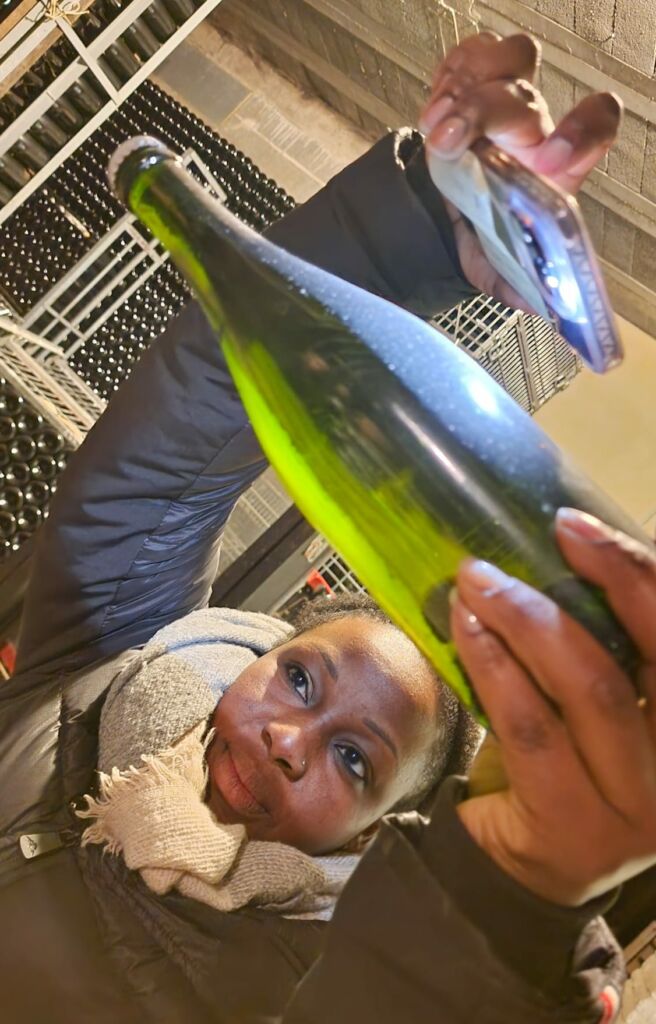
We had a quick tour around the winery and we were able to see the many Champagne bottles ageing. I was interested to see the bottles in the ‘gyro palate’ waiting to be disgorged. This automatically turns the bottles to slowly get the sediment to the neck of the bottle. An interesting and convenient machine that means Erlande doesn’t have to do it all by hand these days!
Champagne Tasting & a Tower of Gougère
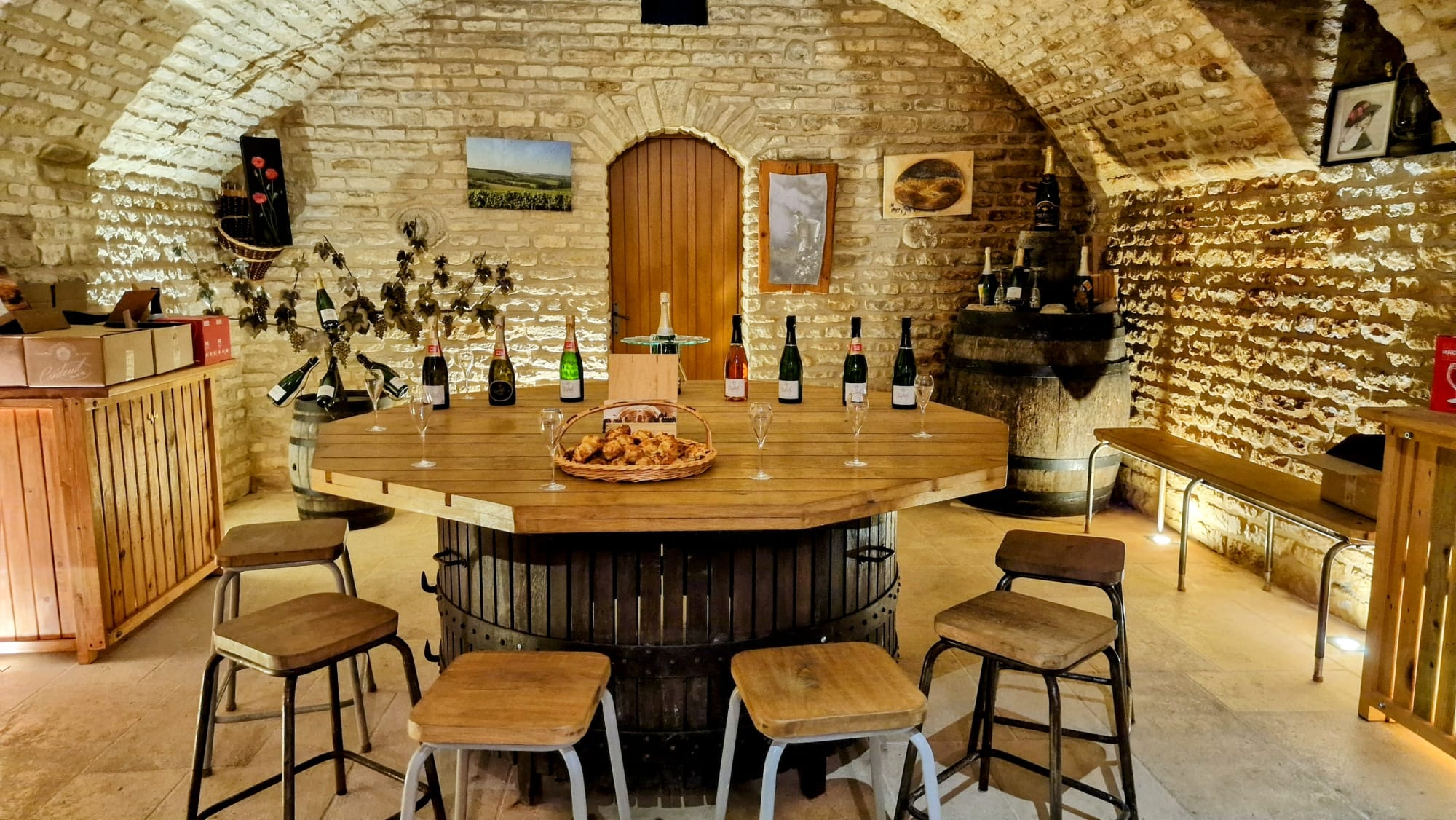
We made our way to the cellar and this was a sight to be seen. There was an amazing room with a huge round table was decked with tasting glasses ready for our Champagne tasting. A tower of gougères that her father had made for us caught my eye immediately!
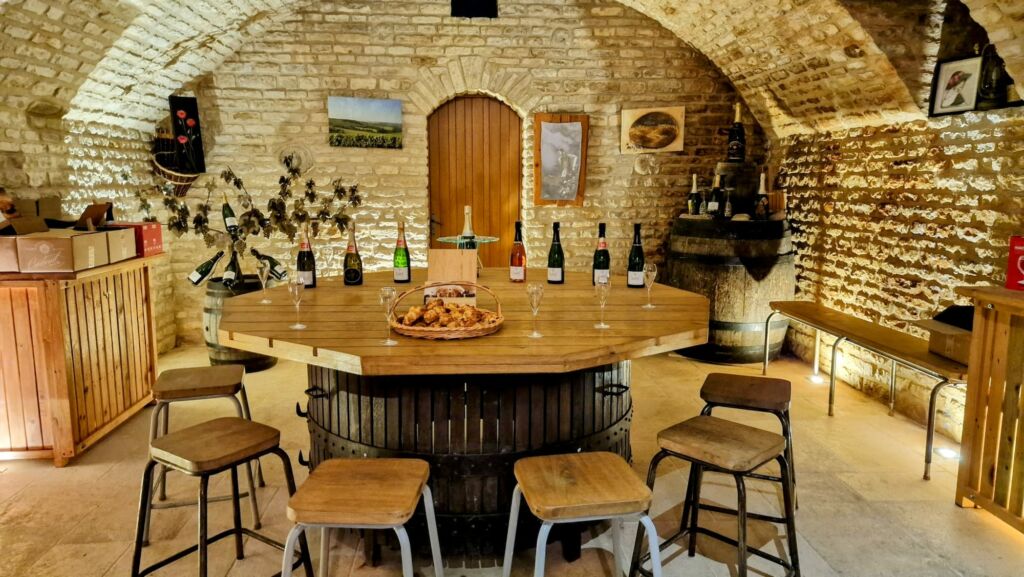
Erlande talked us through the different Champagne. They age Champagne Cordeuil aged for a minimum of 7 years on the lees. This is what gives it depth and character with that lovely brioche flavour.
My personal favourite was our new import Champagne, the brut Nature. Made using majority of Pinot Noir at 85% and 15% Chardonnay, it is soft, fruity and elegant. The high percentage of Pinot Noir adds plenty of fruit with balancing acidity, a long finish with a gentle mousse. A must try!
Terri

Hungarian Wine Summit
‘Oh Lucky Man!’
There are times in my life when I wonder what I have done to deserve something. Here in a good way I am now in the Hungarian Wine Summit! 20 years after my first wine trip to Hungary, courtesy of the kindness of Hugh Johnson. He arranged a visit to the recently created Royal Tokai Company. They were putting the historic wine back on the vinous map post-communism.
This time I am the lucky recipient of a “golden ticket” to the Hungarian Wine Summit. Hopefully it will become an annual event to educate and entertain wine professionals from around the world. The lovely Monika Gyenes of Best of Hungary website put my name forward as a Welsh representative. Hungary is not a big producer in global terms, around 14th in the world rankings and 1% of world production. Its 400m bottles a year probably equates to less than half of the production of E & J Gallo!
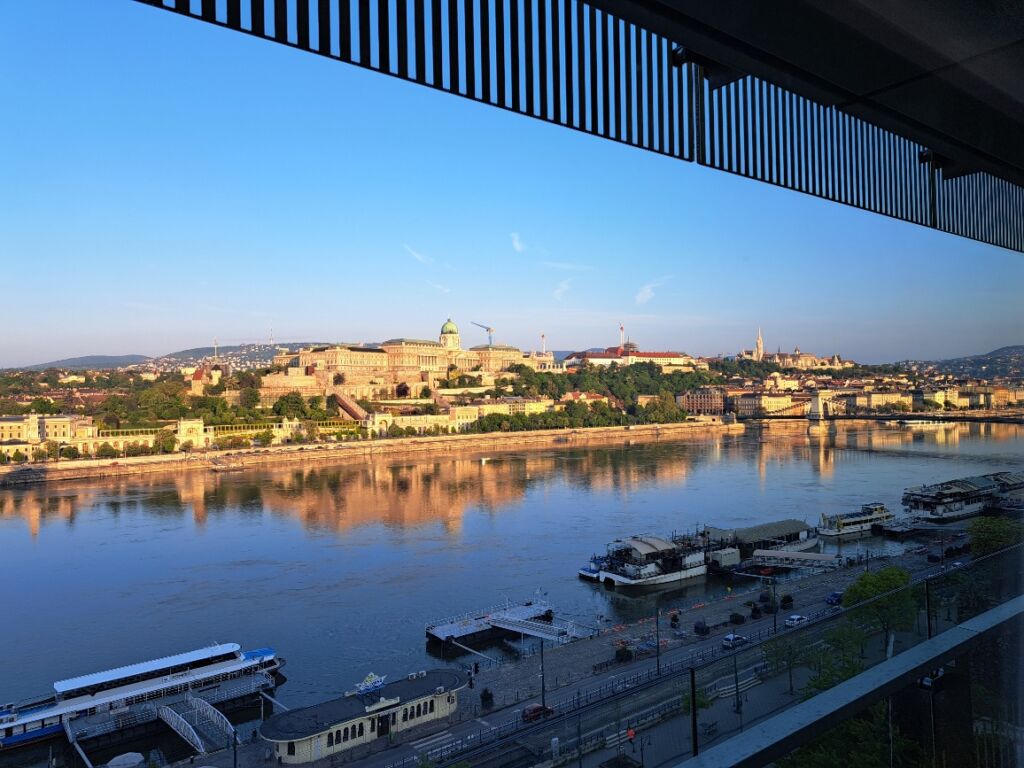
Landing on a flight from Birmingham to Budapest I am whisked from the airport. I’m dropped outside the Marriott Hotel in Pest. It looks across the Danube at Castle Hill on the Buda side of the river. I have time to stroll down the river to the indoor market. Then crossing the mighty Danube (still with a thousand miles to flow before it enters the Black Sea in Romania) and sauntering back to check-in at the river-side hotel.
Rubbing Shoulders with Masters of Wine
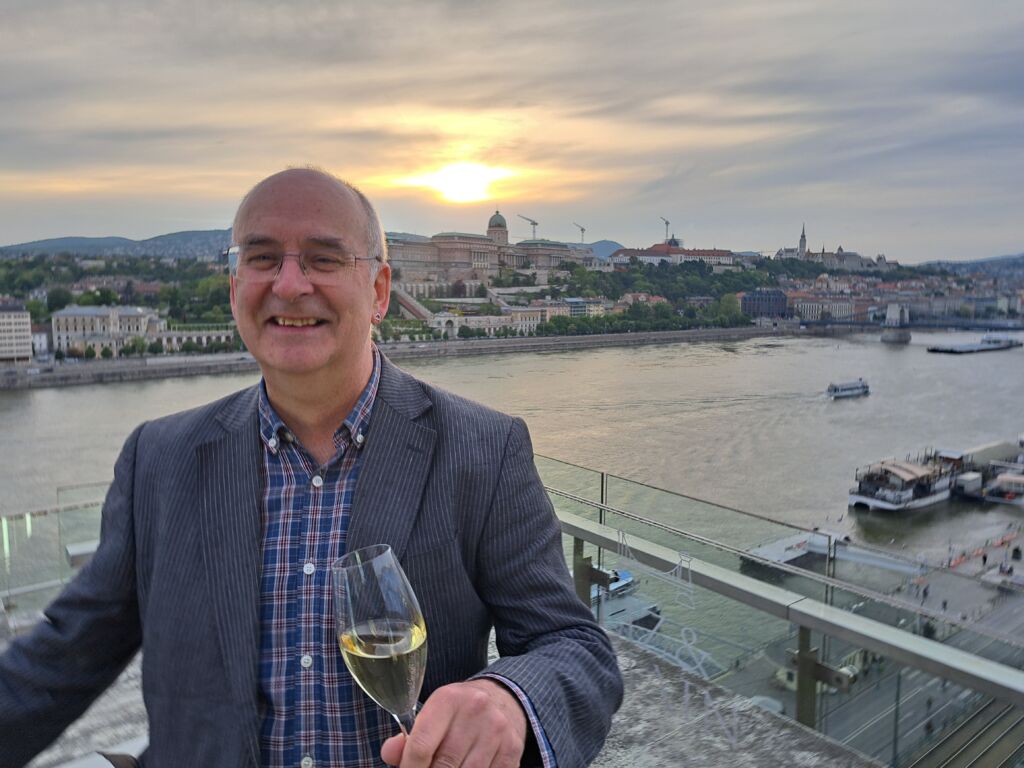
As friends will know I do not have an extensive wardrobe. I have brought the lighter of the two jackets I own for the evening launch party on the rather chilly top floor Liz and Chain Bar. Speeches by the great and worthy of Hungarian wine explain how far the industry has come in the years since I was last here. The dapper host is Gergely (Greg to the linguistically challenged) with an immaculate waxed moustache and even more impressive English accent. We have a selection of wines to taste and drink, supplemented by beautiful, substantial and sophisticated canapes. It is hard not to be somewhat overawed rubbing shoulders with Masters of Wine, top Sommeliers from Shanghai and Korea, journalists, consultants and wine educators from Europe, America and around the world.
Back to School – Masterclasses
Next morning at 8:00 an expectant group meets in the foyer and is transported across the river to a beautiful new conference centre and concert hall. A perfect blend of renovation of post-industrial buildings and new modern architecture within a calm and quiet park while still in the centre of the city. After registration and introductory speeches, we are treated to a range of masterclasses on fabulous Tokaj wines, the intricacies of Hungary’s volcanic soils, new sustainable wineries etc. The only shame was that you could not sit-in on more of them! After a fine restorative buffet, it was on to taste the wines from wineries that had been setting up at the back of the hall in the morning. A range of 30 or more quality producers from across the country.
With a short break to recover out in the sunshine it was on to the neighbouring hall for further discussions and sustenance. We were treated to an interesting performance by Deva, a talented young musician playing “Techno-Hungarian Folk”! After a full and intense day, we were taken back to the hotel across the river, with just time for a small glass of Furmint before turning in for the night.
Flying Saucers!
The following morning, we are up early again to start our “Study Tours”. The sleepy crew in the foyer were split into three groups with varying routes across the country. Our bus made its way against the morning traffic out of Budapest and on to the motorway for the 3 ½ hour drive to the far east of the country (next stop Ukraine) and the famous Tokaj region.
First stop was the incredible Sauzka winery. We landed below the winery which had looked from a distance a lot like 2 flying saucers embedded in the hillside. Word has it that €25 million has been spent here to create a stunning vineyard and winery. We tasted excellent fizz and still wines in the futuristic tank and barrel room cut into the hillside. There can be few more impressive wineries anywhere in the world. The “little snack lunch” would be hard to beat… and not just on understatement!
We were then treated to tours and tastings at two more Tokaj cellars before arriving in the rain at the Gróf Degenfeld Hotel. One final tour before enjoying a wonderful dinner at which all the courses were matched with the estates white Tokaj wines. Amazingly the best match of the night was a super-rich and sweet 6 Puttonyos Aszú wine with a Venison Ragout!
The next morning, I managed to get myself up early enough to take a short walk in the rain up the hill behind the hotel to the Theresa Chapel. It has splendid views over the surrounding vineyards to the Tokaj hill. Its volcanic shape a perfect indication of the activity that has created the topography and soils of so much of northern Hungary.
Tasting on the Hoof – Eger
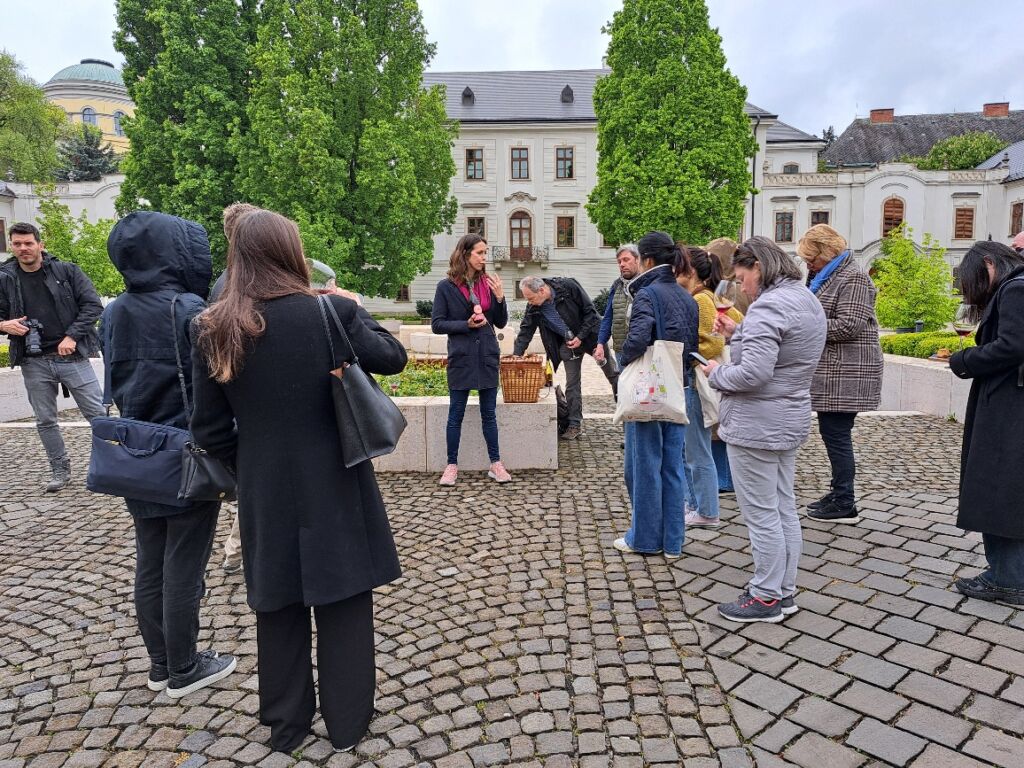
The walk and fine breakfast set me up for another packed day of visits and tastings. This time the target is Eger, halfway back to Budapest and the home of another famous Hungarian wine – “Bull’s Blood” (the name relates to the Ottoman siege of the town in 1552 when according to Hungarian folklore 2000 loyal soldiers saw off an Ottoman army of 40,000) more correctly called Egri Bikaver. The town is packed with historical sites which the daughter of the late revered Gál Tobor showed us around with a walking “Tasting Tour” (different wines at different sites) finishing below the famous castle.
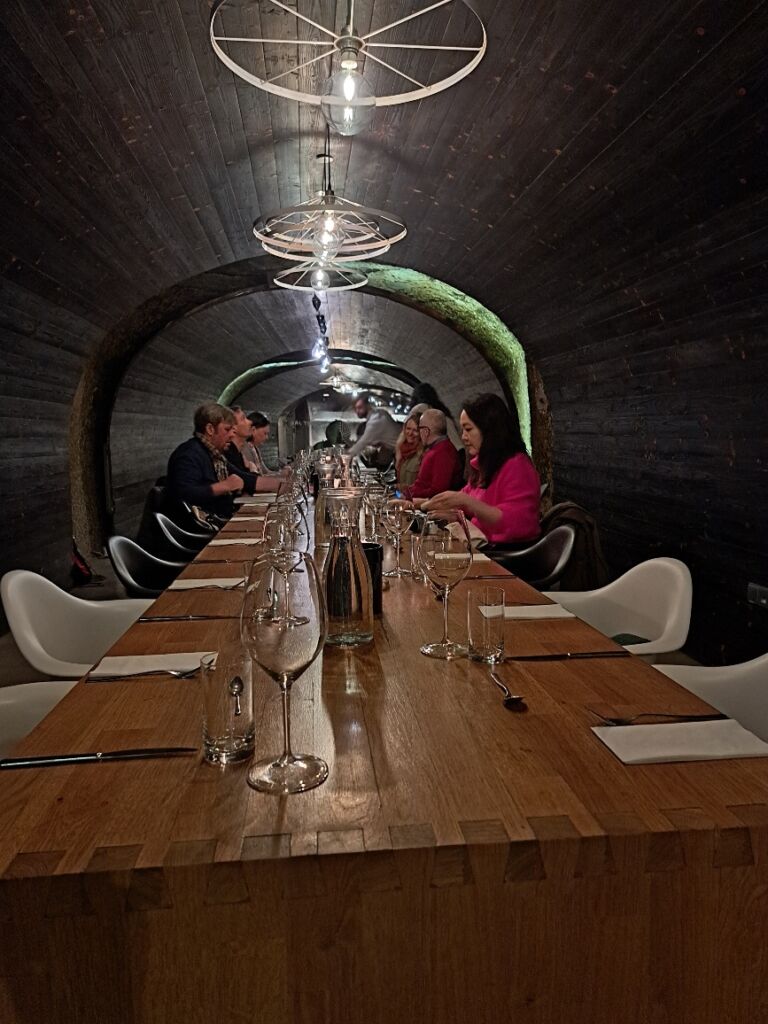
We were treated to a delicious subterranean lunch at the longest table I’ve ever seen (sure to seat 50) in one of the tunnels that leads to the Cellars. We then moved on to the fabulous San Andrea winery. The tasting and introduction were in the heart of the underground cellar, this time only excavated in the last 20 years to create the winery. Back above ground we were able to taste from some 20 producers of the region. Quality was great across the board. The wines, both red and white, are overwhelmingly blends, the reds dominated by Kékfrankos. The key words to remember were cold climate, volcanic soils and blends!
Climate Change – The end of Tokaj?
Another recurring theme across the three days had been how much climate had already changed over the last 20 years (definitely bringing Kékfrankos to new levels of ripeness). The worry will be, as in so many great wine regions of the world, where will we be heading next. A sobering comment from one top sweet Tokai Aszú producers was that it may be impossible to make these historic, unique wines within the next two decades.
It may seem that it was a was all a bit of a jolly but decisions were made and I look forward to receiving a pallet of new Hungarian wines in the next few weeks and to start spreading the word about the variety and quality of wines coming out of the country today. If you’re eager to taste join us on the 21st of June for our Hungarian wine tasting – taste 6 wines & a bowl of traditional goulash! £25 p.p. but be quick as there’s only limited spaces available.
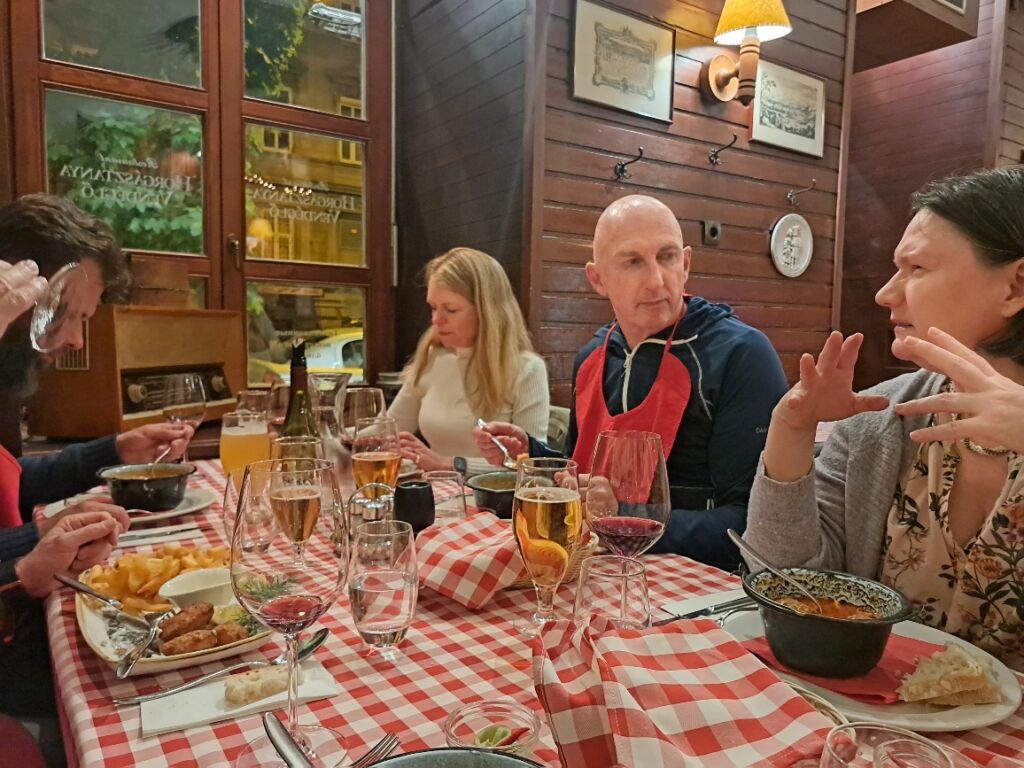
We didn’t get back to Budapest until dusk. But enough time for a small splinter group to head across the Danube to a traditional fish restaurant. We enjoy a thick and wholesome fish soup, washed down perfectly by a red Kadarka wine. A slower amble home by the twinkling lights of the river could not have been a better finish to a fabulous educational and enjoyable trip to the heart of old Europe.
The Old Bridge Hotel
We visit old friends in London every now and again and our favourite stop on the way home is The Old Bridge Hotel. It’s a homely and comfortable hotel in Huntingdon. This is also Oliver Cromwell’s birthplace as it happens. The Old Bridge Hotel has a good restaurant and genuinely welcoming, friendly and professional staff.
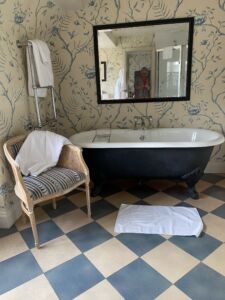
Old Bridge Hotel Wine Shop
Of course there is another attraction for us! It has a good wine shop with an enomatic machine. Have some fun tasting small measures from a good selection of wines. You just put money on a card and off you go to the machine to choose a wine to taste.
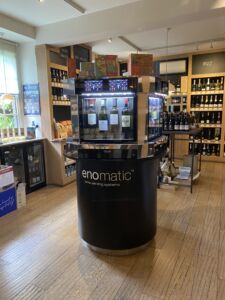
Good Wine Selection
Having the shop means they have a very fair pricing policy on wine in their restaurant and an excellent choice of wines by the glass. Dylan took the opportunity to taste Newton Johnson wines from South Africa. We stock some of their lines in our shop Pinot Noir and Chardonnay as well as the Albariño. Their wines are extremely well made and are often hailed as the best Burgundy style wines outside of Burgundy.
A Good Sommelier Makes the Night
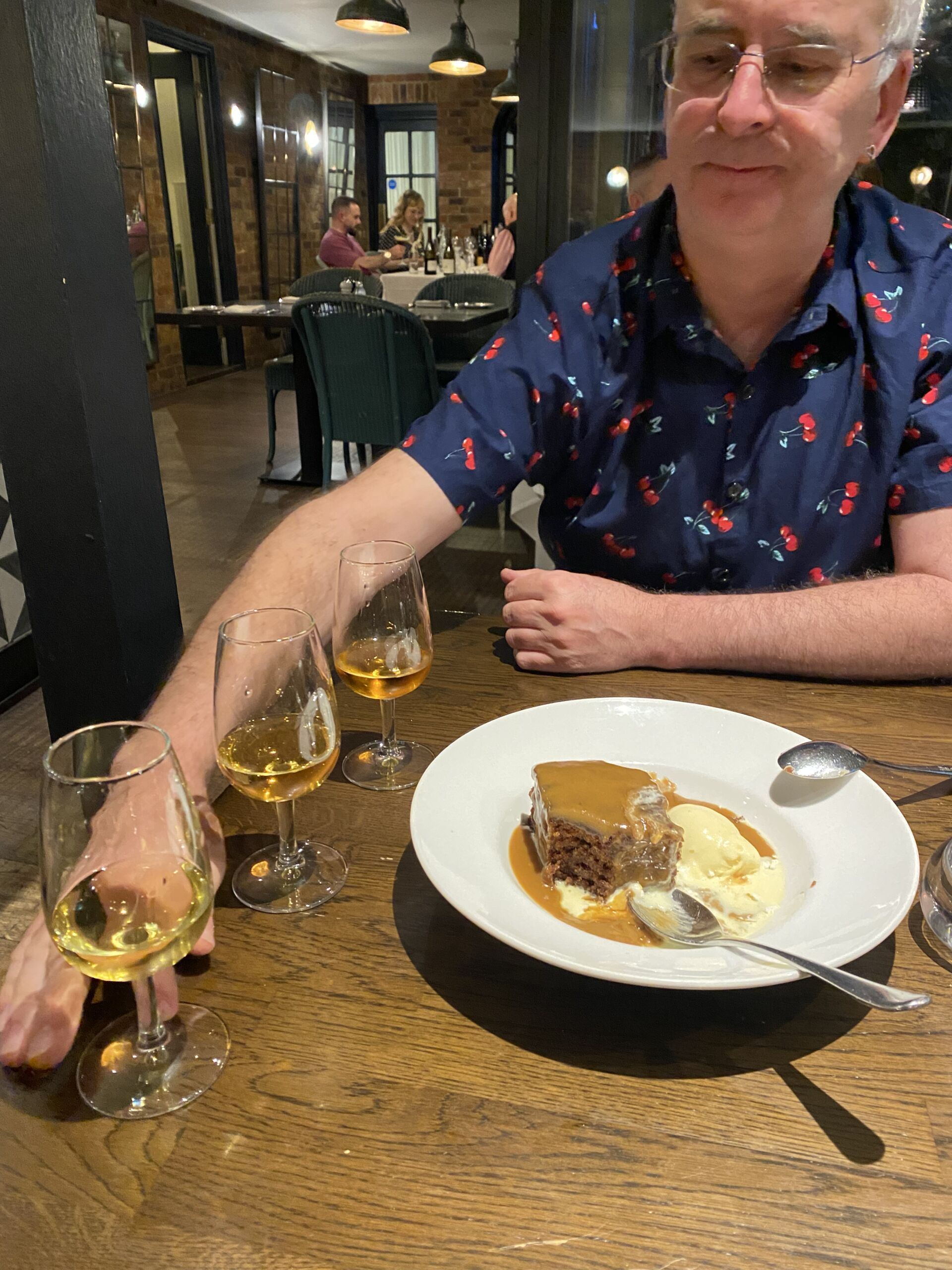
The sommelier was great fun last night and very knowledgable. We ended our meal with him testing us on 3 dessert wines! A lightly fortified Muscat, a Tokaj and a New Zealand Pinot Gris. The Greywacke Pinot Gris was a winner and we shall add that to our Greywacke wine collection in the shop.
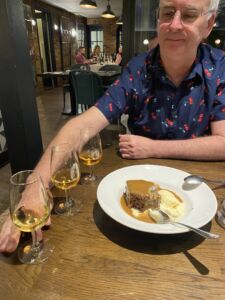
There are some great offers, Sunday night deal is exceptional value. We paid £95 for our room and breakfast (also very good with top notch marmalade – very important!) It’s a good base to visit Cambridge.
Llinos
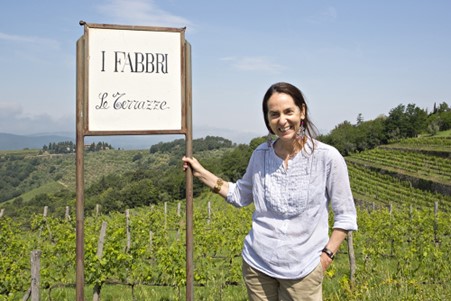
I Fabbri
Dylan’s Travels to Chianti
What a night at I Fabbri. I had to do some serious rally driving to arrive at all. It had been a long four and a half hour drive from Cantinarte in Abruzzo. The last half or particularly 20 minutes was challenging. The tarmac ran out, the mist was down and it was raining. I was aware I was going to be late having not expected the conditions or the twisting, undulating forest track.
Arriving at I Fabbri
I finally arrived at the little square where Susanna had told me to park. With no visibility I had little idea which way to go into the mist: up, down, north, south, east or west! A forester in a Land Rover emerged and offered for me to follow him. He indicated for me to turn down a narrow track and I finally arrived at the Castello di Lamole.
The Wine Maker-Importer Relationship!
Susanna was waiting and directed me into a little parking space. We hugged like old friends, but we have only met briefly maybe three times! Is it because of the product you have been selling for years that means you feel like such old companions? In the same way as when you meet old college friends and you can pick up again at the drop of a hat we chat away!
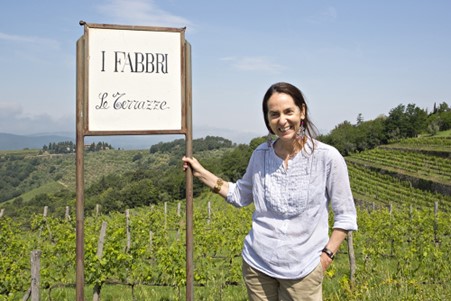
She led me up some stone steps to a beautiful compact tasting room. On another day I’m sure it would have had a spectacular view over her treasured vines.
She had left a successful career in fashion in Florence more than 20 years earlier to come and resurrect her family’s vineyard. This is a family history she can trace back 400 years. I-Fabbri (blacksmiths) maybe attests their former graft in the north of Italy but surely four centuries of lineage is enough for a family to claim roots.
Tuscany
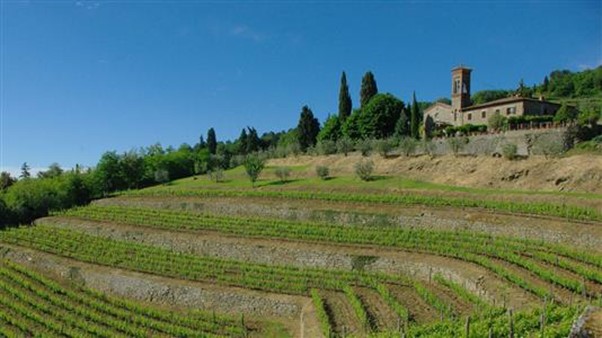
The vineyards are some of the highest in Tuscany, really not too far from Florence, maybe 35 kilometres (which even in the day could take a heroic hour or more in a motor car on a night like tonight). But tonight, as the light outside faded, I might as well have been visiting a vineyard in the depths of Armenia or Moldova or halfway up the Catalan Pyrenees!
The Tasting
Two tables were set – one had glasses and three bottles of Suzanna’s labours and hard to ignore was another with two place settings bowl and dinner plates, neat napkins, more glasses. I would not starve before losing myself in the forest later!
We tasted through her different cuvees as she explained the nuances between them. The bedrock of Tuscany and Chianti is Sangiovese and make up the majority of her wines – bar one. A little proportion of Caniolo here, 20% Merlot in the Olinto giving a hint of plumper fruit and one cuvee of Merlot from vines she planted before 2000 as she re invigorated her ancient family fields and terraces of vines.
Lamole Chianti Classico
100% Sangiovese Grosso come from the highest vines up to 630 metres (most of the way up our local mountain Cader Idris as I look out from my kitchen in Dolgellau now). Aged in cement tanks for 12 months. ‘Cement’ just doesn’t sound so romantic but is the bedrock of some great wines. I find age and experience tend to cool the enthusiasm of wine makers for oak (once again awarded Tre Bicchieri in the prestigious Gambero Rosso Guide).
Terra di Lamole
This wine has the addition of 10% Canaiolo grapes from lower vineyards (down at 550 metres!) and some from her oldest vines planted around her birth in the 1960s. Here there is some use of oak a proportion spending time in 500 litre French oak barrels.
Riserva Chianti Classico
The Chianti is all made in 500 litre French Tonneau, the 2020 for around a year. This use of not new oak is about giving texture to the wine and for sure rounding the flavours.
Grand Selection Sangiovese Grosso
The Grand Selection Sangiovese Grosso is from some of the oldest vines. It is only made in the best years and is aged in 1500 litre Allier tonneaux for 24 months. This is the highest representation of what those 60-year-old vines can do.
“Il Doccio” 2018
This finished off the tasting. It is 100 % Merlot and demonstrates what restraint in the high hills of Lamole can produce. It is delicious but not overblown.
Susanna is erudite, modest and charming – her wines reflect this. They are powerful but not blockbusters where impact is impressive but whose pleasure may wane. With the wines of I Fabbri the pleasure grows. The complexity reveals itself: the fruit is there, the acidity is there, the tannins too. It is the balance that makes these wines so good.
And the Socialising!
So back to the other table. Hospitality in Italy comes hand in hand with my work that is wine but so often food makes the experience so special. I follow her down another stone staircase to the kitchen below. A simple meal is ready to throw together. We break bread together, literally – crunchy croutons to scatter into the delicious potato and pumpkin soup, drizzled with a little fine olive oil. Now we relax and conversation can spread to how much olive oil one might use in a week (one litre for a family would be normal). Politics and the state of the world however horrible seems more bearable with some simple meatballs in tomato sauce and small diced fried potatoes garnished with rosemary and of course a glass of I Fabbri in hand.
Lost Again!
Such an experience would make any job worthwhile. I have to say it is not always so, but this is a visit to stay in one’s memory for years. The time has flown and I am late to reach my accommodation. Susanna wrapped up the slice apple tart for me to take with me. She phones the hotel to say I am on my way and will be there in good time. We go back out into the dark, mist and drizzle and hug like the old friends we now are! She gives me the sort of directions that are vital to get me straight to my hotel: left at the end of the track, right when you get to the bottom of the hill and right again by the pharmacy in the village. Instructions that seem so obvious immediately, but sadly half an hour later I’m now further from my bed than when I left her! Eventually I have headed up and over some strange mountain (Chianti is hilly) and I arrive at the hotel. A light is on, a little envelope on the doorstep with my key and directions to my room. I slept so well!
Click HERE to see her wines on our website.