

 01341422870
SEARCH

 01341422870
Welsh Wine Week
Welsh Wine Week 2nd – 11th June
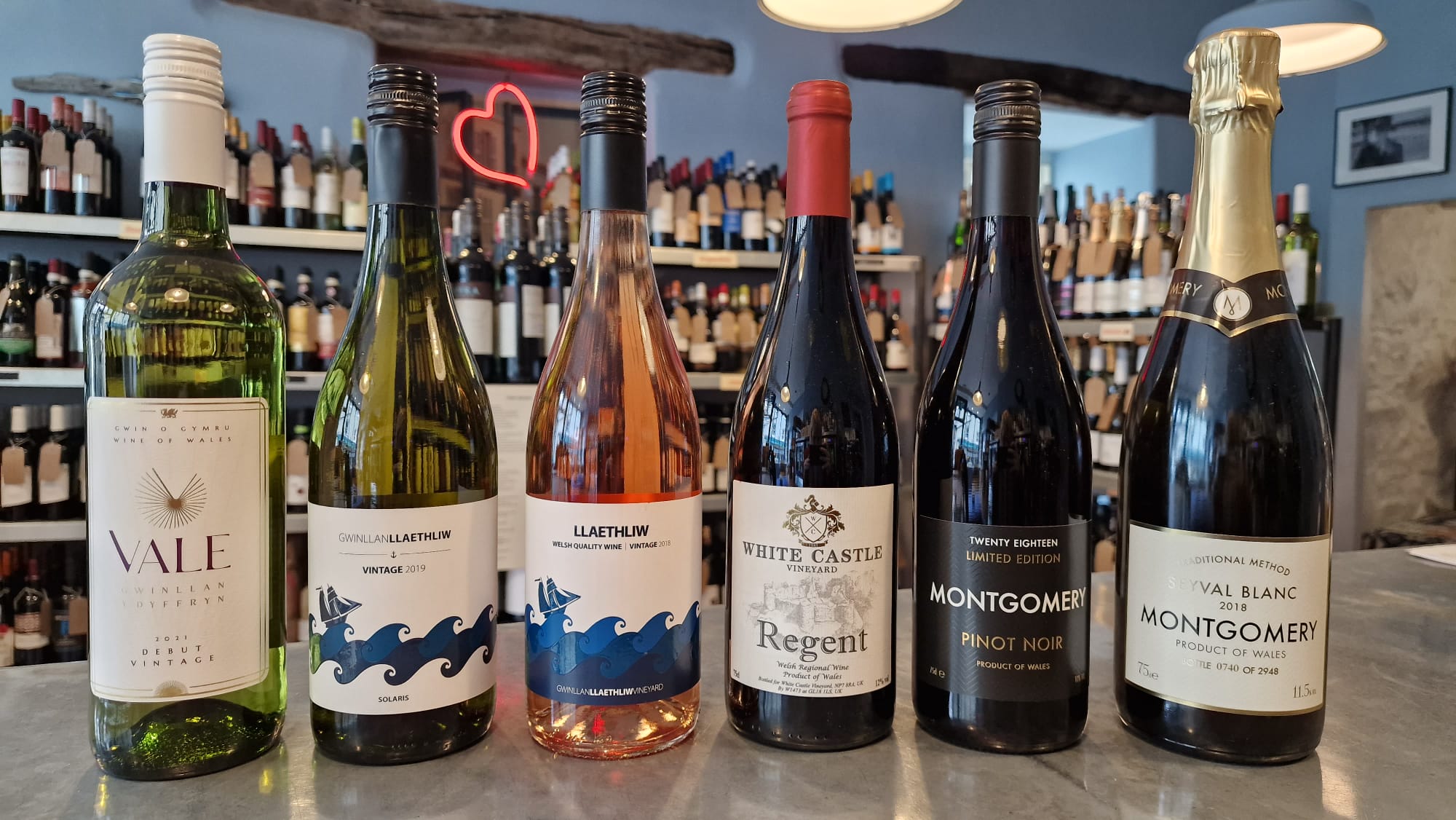
Welsh Wine Week celebrates the great wineries in Wales every year. In our shop, we stock a range of Welsh wine. Without fail, a number of customers will be surprised that we produce wine in Wales at all. If you want to see the ever-growing list of Welsh vineyards, pop over to the Vineyards of Wales website – you’ll be amazed!
Quality
Another thing that surprises customers is the quality of Welsh wines. The growers from all over Wales are well educated in their field and forever developing and experimenting. It’s a real treat to see biodynamic and organic practises in vineyards such as Ancre Hill. This of course is no mean feat in a country like Wales where keeping disease and rot at bay is tricky and a bit easier in a warmer, drier climate.
What’s New?
I cannot keep up with the new vineyards in Wales and this is very exciting. I think the newest development that promises to be a real a game changer is Robb and Nicola Merchant’s plans to develop a winery. If this is successful, it means they can produce their award winning wines on site as well as make wines for other Welsh growers.
Support the Development of Welsh Wine
You can be a part of this exciting project. White Castle have established a Crowdfunding page to raise funds and there are a number of options for you to choose. Have a look and see if you fancy supporting their brave development. It’s this kind of ‘go-for-it’ spirit that will help carve out a promising future for the Welsh wine industry.
Welsh Wine Week in Dylanwad
If you call in to our shop/cafe/bar during that week, we will have a range of Welsh wines for you to taste. Come and see for yourself what the fuss is about if you haven’t tried them before. Alternatively, just enjoy a glass and relax or pop onto our website to discover Welsh wine! Iechyd da!
The Italian Tour
The Italian Tour
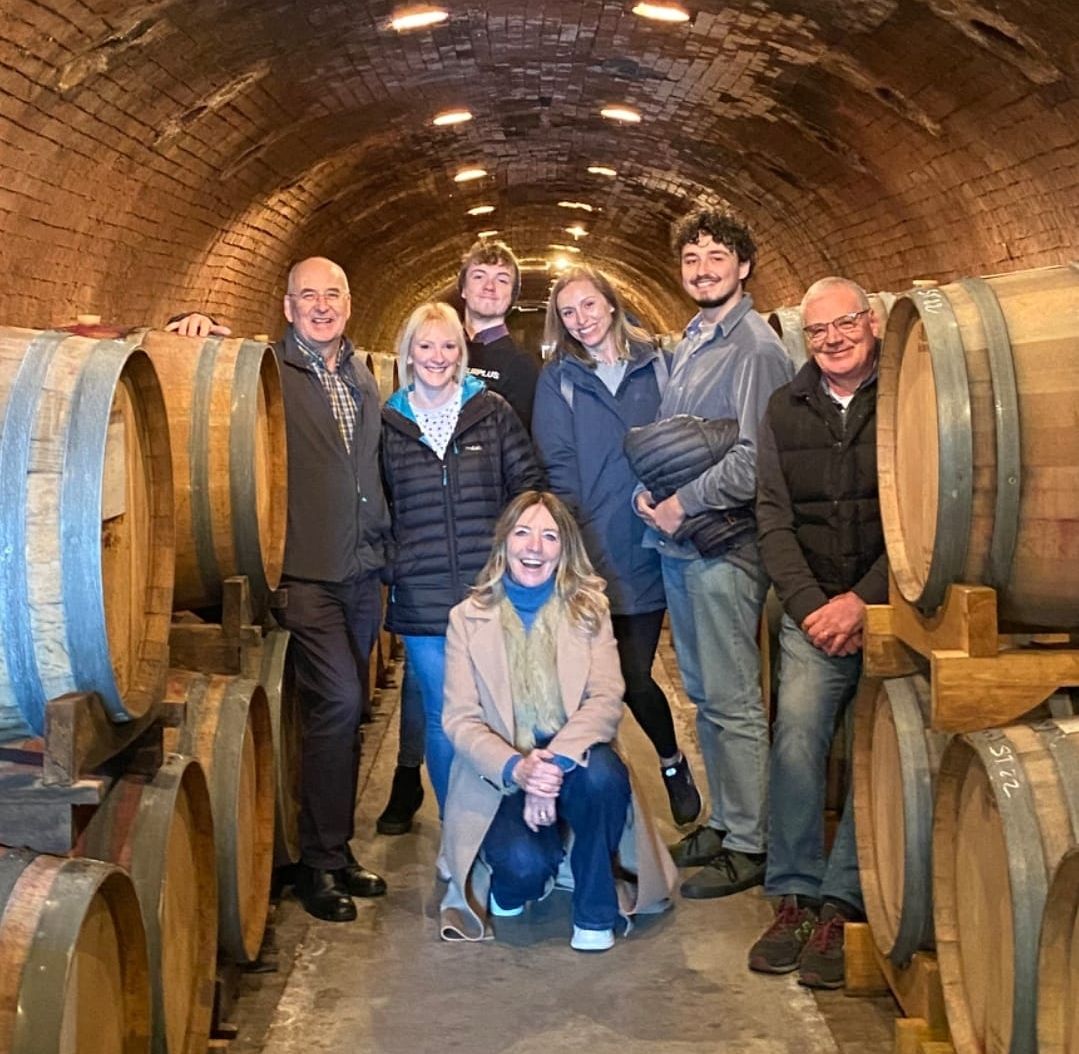
How exciting it was to set off on our first training trip to some of the vineyards that Gwin Dylanwad Wine import from. The Italian tour promised some serious training and I was looking forward to it. We set off early on Sunday morning and landed in our accommodation at the foothills of the Dolomites late that night.
I know a lot of people are saying it’s a cushy number being taken off to visit vineyards but it was actually a lot of travelling. Without fail, every wine maker we visited expressed shock at how far away we were staying (about 45 minutes). It was a lot of driving but the experience of travelling through the Italian countryside was worth it and the views were spectacular. And in Wales, we are used to travelling! It was also a good opportunity for a bit of team bonding.
The Italian Tour – Bidoli
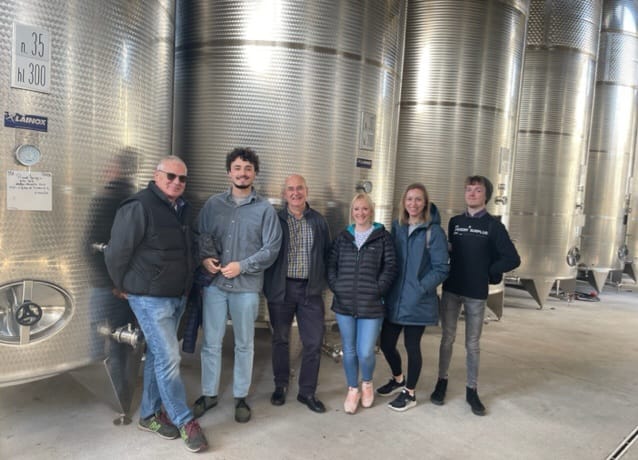
Bidoli was a very smart winery. I was very impressed by the quality of the Pinot Grigio. This is the type of wine that I have found bland and uninteresting in the past. Bidoli’s was brimming with lovely stone fruits balanced with a good acidity and was very refreshing. It was a prime example of a well-made easy drinking wine.
I was struck by the welcoming and kind hosts of these vineyards who were so passionate about their company. Even if they didn’t own it, they were so enthusiastic about showcasing their product to the world – even a tiny company from Wales. As a result, we were wined and dined quite lavishly! Excellent food coupled with lots to drink and an absolute overload of education!
Perlage Winery
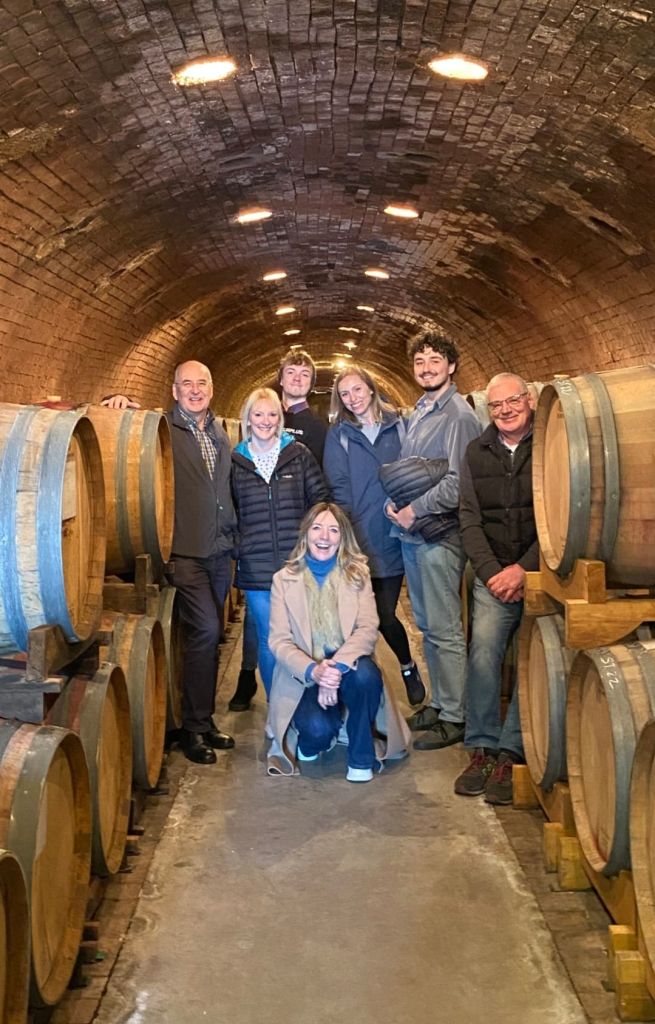
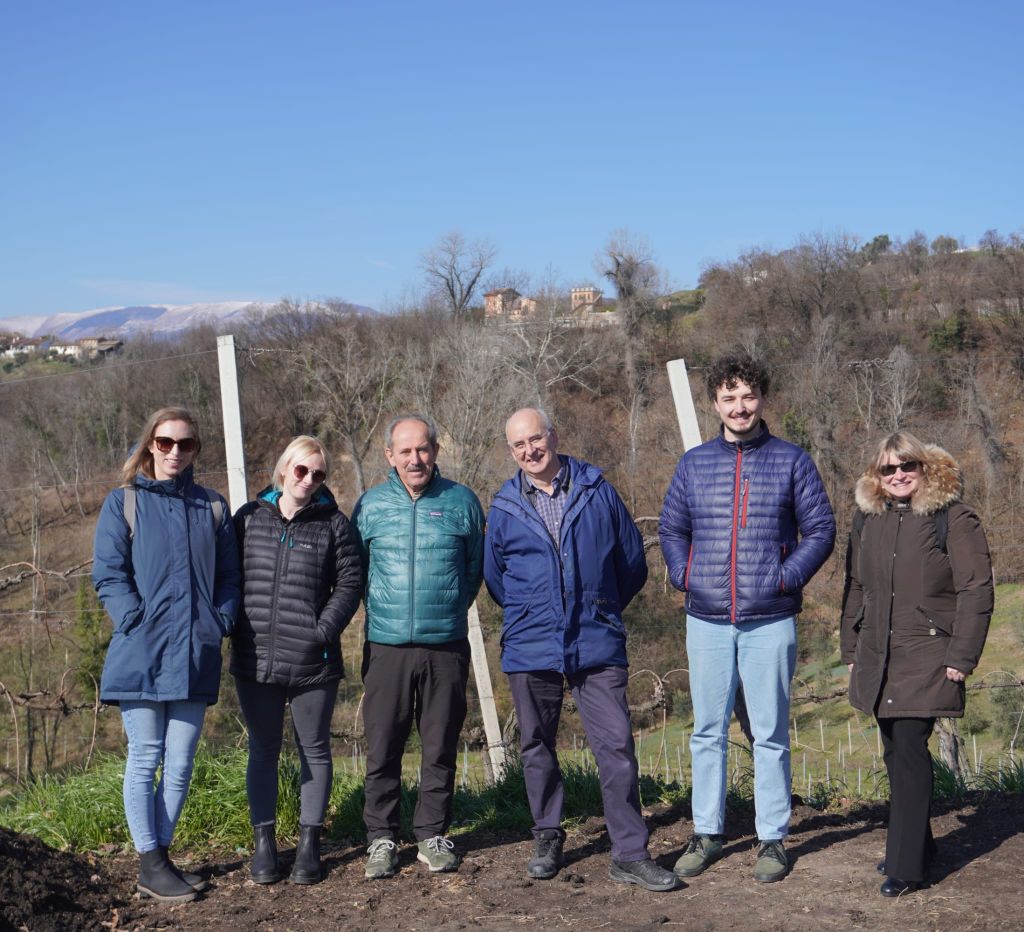
I really appreciated the organic practices of Perlage, especially while growing their grapes in Valdobbiadene for their Prosecco Canah. They use local compost and no pesticides. The steep slopes in this area are very impressive and are key to the production of top Prosecco. It was very interesting to be able to work through the 3 stages of the Canah. So we were able to taste the juice of the grapes before fermenting from one tank, then the wine after the first fermentation and the final product.
Special Italian Imports
So why not give these delicious wines a try? Have a look at Perlage on our website or Bidoli. I think the Perlage Sangiovese is a lovely smooth easy drinker and the Bidoli Pinot Grigio delle Venezie will change your mind if you think all Pinot Grigio is bland! Enjoy!
Osian
Welsh Wines
Some frequent questions about Welsh Wines
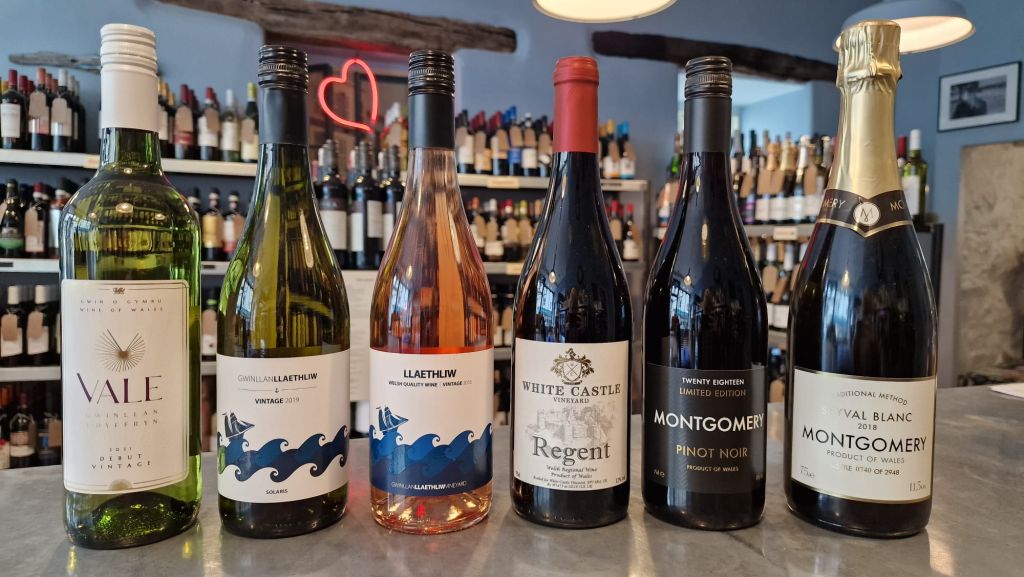
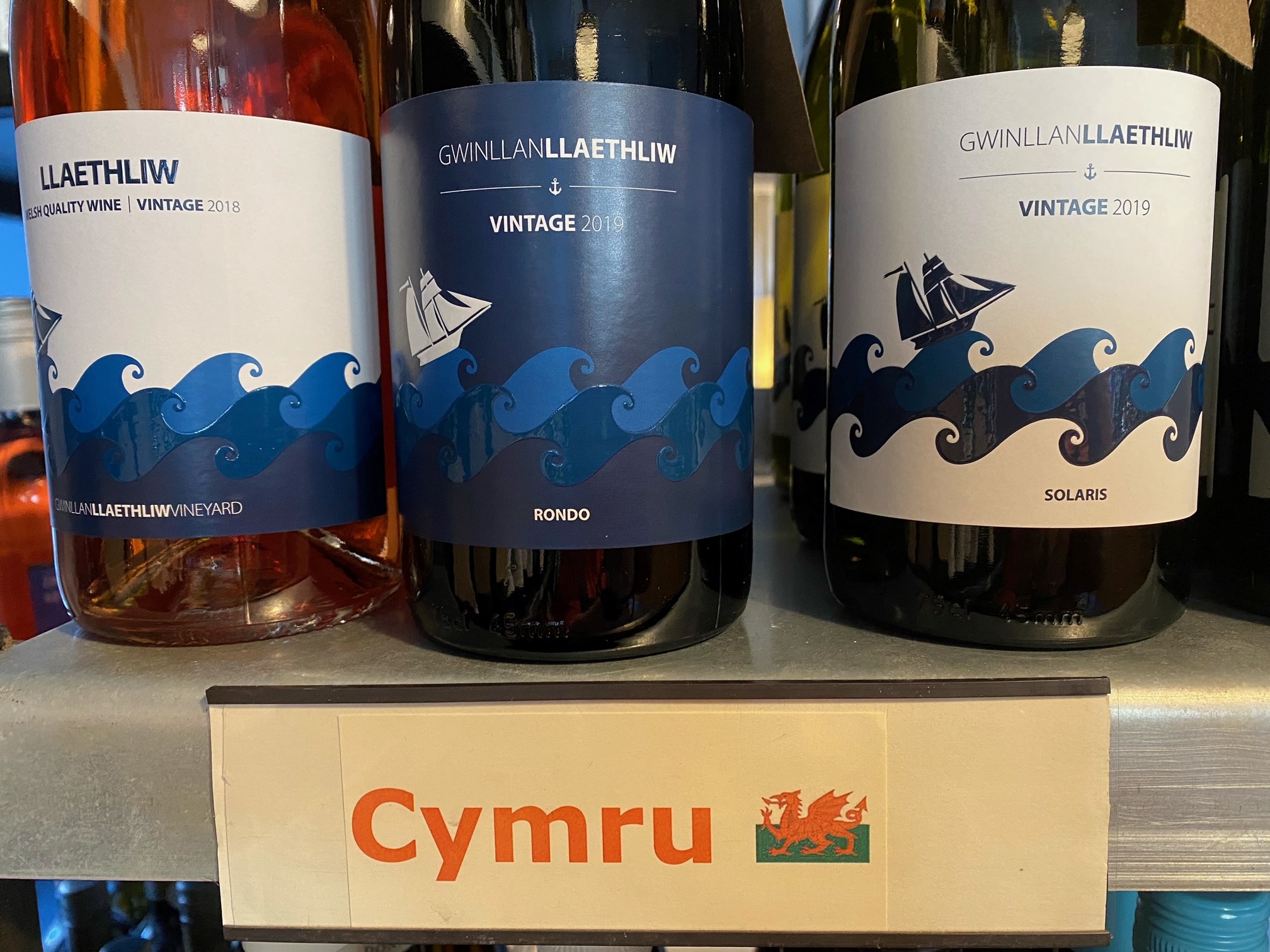
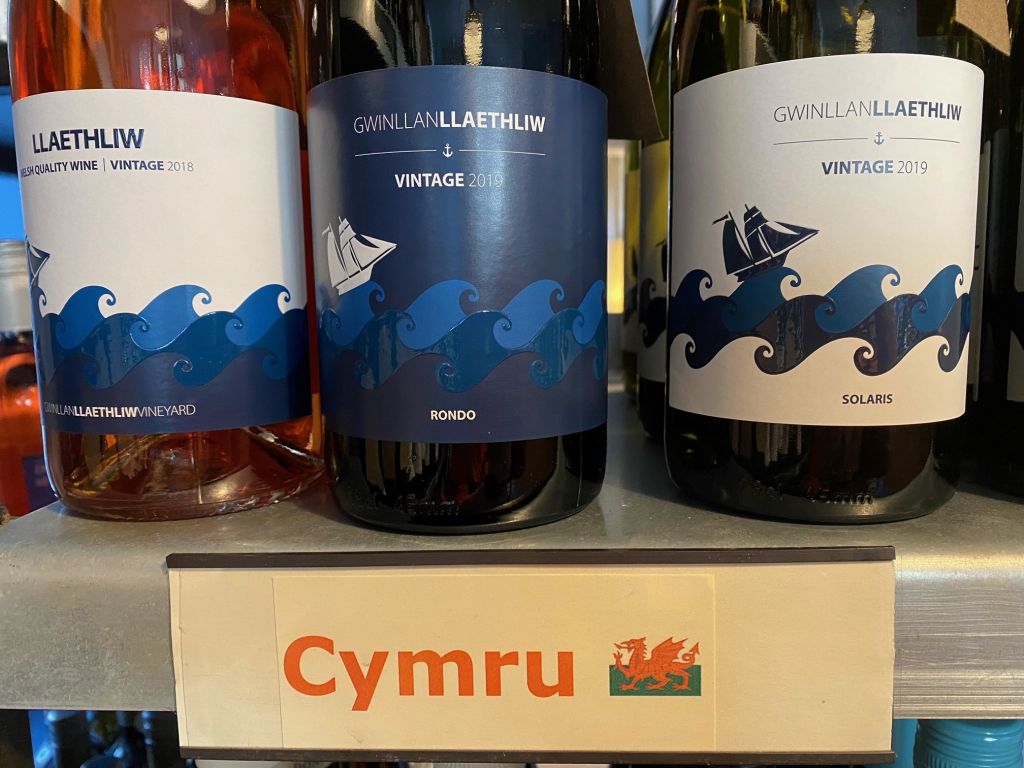
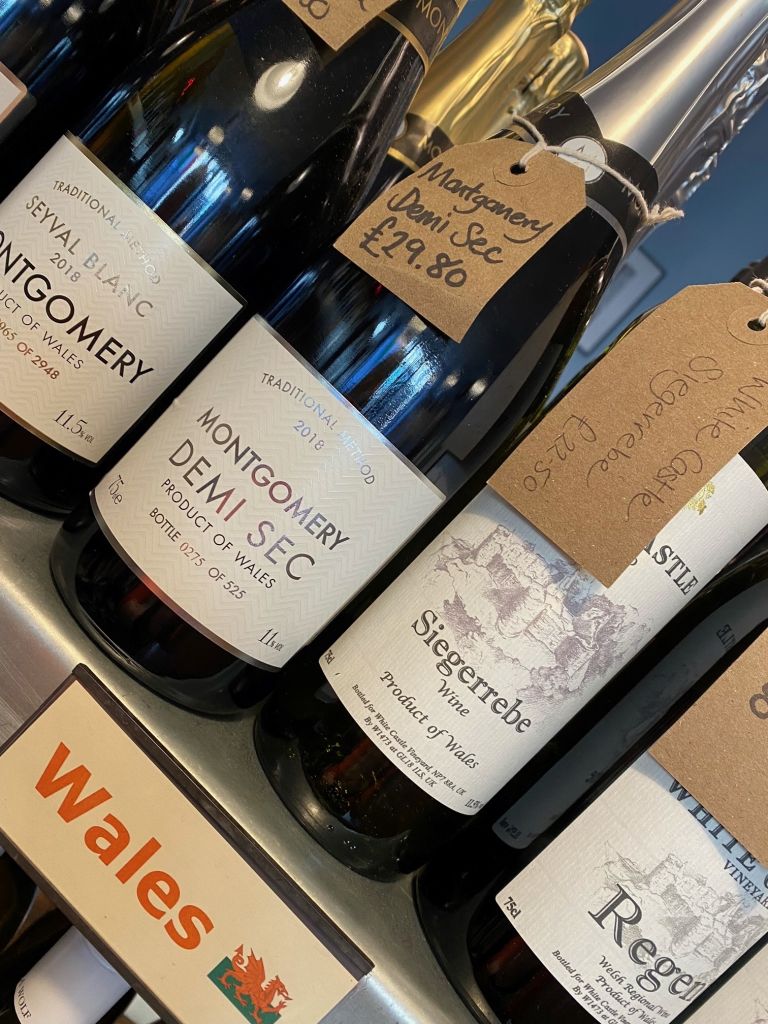
When customers visit our shop they are often surprised by the fact that there are Welsh wines. It is unusual really because we are on the cusp of the northern hemisphere limit for successfully growing wine grapes for commercial use. However, Welsh wines are increasing in number every year and there are some 40 Welsh vineyards by now. You will see several on our shelves, two being Montgomery and Llaethliw.
Where can grapes for Welsh wines be grown?
As well as finding the correct soil composition the most important fact is probably the aspect of the vineyard. A nice south facing slope is important so that the grapes catch as much of that ripening sun as possible in a cooler climate. One of the greatest problems a grape grower will face is the unpredictable weather. A late frost can decimate your crop and winds can destroy the vine itself. Hailstones or heavy rain can disrupt flowering and of course, damp conditions can encourage mould. So grape growing in Wales has its challenges.
Which grapes are used for Welsh wines?
If we take the above into account, then choosing grapes that are early ripening and disease resistant is wise. There are clones of grape varieties that can answer these needs. Solaris and Rondo are very popular varieties in Wales. The white is a fresh and dry fruity style that is probably comparable to a Sauvignon Blanc. Rondo, the red produces a light juicy fruit wine. There is a Pinot Noir clone (Précoce) which does very well in Wales (White Castle’s Gold Medal in the Decanter World Wine Awards for example) and many growers choose to grow this variety.
What kind of wine can I expect from Wales?
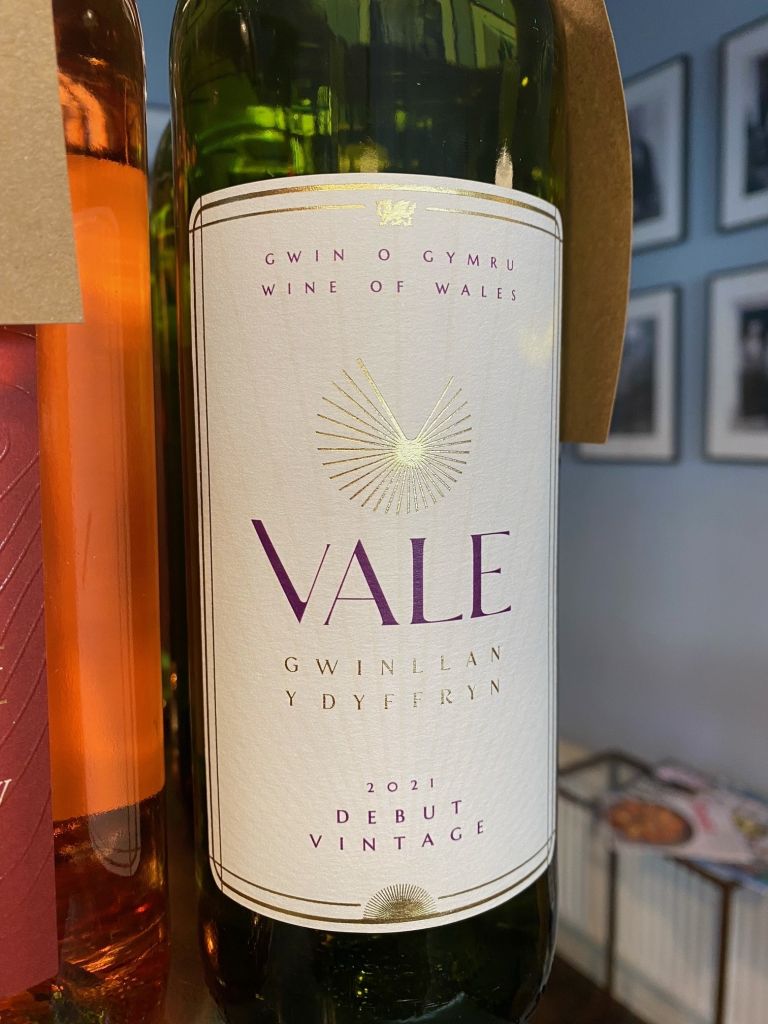
An ever growing variety is the answer. When you see that Ancre Hill have grown Albariño after studying the similarities in climate between Galicia and Monmouth it’s clear that the vision is there. White Castle Vineyard has also ventured with Cabernet Franc (and I see on social media that they’re plotting for something new here too!) It’s patently obvious that the skill and appetite to do something different is growing in Welsh wine makers. They’re doing their research and investigating different possibilities: Gwinllan Y Dyffryn planted a grape called Divico to try and achieve a more robust style of red and it’s also disease resistant. So we can see that we are just at the beginning of our wine adventure here in Wales. We have a range in the shop and there’s usually at least one open behind the bar for you to try. Click here for the online selection.
Newton Johnson
Newton Johnson, the Last Winery Visit
Newton Johnson is situated at the top of the Hemel-en-Aarde Valley. This translates as ‘heaven on earth’ and indeed it is a beautiful spot. We arrived in the morning for our final vineyard visit in South Africa. This one was exciting because we stock some of their wines.
Newton Johnson, Foodie Heaven
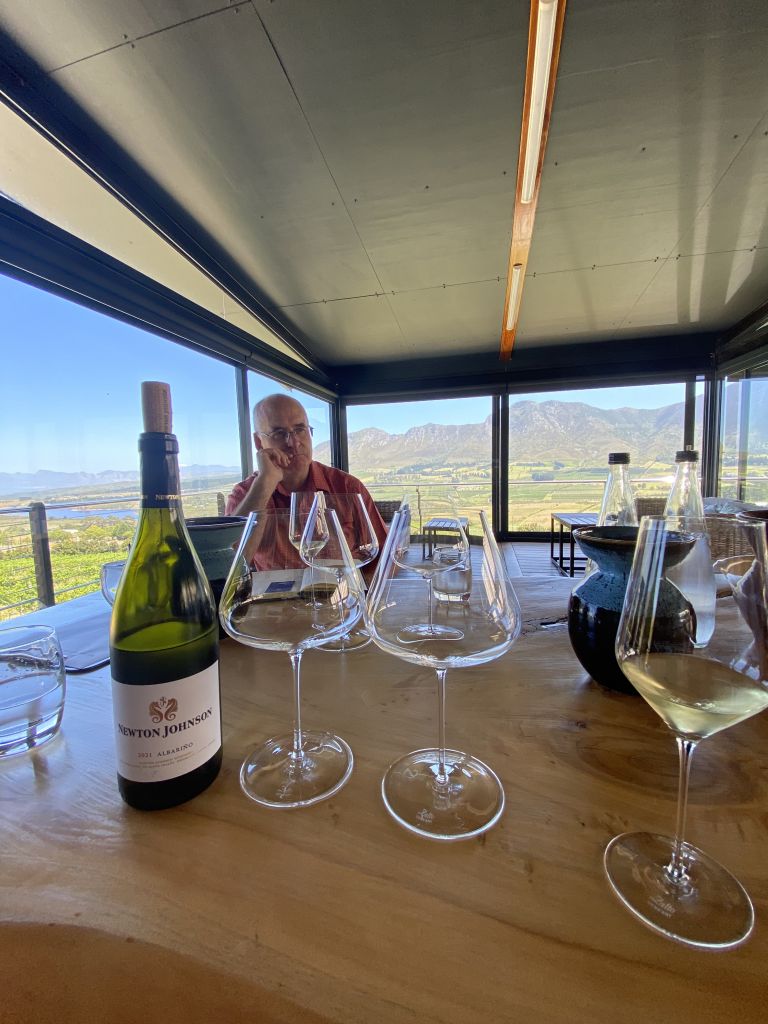
We met Bevan in the stunning tasting room that has pretty well all-round views of the valley and his vineyards. He introduced himself as being the one ‘who eats and drinks for a living’. Well, he does a really good job of the tour and tasting and if you’re ever there book in for lunch too, the food is delicious.
Pinot Noir
I asked him how they had started in this particular spot. His answer was, quite simply, that his father had ambitions to grow Pinot Noir. Therefore, they moved! This area is unusually close in proximity to the cooling influence of the South Atlantic Ocean and is further south than the traditional South African winelands. This makes Hemel-en-Aarde one of the coolest, most maritime, wine producing areas in the country. I think when you have that much dedication and ambition for the grape that you’ll relocate the whole family, you are going to produce something particularly good.
Chardonnay
His brother Gordon is the wine maker and we met him in the winery. The care taken is quite amazing, he will, for example, walk the vineyards and mark each bunch of grapes he wants to be picked for the first Chardonnay. Then, he’ll select the second picking for the next wine.
Tanks
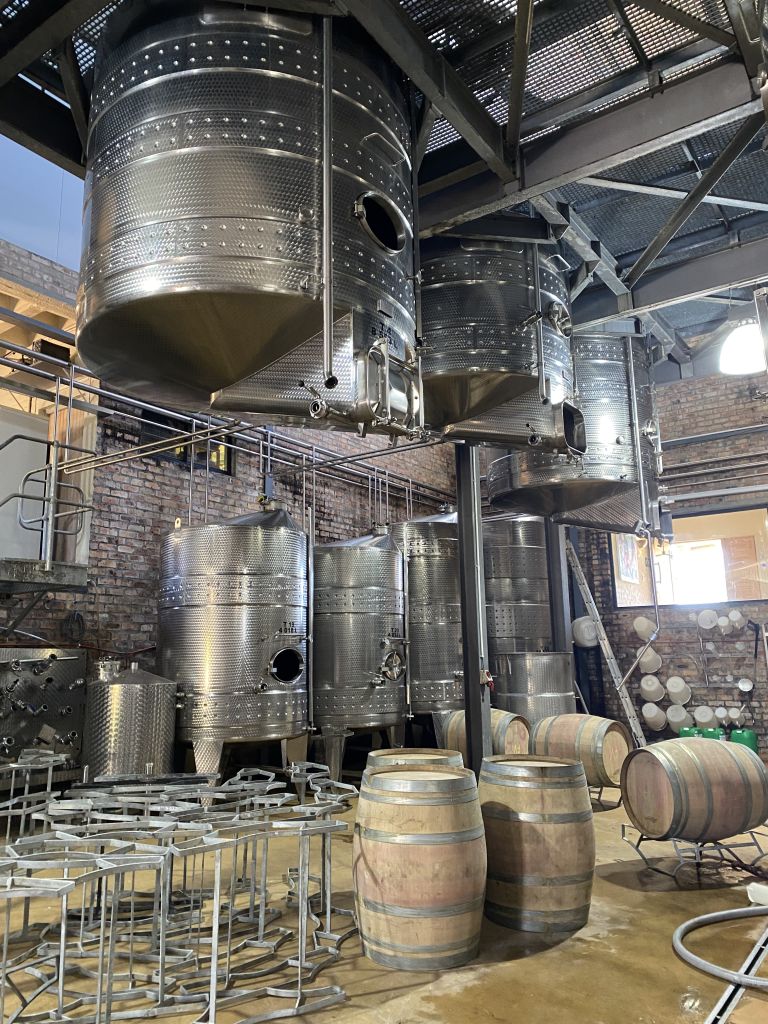
In the winery, we noticed suspended tanks and have never seen that before. This was in order for everything to be gravity fed rather than pumped through which seems a gentler way of handling the grapes.
Oak Barrels
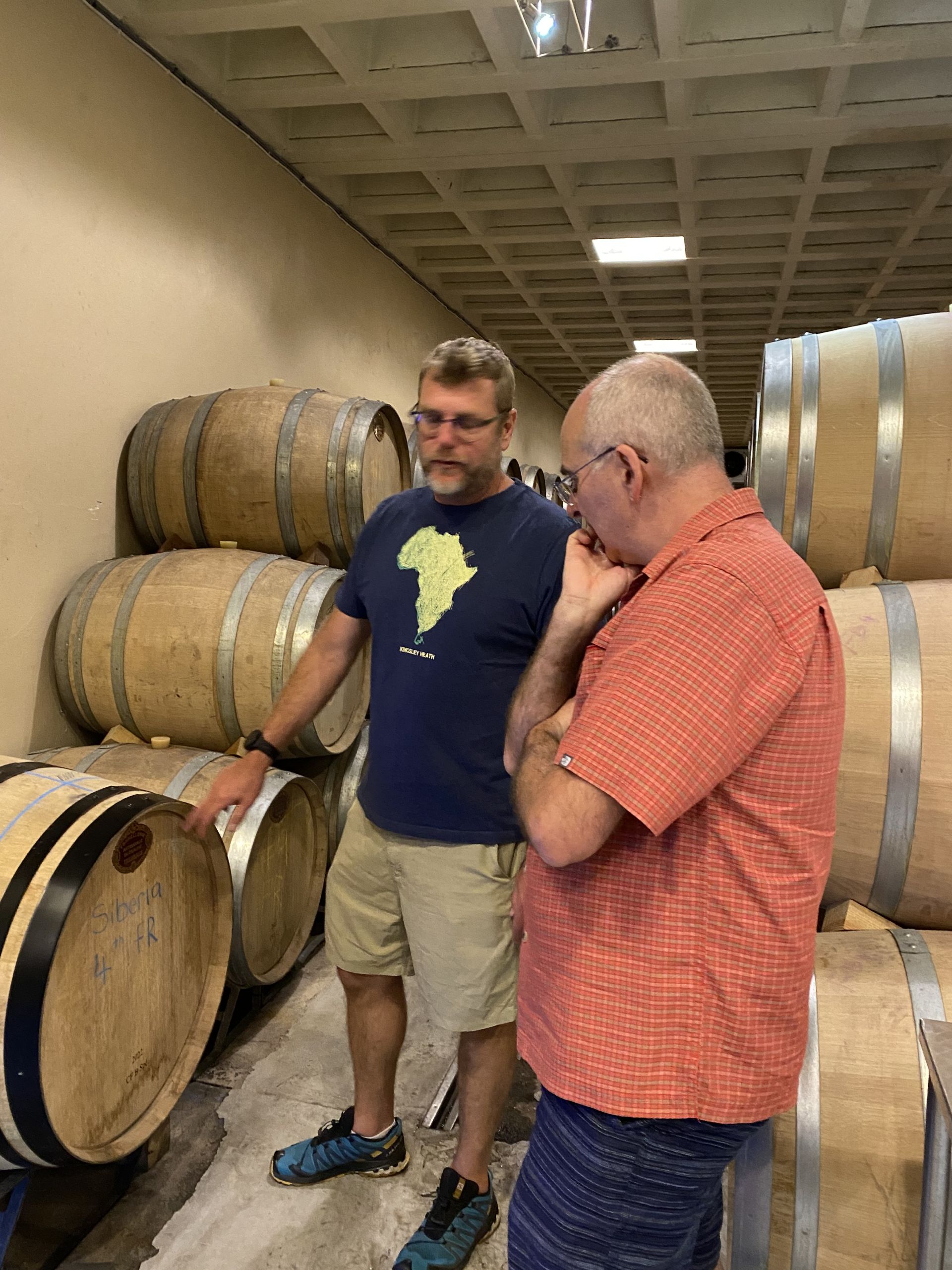
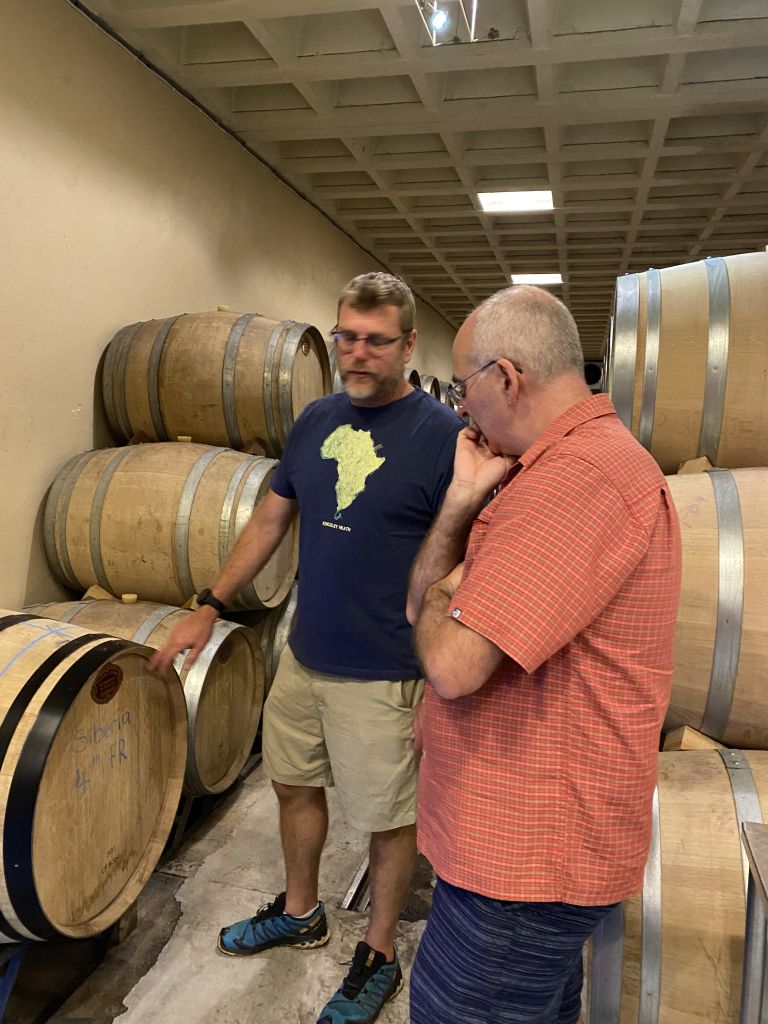
Onto the cellar and we could see the names of the two coopers – Hassin and Tremeaux burnt into the front of the French oak barrels. I was highly entertained to hear about the barrel sourcing. He originally contacted one of his current barrel makers to source good French oak casks. The Frenchman came back to him with the answer ‘send me your wine to taste and I’ll tell you if you can buy my barrels’! I see this as another endorsement of the quality of their wines. This relationship is a close and continuous one. Each year they send their wines to the cooper and the barrel is customised to their wine.
Burgundy Style in South Africa
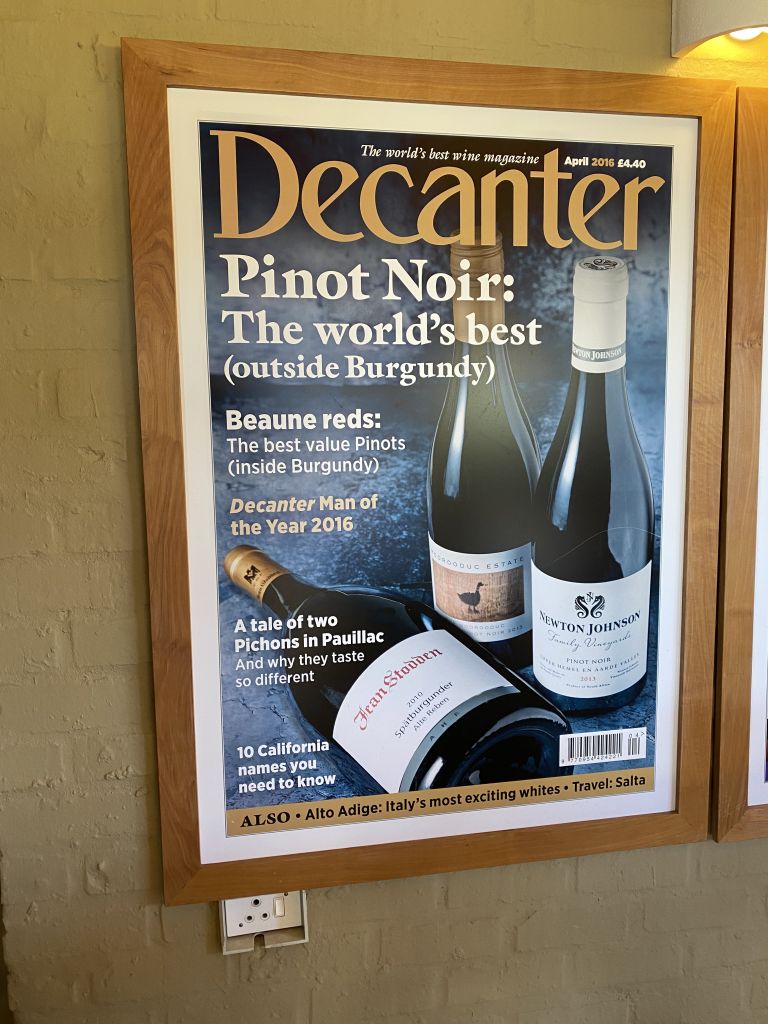
These wines are produced with care and attention to detail, but the growing ethos is to intervene less. The result is really tremendous and if you want Burgundy style, Chardonnay or Pinot Noir. I would highly recommend trying these wines. They’re not cheap, but we do have the entry-level ones in the pod at the moment. They won’t be available for long! Alternatively, have a look at them in our online shop.

South Africa
Our second day in South Africa and we were bombing along to Tulbagh. Our destination? Twee Jonge Gezellen (two young gazelles) Estate to sample sparkling wine made in South Africa. The scenery is really magnificent with rugged mountains beckoning on either side. I’m not sure I’d take a walk on my own up them like I would at home!
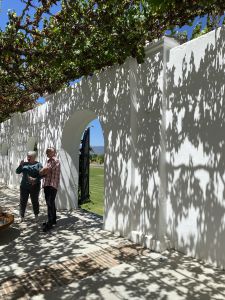
Krone Cellar, South Africa
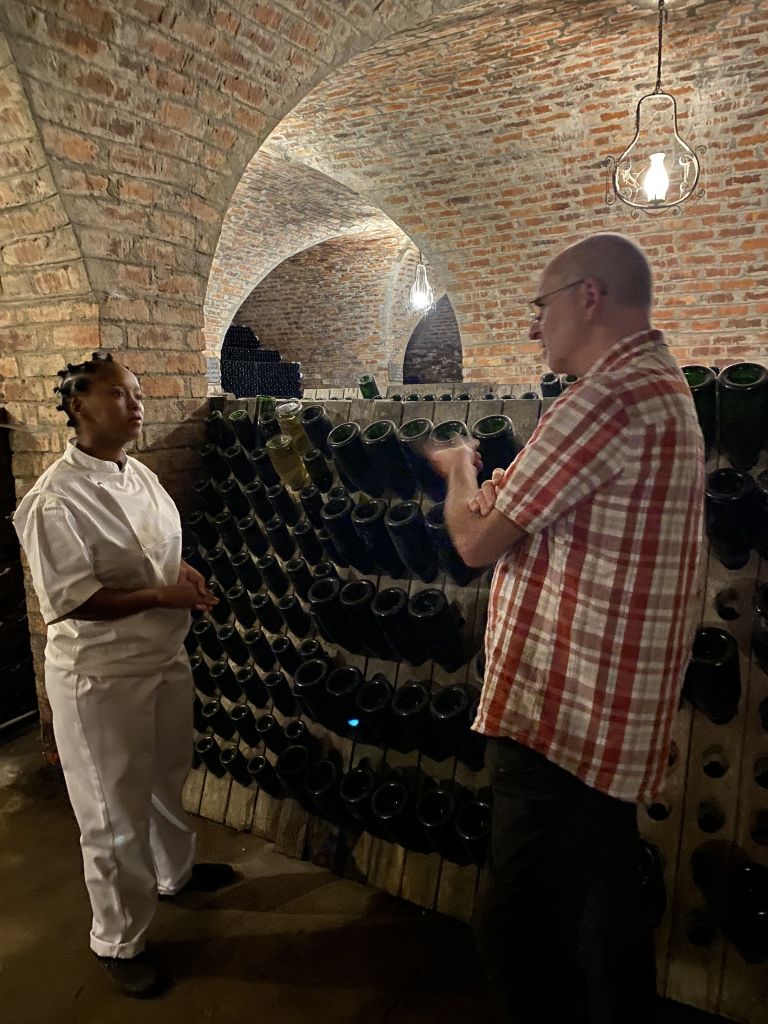
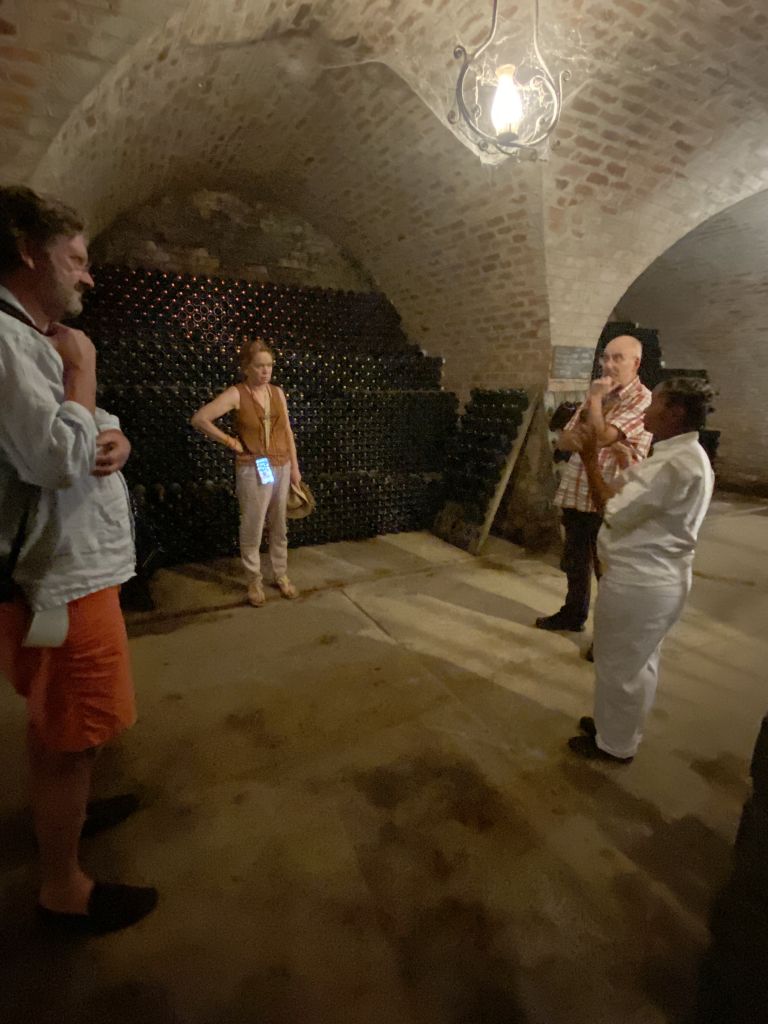
The knowledgable Didi guided us around what was the first underground cellar in South Africa. They make vintage sparkling wine, nothing else. In Europe, most of the Champagne we buy is non-vintage. This is because the estates blend wine from different years (and grape varieties) to make Champagne. In a region where weather is unpredictable this allows them to make a consistent product. If they have an exceptional year, they may make a vintage Champagne from those grapes. Wine makers are not permitted to call Sparkling wine ‘Champagne’ in South Africa. They call it Method Cap Classique and this uses the same method as Champagne to produce the sparkling wine.
The Grape Harvest, South Africa
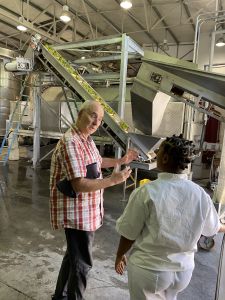
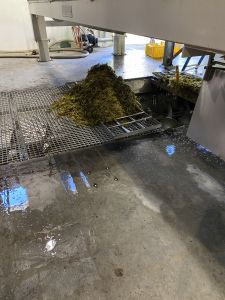
Now this was exciting. We normally visit vineyards in Europe during the boring months when nothing happens. For the first time, we were able to see and be present at the initial processing of the grapes after harvesting. These were Chardonnay grapes, and they were sweet! You can see them trundling up the conveyor behind Dylan in the picture. The next picture shows the immediately discarded skins after pressing. These grape skins are used on the land as fertiliser.
Ditching the Sediment
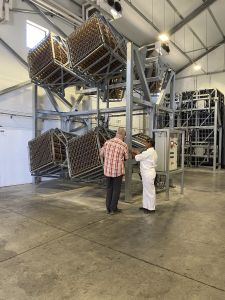
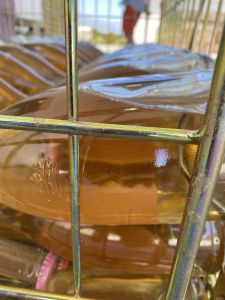
This is a gyro palette. In the first picture of Didi and Dylan above, you can see upside-down bottles behind them in a ‘pupitre’. This was for the purpose of ‘riddling’ to get rid of the sediment in the bottle. Each bottle is be turned a quarter turn, twice a day for several weeks. This slowly gets the sediment down to the neck of the bottle ready to remove it. Using these racks may be seen as somewhat old-fashioned now. For mass production, the gyro palette does this far quicker and with less effort. Can you see the sediment in the bottle below?
Disgorging
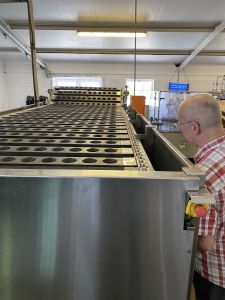
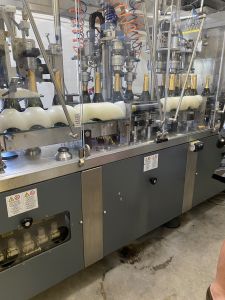
The wine bottles are put upside-down in the machine pictured below. The neck of the bottle is in a refrigerating solution which freezes the neck. Remove the cap and the pressure of the bubbles pops out the frozen plug with all of the sediment in it! The bottle is then ready to be sealed with a cork, foil and cage. Our friend Jeremy has just reported from New Zealand a newer method that we haven’t heard of – I look forward to hearing more wine explorers!
What a location!
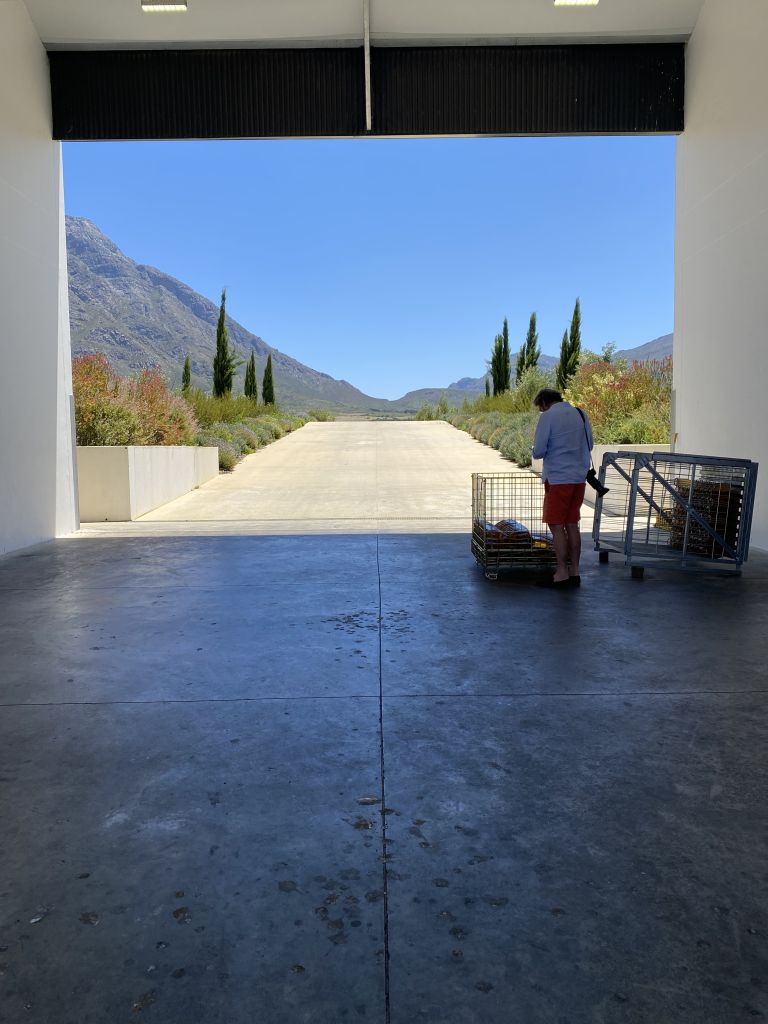
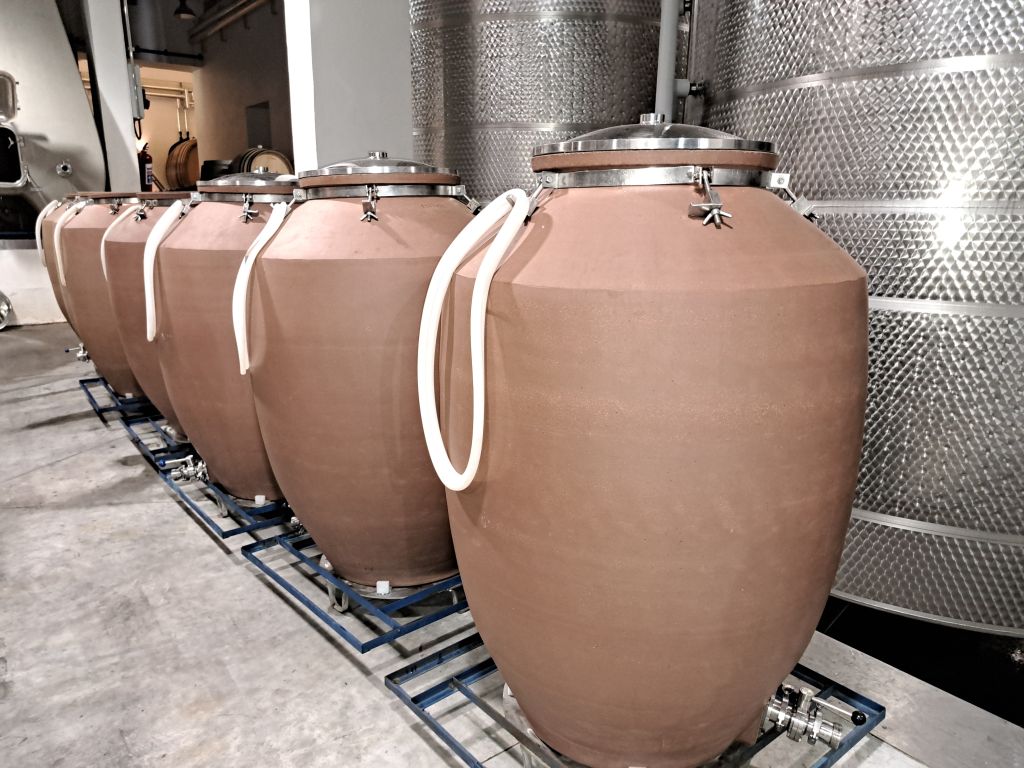
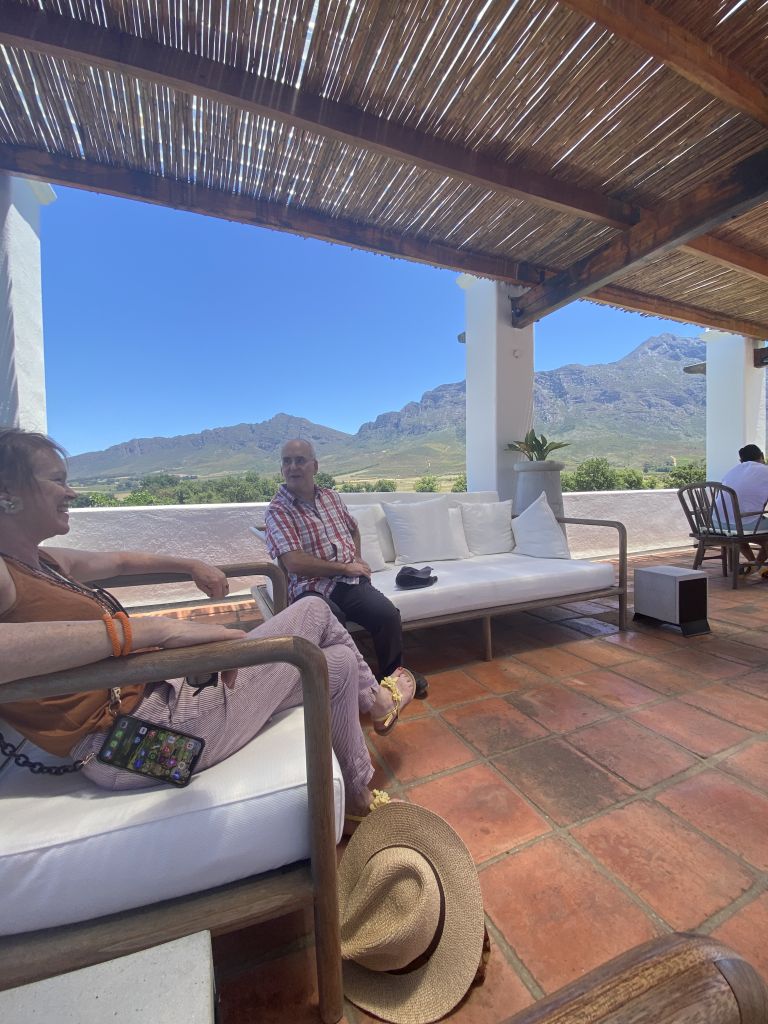
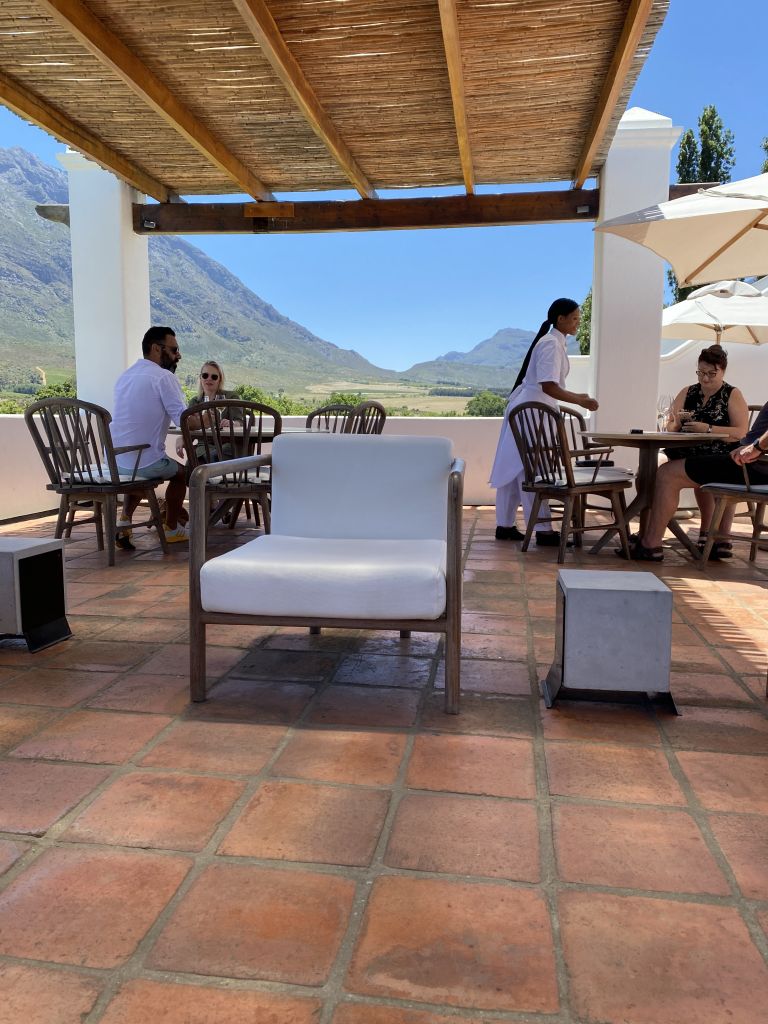
Finally, we enjoyed a tasting of all of their range of sparkling wines. We all preferred the Amphora Blanc de Blanc. Blanc de blanc means it’s made from just white grapes (Blanc de Noir means white wine made from red). The amphora is that little clay pot you see in which some of the maturation takes place. Finally, here are some more stunning pictures, I mean, what a place to taste wine.
South Africa
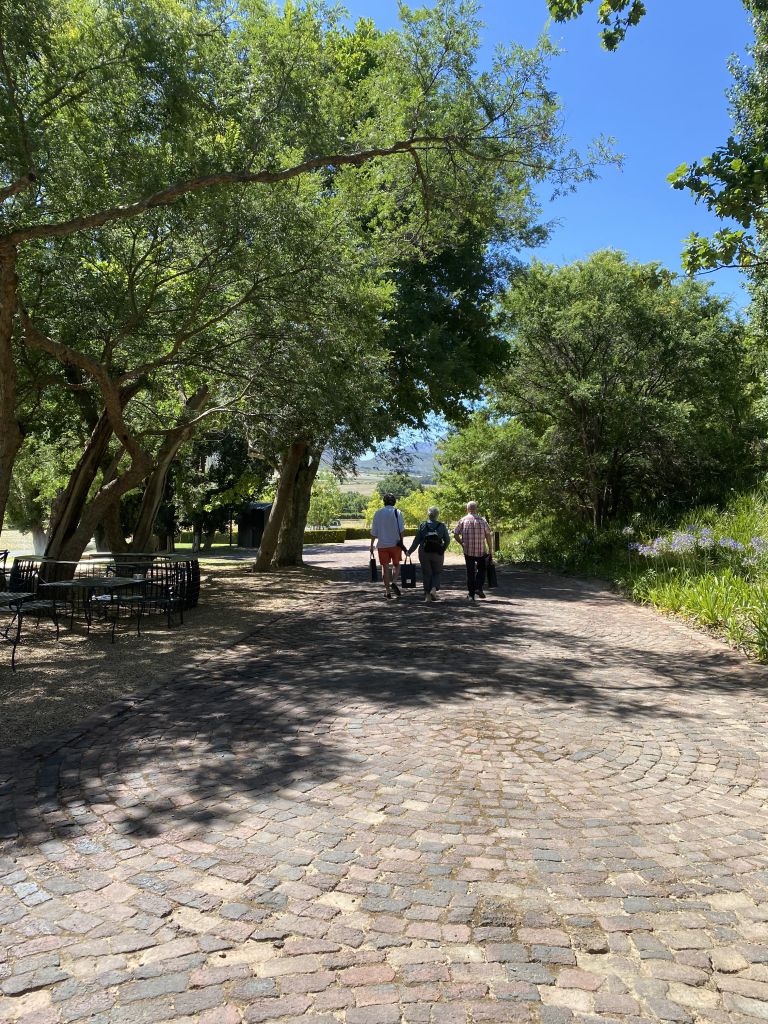
A week in South Africa is a short time so we were extremely grateful to have our lovely friends Jón and Catherine to act our tour guides! So, no wandering around finding our bearings and figuring out the lay of the land. Jón was there to whisk us away immediately. Well, once we’d delivered the Mercedes rear window we’d transported over for a friend – just a regular journey you understand. Within an hour of arriving in South Africa we were having brunch in vineyard number one. Note we’re holding on to our fleeces. We were told it could be chilly out there. Not if you’re from Wales!
Groot Constantia
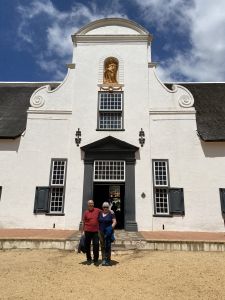
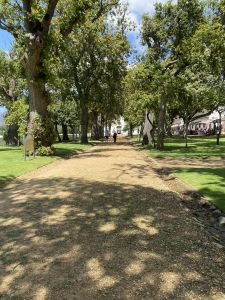
So much for ‘New World’ this stunning wine estate with its beautiful buildings date back to 1685. Perched up on the hillside, from the grounds you look towards False Bay. There lies the clue to being able to produce quality wines in South Africa. Altitude from the rugged mountain ranges that run like arteries down to the sea. Cooling winds from the numerous bays. Also, next stop is the Antarctic, from there the Benguela current transports icy waters around the tip and up the west coast of Africa. Add to this the cooling effect of the wind (The Cape Doctor) and you have a climate that’s suited for wine production.
Klein Constantia
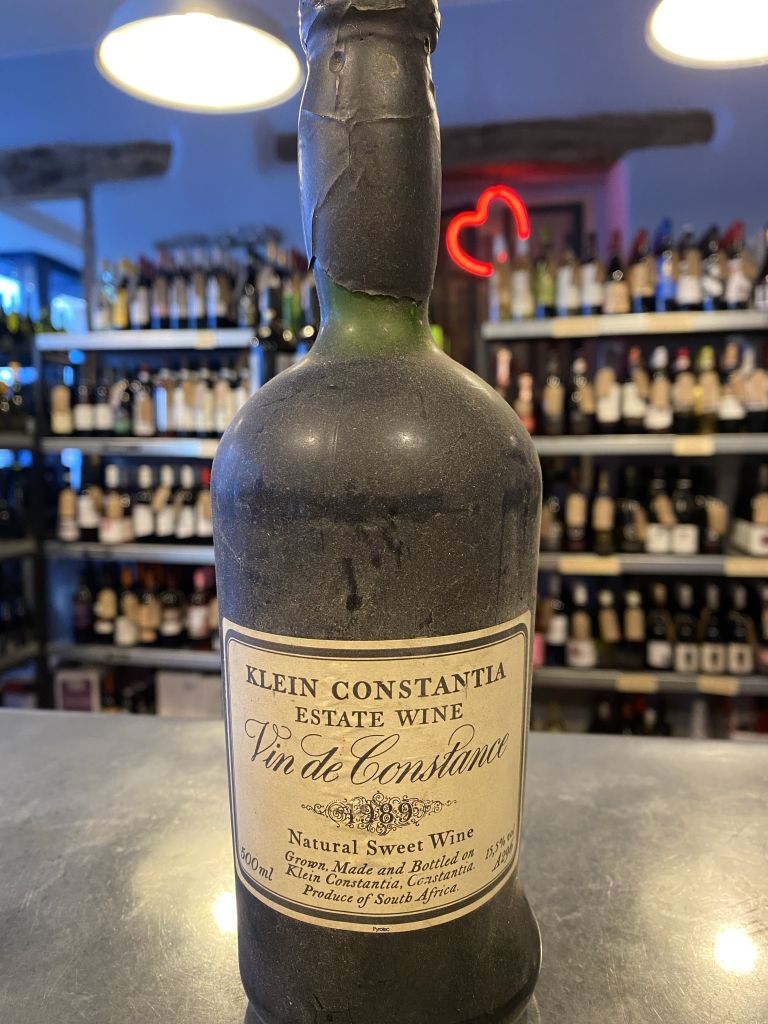
After our visit to this estate, Dyl reminded me that we have a 1989 bottle of Klein Constantia at home. A delicious natural sweet wine from the same area: Vin de Constance. I dug it out, it’s possible that it’s past its best. Maybe it’s time to open that now and see!
Cape of Good Hope
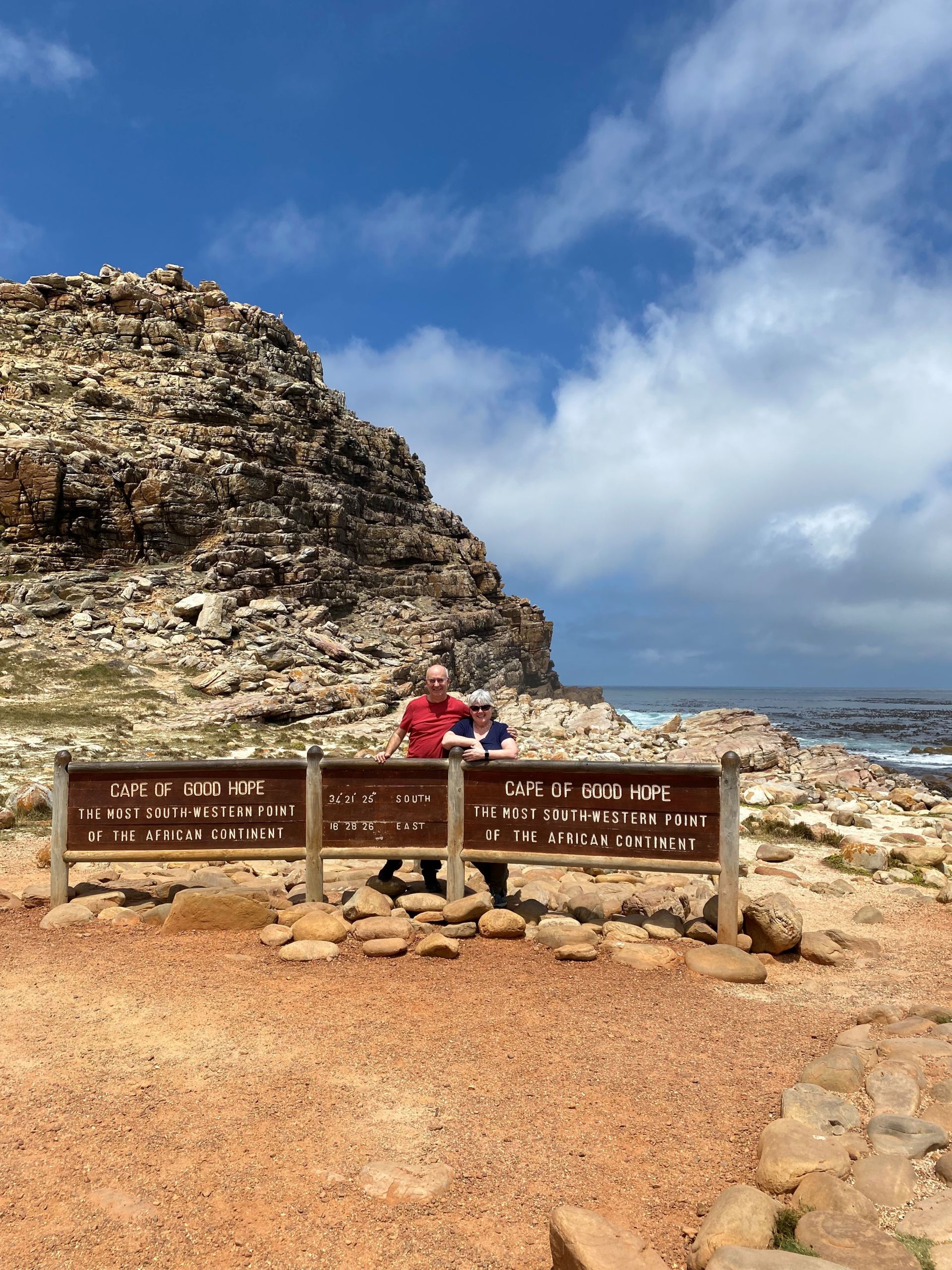
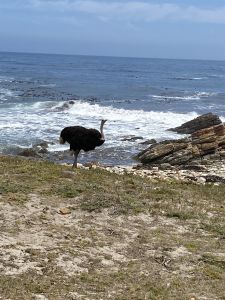
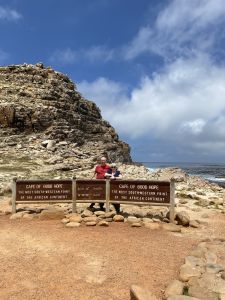
Our first day really helped us settle with a tour around the Cape. We drove through the Cape Point Nature Reserve, right down to the Cape of Good Hope. Maybe it’s not quite the southernmost point but it’s still exciting to think you’re right down at the final piece of land of that great continent. We slept well that first night. Look out for our next blog when we have an insight into the making of sparkling wine in South Africa.
Winter’s Here, Hamper Cheer!
Winter’s Here – I love it!
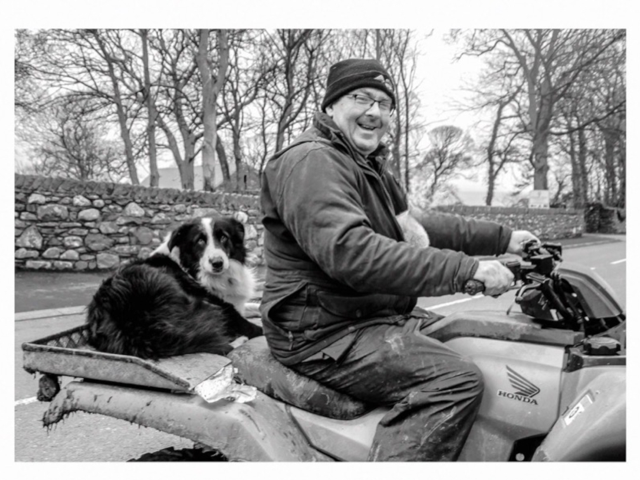
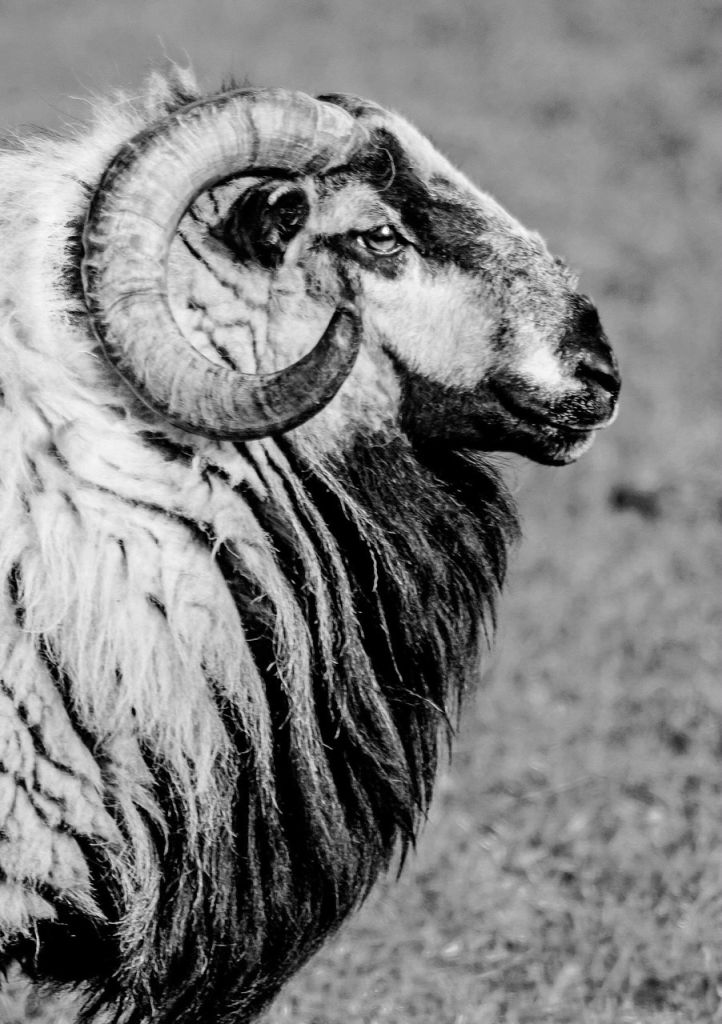
This time of year is a sort of slowing down and speeding up for us. I always used to like the farm as winter approached (that’s my brother John off to check on the sheep in the picture and I couldn’t resist including the stunning photo of the Welsh ram!) Everything hunkers down for the colder months and it all changes down a gear in nature. The animals grow their thickest winter coats to protect against the snow.
Hamper Cheer!
It is however our busiest time of the year: ‘You can feel it in the air,’ Terri says – ‘the hamper fever!’ It certainly is like sensing a coming storm, the distant rumble of the shred tempest. We had packed a 100 hampers by the beginning of December! There’s a great selection of hampers online and many more in the shop. Have a look at the new pictures on our website, we’d love to know what you think. We have ditched the picture of the building and put our faces there instead!
New Staff!
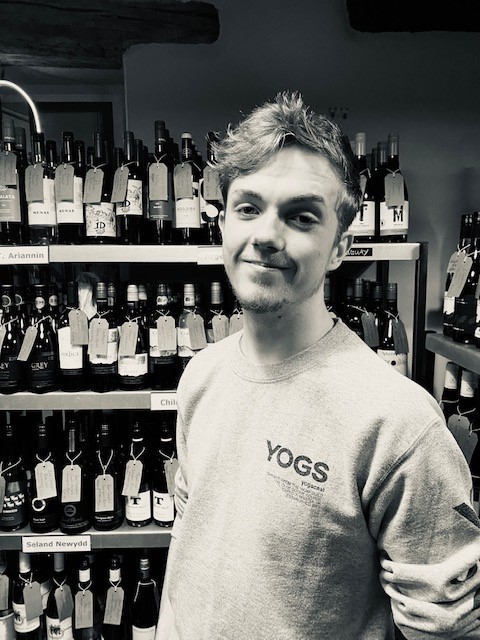
I’m also delighted to introduce you to our newest member of staff: Elis, who is looking forward to his wine education! He’s from the area and has a great interest in good whisky and Saki as well as wine. So that’s an excellent start! Pop in to say hello and get some help to choose your favourite wines for Christmas. We have a specially selected case for you. Alternatively, browse with glass in hand either online or in the shop.
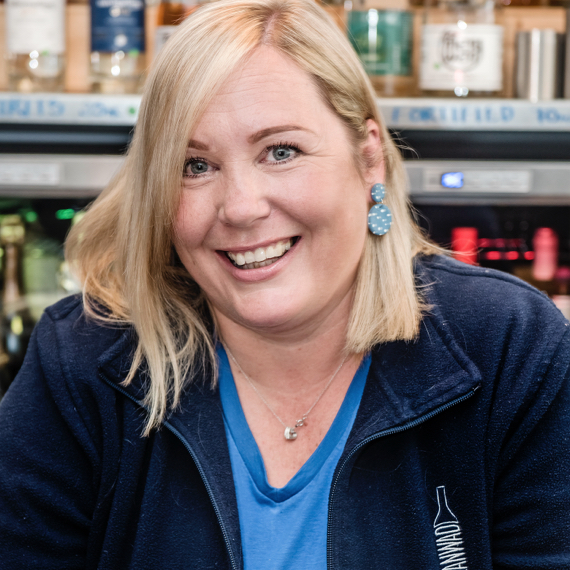
Emma’s Farewell Case. Where do I begin?
Dylanwad, appropriately, has been a considerable ‘influence’ in my life and is partly responsible in shaping the person I am. After some 30 years I am moving on and have such fond memories and built genuine everlasting friendships with many. A huge ‘Diolch’ to all. These are just 6 wines I have selected to be part of ‘Emma’s Farewell Case’ which take you on a journey of some of the vineyards we visited – I hope you enjoy as much as I do.
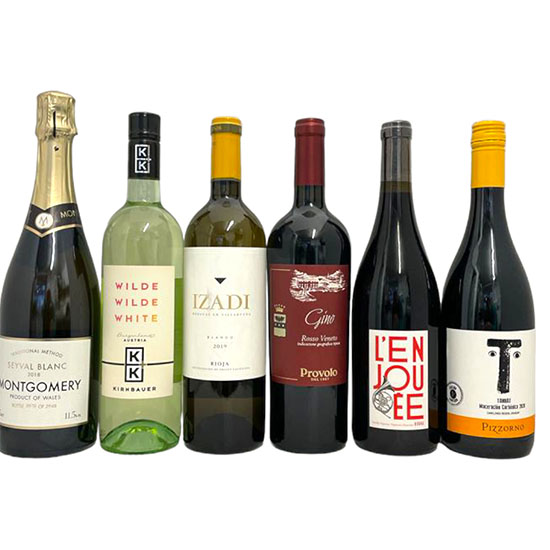
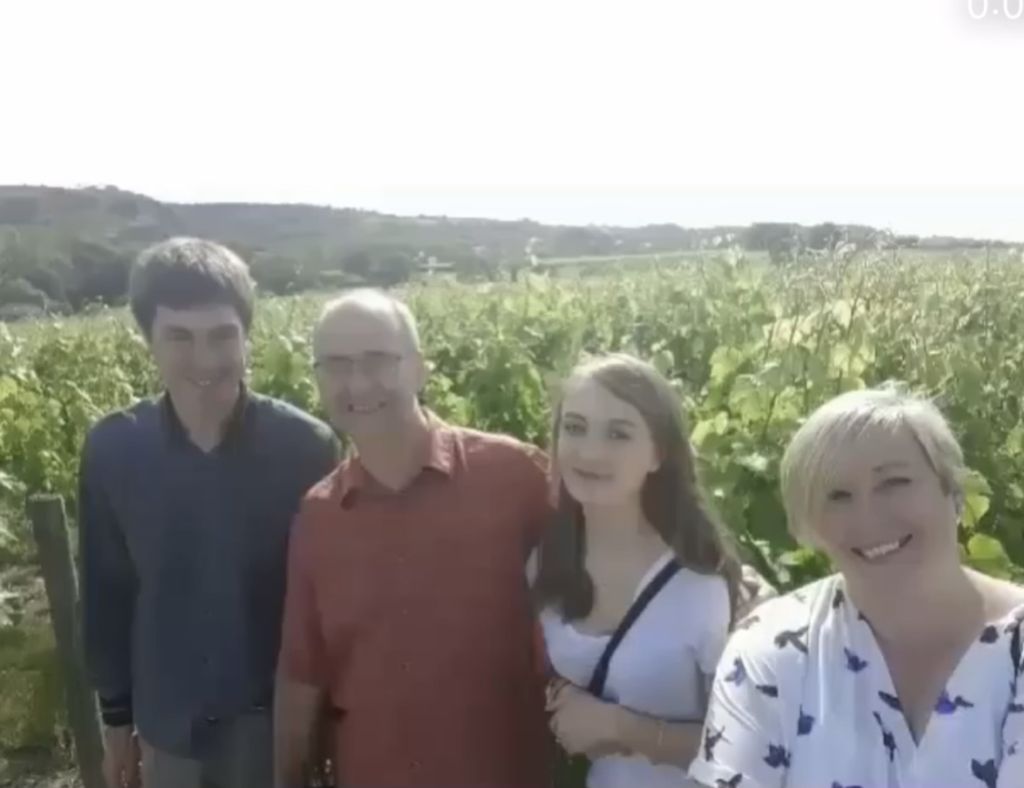
Domaine Ogereau, Cabernet d’Anjou, Loire Valley, France
2015 was our first adventure abroad to meet the faces behind the bottles. We arrived in Saumur and there was a wonderful music festival. The streets were crammed with people all enjoying the buzz of entertainment. Visiting Emanuel was so good, witnessing first hand the passion he has for the vines and how the winery works. And of course, tasting its end produce… Chenin being another favourite of mine.
On the same trip we visited our lovely sparkling producer in the Loire. Going into the underground cellars at Louis Grenelle with the handsome French guide (no socks was the only ick!) was a highlight! He explained the traditional method of making the sparkling wine and how the French “are good with their ‘ands” due to the riddling!! Oh-la-la!
Dyl and Tez had to start a new guessing game with my ‘Wenglish’ on the way home on the plane as I described whoever sat behind me, constantly kicking me as a ‘Ceffyl Nos’. Don’t worry if you don’t understand, it took the 2 of them the whole flight home to figure out what I was trying to say. I’m sure they will fill you in in the shop.
Provolo, Gino, Italy
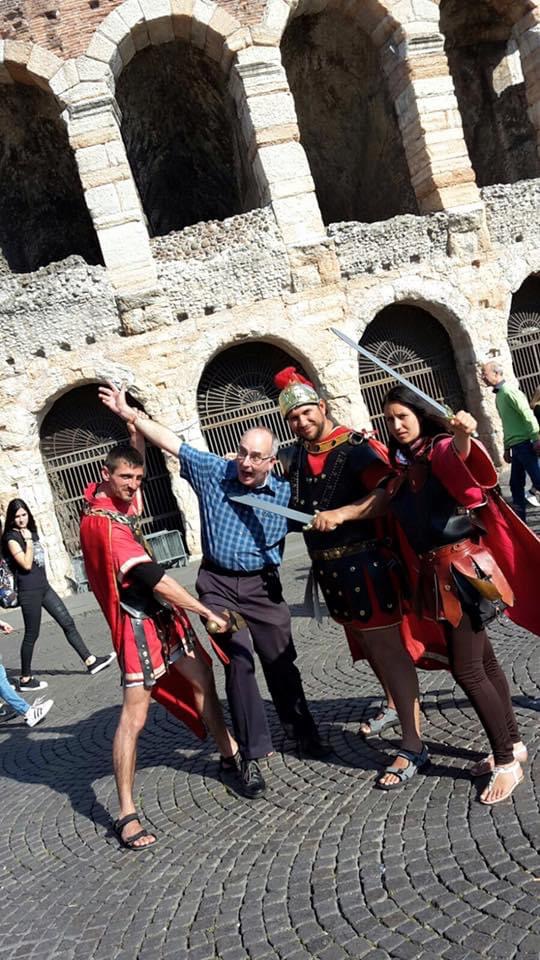
2016 Vinitaly is a wine trade fair and it was overwhelming. I have never seen so much wine in my life! (and handsome Italian stallions!) Bortolin is a top prosecco and Gino an all-time fave red of mine and we visited both producers in the fair. We stayed by Lake Garda which was stunning. Tez and I enjoyed our morning walk as Dyl needed a well-deserved break from our constant giggling. Whilst in Verona I, as usual, refused to have my picture taken. However, Dyl got targeted by some Roman Soldiers and ended up having to pay them for the privilege of having his picture taken. If only he knew he was a Prynhawn Da S4C star it should’ve been the other way around!!
Izadi, Rioja, Spain
2017 saw a trip to Rioja with Dyl, Tez & Sandie. Izadi was a bodega we visited and the triangle on the bottle represents the area where the grapes are planted. I remember going out to see the vines and being in awe of the old vines that were some 80 years old. We also had fun returning the hire car – it was honestly better than a Bond movie with super stunt woman Sandie to the rescue as she rolled under a closing roller door!!!!
Montgomery Sparkling White
2018 was my first visit to the vineyard with Caro to join the grape pickers. I loved it. Woody explained how to make sure the sugar levels are the correct scale for picking using the Brix refractometer. It’s really therapeutic work you know! As many are aware I now class myself as a pro picker returning to the harvest most years to pick and it’s my USP for the wine –‘ Em’s magic touch’ in the bottle.
K+K, Wilde Wilde White, Austria
2018 we had a trip to Austria. I can’t give too many secrets away about this visit but one thing for certain is that it was an entertaining expedition. There was an incident with a hire car again… but I’m sworn to secrecy.
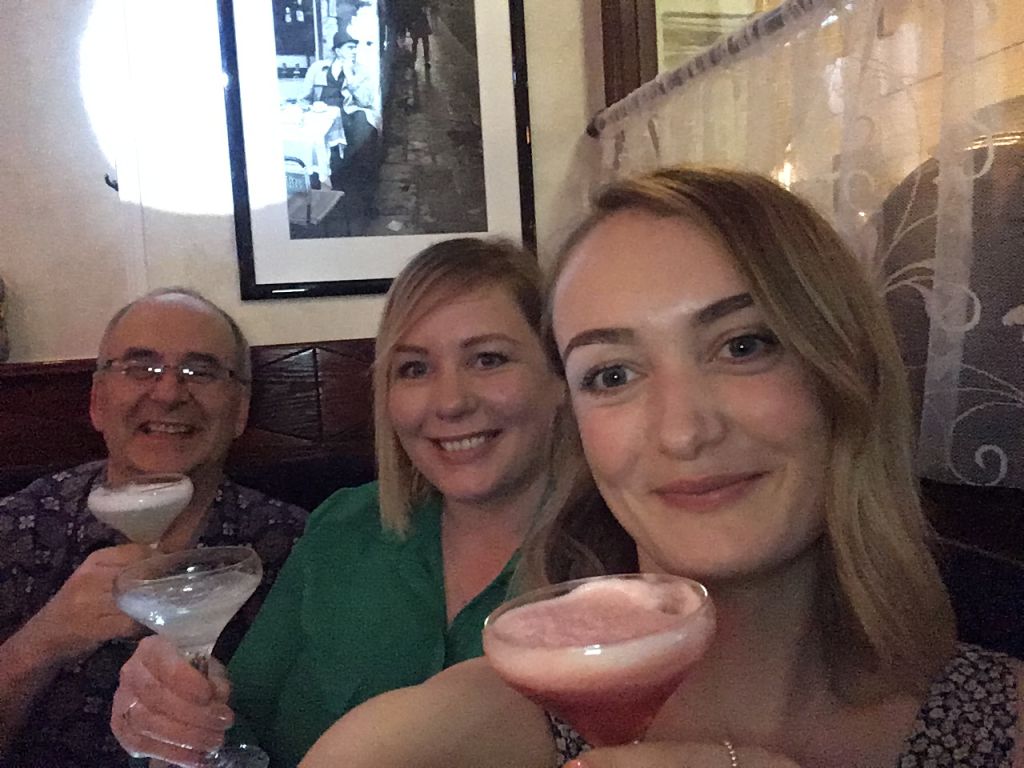
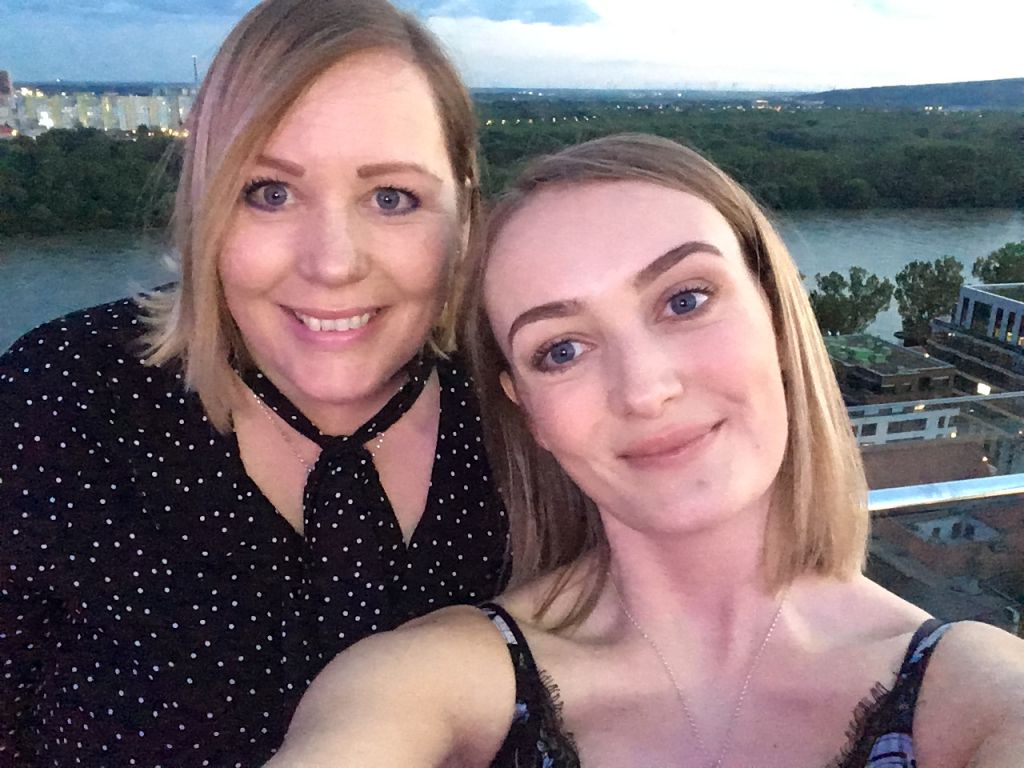
After being pulled over and paying a fine to enter Austria from Bratislava we made it to K+K Vineyard. The setting and wines were amazing. Terri’s face was more than a picture when they bought out the breadsticks with the traditional lard and bacon bits spread onto it. We all loved seeing the storks in Rust and enjoyed our cocktails in an Antique American Bar in Bratislava.
Pizzorono Tannat
2022 No trip to Uruguay however plenty of study time for WSET 3. I obviously expanded my wine knowledge and one of my favourite things I learnt (apart from the classification system in Saint Emilion, Traditional Champagne Method and the Solera System) was Carbonic Maceration. Carbonic Maceration is when whole uncrushed bunches are put into vats filled with CO2. What’s called intracellular fermentation begins and the grape skins split and juice is released. This method has been used with this wine and extracts colour but not much tannin giving the wine fruit forward characteristics with notes of kirsch, banana and bubble gum.
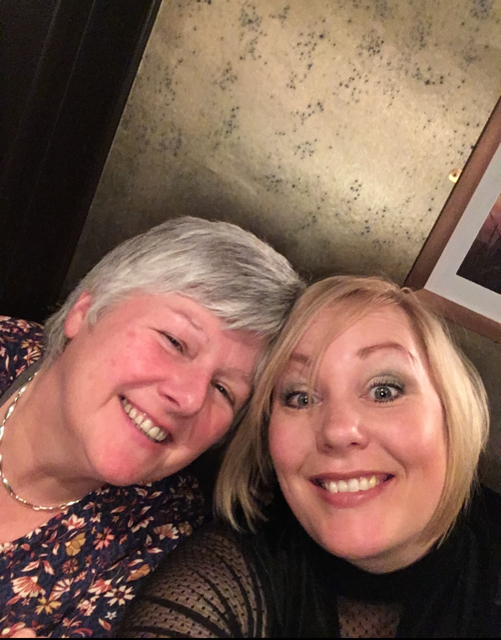
Thanks again for everything. I’m sure to see you all out and about, in fact you’ll probably see me more often in Dylanwad sampling anything new and keeping my knowledge topped up by the pros.
Cwtch Mawr,
Ems
Spanish Wine Month
Spanish Wine Month – Get your Friends around!
To celebrate our Spanish wine month we have created a special case of wine with a couple of snacks. To go with this, we are planning another mini virtual tasting series! We shall dedicate 3 Fridays to tasting wines from the case on Facebook Live. Order your case by clicking here and you will receive the wines along with snacks and a short agenda to remind you of the dates.
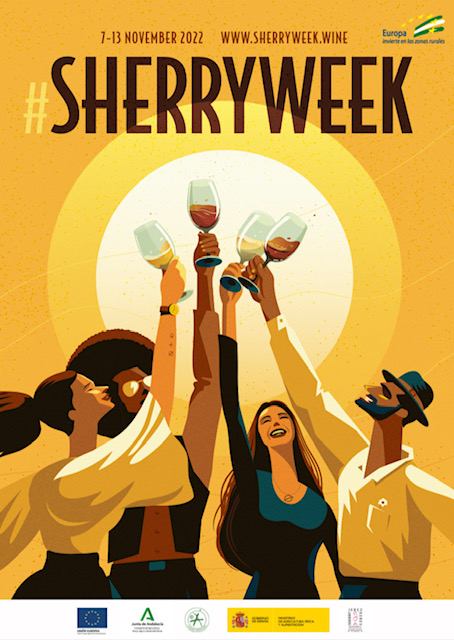
Spanish Wine Month – Sherry Week
To kick off our Spanish Wine Month we are starting with International Sherry Week from the 7th November. Sherry is a fortified wine which is grown and made in very particular conditions. In the Jerez region, you will find the white albariza soil. This soil bakes hard under the sun and forms a solid cover under the vines. The heat of the sun is reflected back up to the vine and prevents evaporation of water underground. Vines thrive in otherwise arid conditions because they have access to scarce water under the ground.
Spanish Wine Month – Making Sherry
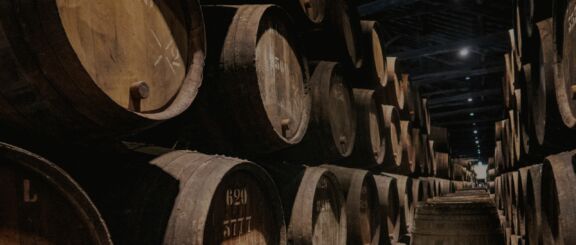
Sherry is made using the solar system which is a series of barrels in which the wine is kept. It is aged under a layer of yeasts called ‘flor’ which prevents contact with the air and affects the biological ageing of the wine. We will explain this further on the 7th November in our live Facebook tasting of sherry! It’s a delicious apéritif but a nice fino goes well with seafood or maybe a Chinese soup.
Spanish Wine Month – Cava
Cava is a popular Spanish fizz and we don’t pay enough attention to it really. It’s made in the traditional method which is the same way that Champagne is made and you can get some really excellent value Cava. Well, now we can put that right because you will be able to drop into the shop during the week of 21st to 25th to taste some Cava. There will also be a bottle in the Virtual Tasting Case to open on the 25th November for our Facebook Live tasting.
So there’s lots going on in November under our Spanish theme, keep in touch and look out for the events. Hasta luego!
Panettone – Christmas Luxury!
Fratelli Sicilia Panettone
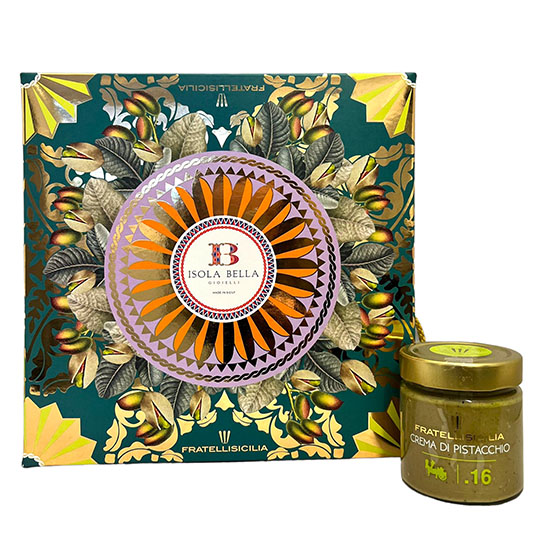
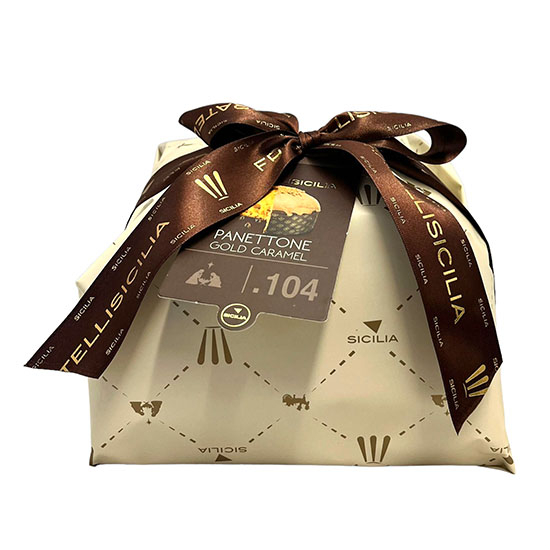
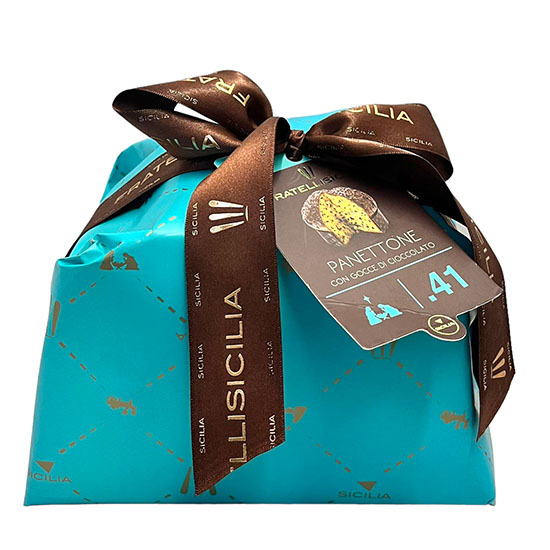
We get very excited at this time of the year in Dylanwad when all the beautifully presented Christmas stock arrives. We have a trusted importer for our luxury Fratelli Sicilia Panettone. They range from traditional or caramel to a luxury chocolate & pistachio at the top of their range.
Traditionally Made Panettone
In my opinion, the dry cardboard-like versions that are available aren’t a patch on these. Fratelli Sicilia panettone are prepared with top quality ingredients. Eggs from free-range hens, Dutch butter, wheat flour and dried fruit. It isn’t made in the artificially speeded up way. They use the traditional method and it is naturally leavened for 36 hours, strictly using mother yeast, which guarantees softness and delicious aromas.
Hand-wrapped
They also look really beautiful, hand-wrapped by skilled workers who make the product an exclusive confectionery jewel that makes a beautiful gift or a treat for your family this year. A soft light dessert wine suits panettone perfectly or I might even choose the delicious sweet sparkling Cerrino Asti to go with it.
Panforte
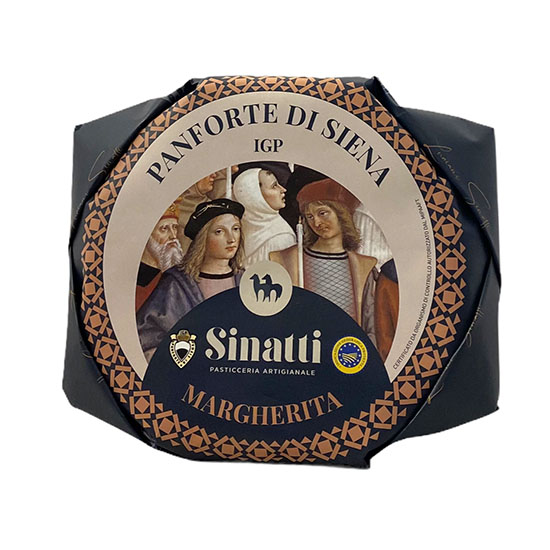
I’m also a great fan of Panforte which are also hugely popular in the shop. This is a traditional Italian cake made of dried fruits, nuts and spices. It is dense, sweet and sticky! I love it with a glass of Madeira. Many enjoy it with cheese or it is a perfect sweet treat for a walk. Emma, Terri and Ceri have been busy re-arranging the shop so pop in for a browse or check out online by clicking below for the lovely Christmas treats.