




 01341422870
SEARCH

 01341422870

High Altitude Wines: How Elevation Shapes Great Wine
High Altitude Wines
There’s something magical about wines that come from the mountains. As vineyards climb higher, everything changes — the sunlight is more intense, nights are cooler, and grapes ripen more slowly, building layers of flavour and elegance. Altitude, as it turns out, can be a winemaker’s secret weapon.
Wines from Mendoza
Nowhere is this clearer than in Mendoza, Argentina, where vines cling to the foothills of the Andes. Here, at 900–1,500 metres above sea level, Malbec thrives under piercing blue skies. The combination of long sunny days and crisp nights produces wines of deep colour, ripe fruit, and remarkable freshness — proof that extreme conditions can yield balance and beauty.
Greece
The story continues in Greece, where altitude gives Mediterranean warmth a welcome lift. From Santorini’s windswept terraces to the mountainous vineyards of Naoussa, cooler temperatures preserve the grapes’ natural acidity. The results are wines that sing with energy — crisp Assyrtiko, spicy Xinomavro — a reminder that Greece’s rugged landscape is as important as its ancient heritage. We don’t have any on our shelves yet but we’re close to finding some for you!
I Fabbri
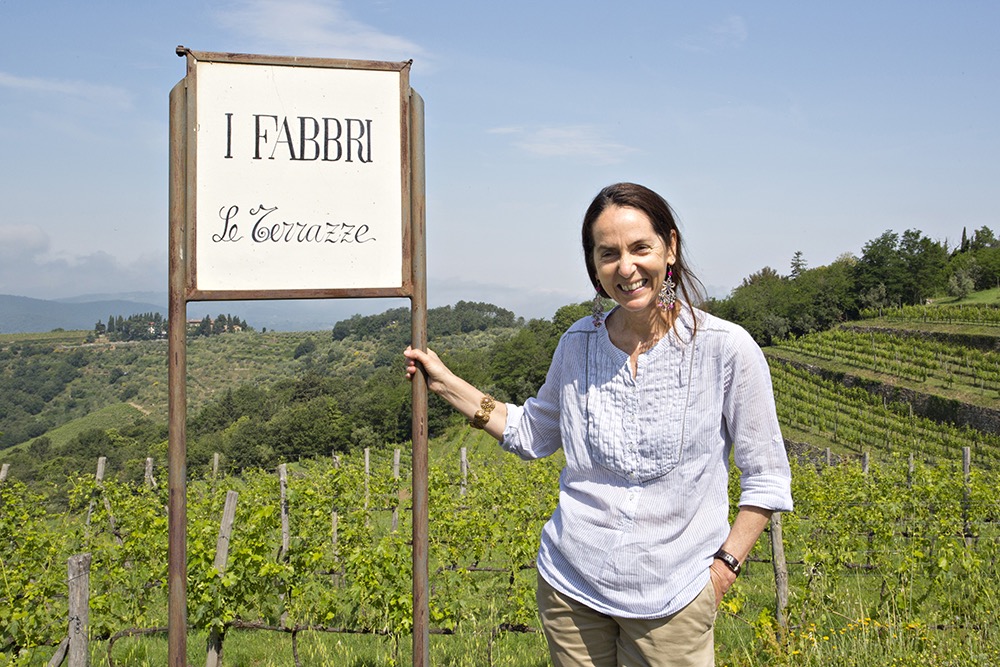
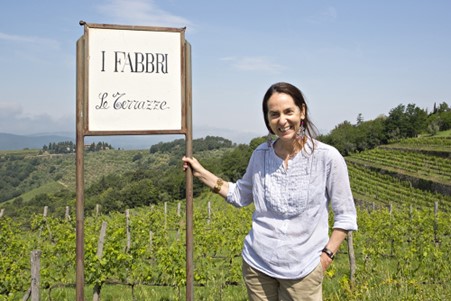
Closer to home, we’ve been proudly importing wines from I Fabbri, a small, family-run estate in the hills of Lamole, at the highest reaches of Chianti Classico. At around 600 metres, these steep vineyards produce Sangiovese of rare finesse: fragrant, pure, and mineral-driven. Altitude here isn’t a challenge — it’s a defining element. The cool climate slows ripening, giving I Fabbri’s wines an elegance that sets them apart.
Andes to Tuscany
From the Andes to Tuscany’s hilltops, altitude shapes more than just the view. It’s what gives these wines their soul — freshness, structure, and the kind of depth that only comes from living a little closer to the sky.
Dropyn – Gwin Dylanwad Wine Chat Podcast
You can hear more about I Fabbri and the fascinating role of altitude in winemaking in our first podcast episode, where we explore how vineyards at the edge of the sky produce wines full of life, energy, and story. Just click on Dropyn – Gwin Dylanwad Wine Chat.
I Fabbri
Dylan’s Travels to Chianti
What a night at I Fabbri. I had to do some serious rally driving to arrive at all. It had been a long four and a half hour drive from Cantinarte in Abruzzo. The last half or particularly 20 minutes was challenging. The tarmac ran out, the mist was down and it was raining. I was aware I was going to be late having not expected the conditions or the twisting, undulating forest track.
Arriving at I Fabbri
I finally arrived at the little square where Susanna had told me to park. With no visibility I had little idea which way to go into the mist: up, down, north, south, east or west! A forester in a Land Rover emerged and offered for me to follow him. He indicated for me to turn down a narrow track and I finally arrived at the Castello di Lamole.
The Wine Maker-Importer Relationship!
Susanna was waiting and directed me into a little parking space. We hugged like old friends, but we have only met briefly maybe three times! Is it because of the product you have been selling for years that means you feel like such old companions? In the same way as when you meet old college friends and you can pick up again at the drop of a hat we chat away!
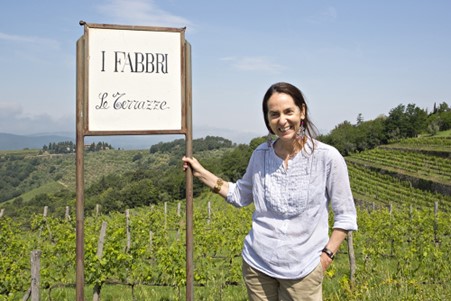
She led me up some stone steps to a beautiful compact tasting room. On another day I’m sure it would have had a spectacular view over her treasured vines.
She had left a successful career in fashion in Florence more than 20 years earlier to come and resurrect her family’s vineyard. This is a family history she can trace back 400 years. I-Fabbri (blacksmiths) maybe attests their former graft in the north of Italy but surely four centuries of lineage is enough for a family to claim roots.
Tuscany
The vineyards are some of the highest in Tuscany, really not too far from Florence, maybe 35 kilometres (which even in the day could take a heroic hour or more in a motor car on a night like tonight). But tonight, as the light outside faded, I might as well have been visiting a vineyard in the depths of Armenia or Moldova or halfway up the Catalan Pyrenees!
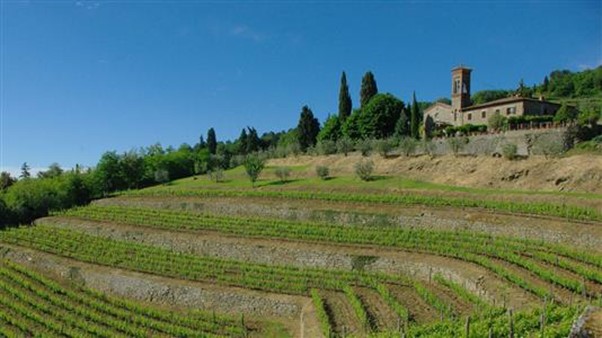
The Tasting
Two tables were set – one had glasses and three bottles of Suzanna’s labours and hard to ignore was another with two place settings bowl and dinner plates, neat napkins, more glasses. I would not starve before losing myself in the forest later!
We tasted through her different cuvees as she explained the nuances between them. The bedrock of Tuscany and Chianti is Sangiovese and make up the majority of her wines – bar one. A little proportion of Caniolo here, 20% Merlot in the Olinto giving a hint of plumper fruit and one cuvee of Merlot from vines she planted before 2000 as she re invigorated her ancient family fields and terraces of vines.
Lamole Chianti Classico
100% Sangiovese Grosso come from the highest vines up to 630 metres (most of the way up our local mountain Cader Idris as I look out from my kitchen in Dolgellau now). Aged in cement tanks for 12 months. ‘Cement’ just doesn’t sound so romantic but is the bedrock of some great wines. I find age and experience tend to cool the enthusiasm of wine makers for oak (once again awarded Tre Bicchieri in the prestigious Gambero Rosso Guide).
Terra di Lamole
This wine has the addition of 10% Canaiolo grapes from lower vineyards (down at 550 metres!) and some from her oldest vines planted around her birth in the 1960s. Here there is some use of oak a proportion spending time in 500 litre French oak barrels.
Riserva Chianti Classico
The Chianti is all made in 500 litre French Tonneau, the 2020 for around a year. This use of not new oak is about giving texture to the wine and for sure rounding the flavours.
Grand Selection Sangiovese Grosso
The Grand Selection Sangiovese Grosso is from some of the oldest vines. It is only made in the best years and is aged in 1500 litre Allier tonneaux for 24 months. This is the highest representation of what those 60-year-old vines can do.
“Il Doccio” 2018
This finished off the tasting. It is 100 % Merlot and demonstrates what restraint in the high hills of Lamole can produce. It is delicious but not overblown.
Susanna is erudite, modest and charming – her wines reflect this. They are powerful but not blockbusters where impact is impressive but whose pleasure may wane. With the wines of I Fabbri the pleasure grows. The complexity reveals itself: the fruit is there, the acidity is there, the tannins too. It is the balance that makes these wines so good.
And the Socialising!
So back to the other table. Hospitality in Italy comes hand in hand with my work that is wine but so often food makes the experience so special. I follow her down another stone staircase to the kitchen below. A simple meal is ready to throw together. We break bread together, literally – crunchy croutons to scatter into the delicious potato and pumpkin soup, drizzled with a little fine olive oil. Now we relax and conversation can spread to how much olive oil one might use in a week (one litre for a family would be normal). Politics and the state of the world however horrible seems more bearable with some simple meatballs in tomato sauce and small diced fried potatoes garnished with rosemary and of course a glass of I Fabbri in hand.
Lost Again!
Such an experience would make any job worthwhile. I have to say it is not always so, but this is a visit to stay in one’s memory for years. The time has flown and I am late to reach my accommodation. Susanna wrapped up the slice apple tart for me to take with me. She phones the hotel to say I am on my way and will be there in good time. We go back out into the dark, mist and drizzle and hug like the old friends we now are! She gives me the sort of directions that are vital to get me straight to my hotel: left at the end of the track, right when you get to the bottom of the hill and right again by the pharmacy in the village. Instructions that seem so obvious immediately, but sadly half an hour later I’m now further from my bed than when I left her! Eventually I have headed up and over some strange mountain (Chianti is hilly) and I arrive at the hotel. A light is on, a little envelope on the doorstep with my key and directions to my room. I slept so well!
Click HERE to see her wines on our website.